
The catalog/Species
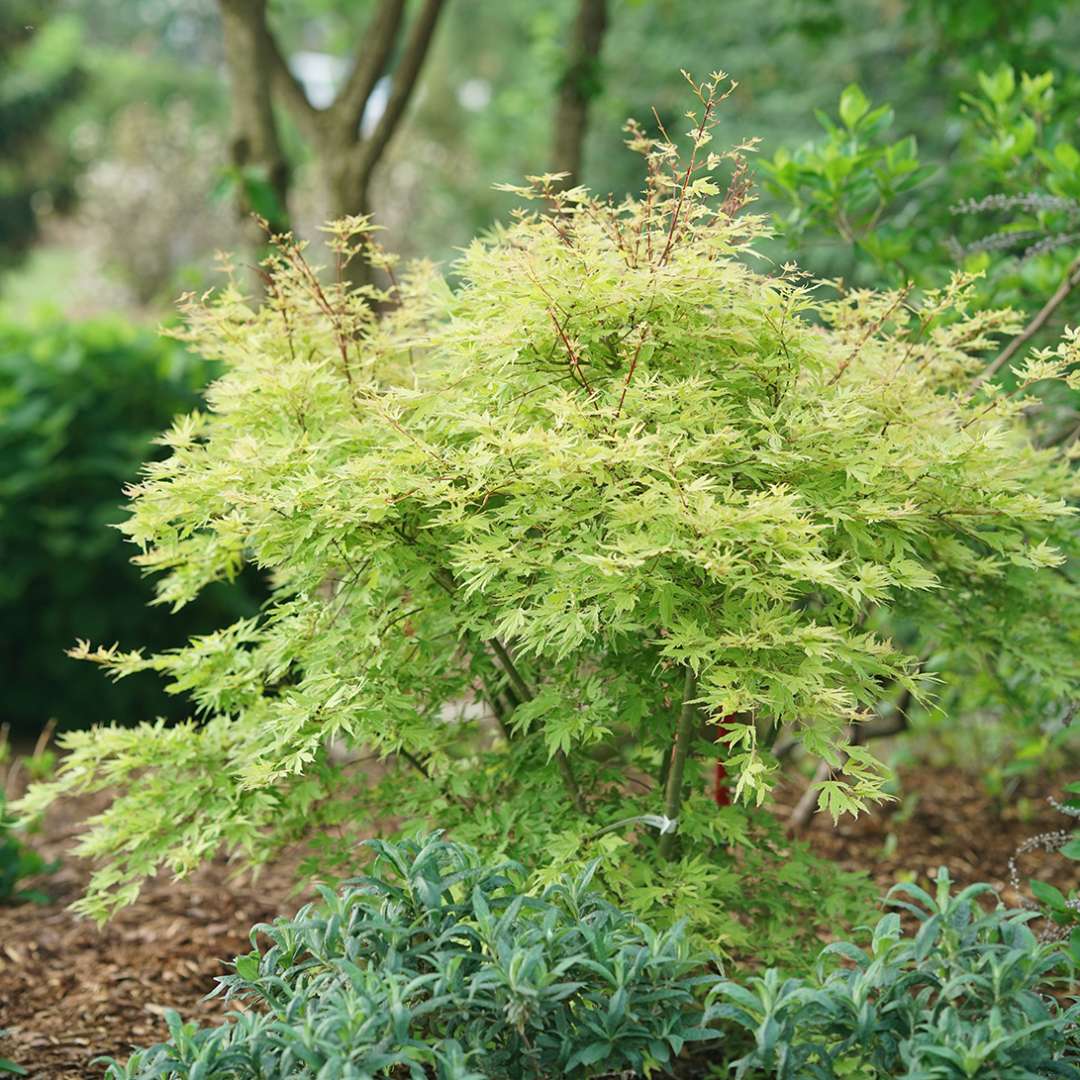
Acer palmatum
Cultivars

Metamorphosa
Acer palmatum 'ARJOS1'
A shrubby Japanese maple noted for the neat texture and ever-changing color of its foliage. In spring, the dissected foliage emerges yellow; a pink margin soon develops, then that shifts to white with shades of reddish-orange in summer. In autumn, the entire leaf transforms to orange-red and eventually red-violet. A finalist in RHS Plant of the Year competition at the Chelsea Flower Show developed by Mr. van Meuwen and Mr. Keijzer of the Netherlands.
'Aconitifolium'
Acer palmatum
Aconitifolium Japanese Maple has large green leaves that are deeply divided and multi-layered. Dramatic fall colors make this one of the most spectacular and desirable of all maples. Fall colors of Aconitifolium Japanese Maple can range from yellow and orange to crimson and even purple. Other names for Aconitifolium are ‘Dancing Peacock’ and ‘Maiku Jaku’. Aconitifolium is an absolutely stunning cultivar! Botanical Name: Acer japonicum ‘Aconitifolium’ USDA Zone: 5 – 9 Average Height: 15′ – 20′ Average Width: 15′ – 20′ Sun Exposure: Sun to part sun Planting/Care Instructions Before planting, have your soil tested to see what amendments are needed. Click this link to check your frost dates: Frost Dates . Choose the right time of the year to plant according to your zone. When you receive your , soak the root ball in water for 20 minutes upon arrival before planting or potting. Gently break up the root ball. This will help the roots grow out into the soil. Dig a hole slightly larger than the root ball of your tree. Fill the hole tightly with soil to avoid any air pockets. Plant your with the root flare above the soil line. Japanese maples planted in the ground generally do not need fertilizer. Container-grown maples can use a bit of slow-release fertilizer. However, variegated cultivars should not be fertilized. Be sure to water your trees. In addition, pull weeds out when they appear. They take nutrients from the soil. Young grafted trees will continue to have new growth on the rootstock for several years. If new buds or branches develop on the rootstock, remove them before they grow larger. If a larger branch develops, use sterile pruners to remove it. Prune trees as needed to encourage growth. Always sterilize your pruners when pruning Japanese maples to prevent the spread of diseases. If you have trouble keeping up with your pruners, check out our locally hand-made leather pruner holster here. Lastly, enjoy your and your time in the garden!
Aka Kawa Hime
Acer palmatum 'Aka Kawa Hime'
Aka Kawa Hime ('small red bark') is a dwarf coral bark Japanese maple. Five-lobed leaves open fresh yellow-green, mature to mid-green and turn gold and red in fall, then drop to show bright coral-red young stems all winter. Slow and upright, about 4 to 6 feet tall and 3 to 4 feet wide.
'Aka Shigatatsu Sawa'
Acer palmatum
Aka Shigatatsu Sawa Japanese Maple has creamy spring/summer leaves with tints of reds and greens in its veins. This maple has a dense canopy with a strong central leader. Aka Shigatatsu Sawa Japanese Maple is great for an accent plant in the landscape or a container. Aka Shigatatsu Sawa turns outstanding shades of reds and oranges in the fall. Botanical Name: Acer palmatum ‘Aka Shigatatsu Sawa’ USDA Zone: 5 – 9 Average Height: 6′ – 8′ Average Width: 6′ – 8′ Sun Exposure: Sun to part sun Planting/Care Instructions Before planting, have your soil tested to see what amendments are needed. Click this link to check your frost dates: Frost Dates . Choose the right time of the year to plant according to your zone. When you receive your , soak the root ball in water for 20 minutes upon arrival before planting or potting. Gently break up the root ball. This will help the roots grow out into the soil. Dig a hole slightly larger than the root ball of your tree. Fill the hole tightly with soil to avoid any air pockets. Plant your with the root flare above the soil line. Japanese maples planted in the ground generally do not need fertilizer. Container-grown maples can use a bit of slow-release fertilizer. However, variegated cultivars should not be fertilized. Be sure to water your trees. In addition, pull weeds out when they appear. They take nutrients from the soil. Young grafted trees will continue to have new growth on the rootstock for several years. If new buds or branches develop on the rootstock, remove them before they grow larger. If a larger branch develops, use sterile pruners to remove it. Prune trees as needed to encourage growth. Always sterilize your pruners when pruning Japanese maples to prevent the spread of diseases. If you have trouble keeping up with your pruners, check out our locally hand-made leather pruner holster here. Lastly, enjoy your and your time in the garden!
'Akaji Nishiki'
Acer palmatum
Akaji Nishiki Japanese Maple is a compact, slow-growing tree that can reach a height of 8 to 10 feet with a spread of 6 to 8 feet. The leaves start in the spring as pinkish-red, then turn green with occasional white variegation in the summer, and finally turn brilliant shades of orange and red in the fall. Akaji Nishiki Japanese Maple is known for its delicate branches and attractive, layered growth habit. Akaji Nishiki Japanese Maple is an excellent addition to any landscape design. Botanical Name: Acer palmatum ‘Akaji Nishiki’ USDA Zone: 5 – 9 Average Height: 8′ – 10′ Average Width: 6′ – 8′ Sun Exposure: Sun to part shade Planting/Care Instructions Before planting, have your soil tested to see what amendments are needed. Click this link to check your frost dates: Frost Dates . Choose the right time of the year to plant according to your zone. When you receive your , soak the root ball in water for 20 minutes upon arrival before planting or potting. Gently break up the root ball. This will help the roots grow out into the soil. Dig a hole slightly larger than the root ball of your tree. Fill the hole tightly with soil to avoid any air pockets. Plant your with the root flare above the soil line. Japanese maples planted in the ground generally do not need fertilizer. Container-grown maples can use a bit of slow-release fertilizer. However, variegated cultivars should not be fertilized. Be sure to water your trees. In addition, pull weeds out when they appear. They take nutrients from the soil. Young grafted trees will continue to have new growth on the rootstock for several years. If new buds or branches develop on the rootstock, remove them before they grow larger. If a larger branch develops, use sterile pruners to remove it. Prune trees as needed to encourage growth. Always sterilize your pruners when pruning Japanese maples to prevent the spread of diseases. If you have trouble keeping up with your pruners, check out our locally hand-made leather pruner holster here. Lastly, enjoy your and your time in the garden!
'Akita Yatsubusa'
Acer palmatum
Akita Yatsubusa Japanese Maple is a slow-growing dwarf variety well-suited for bonsai or our Cedar Boxes. Small leaves emerge bright green in spring, hold their color through summer, then turn warm shades of yellow and orange in fall. With dense branching and short internodes, it develops a compact, layered form and responds very well to pruning. In addition to bonsai, try Akita Yatsubusa Japanese Maple in compact planting areas or rock gardens. Shield from hot afternoon sun for best color. Botanical Name: Acer palmatum ‘Akita Yatsubusa’ USDA Zone: 5 – 9 Average Height: 3 – 4 Average Width: 2 – 4 Sun Exposure: Partial Sun Planting/Care Instructions Before planting, have your soil tested to see what amendments are needed. Click this link to check your frost dates: Frost Dates . Choose the right time of the year to plant according to your zone. When you receive your , soak the root ball in water for 20 minutes upon arrival before planting or potting. Gently break up the root ball. This will help the roots grow out into the soil. Dig a hole slightly larger than the root ball of your tree. Fill the hole tightly with soil to avoid any air pockets. Plant your with the root flare above the soil line. Japanese maples planted in the ground generally do not need fertilizer. Container-grown maples can use a bit of slow-release fertilizer. However, variegated cultivars should not be fertilized. Be sure to water your trees. In addition, pull weeds out when they appear. They take nutrients from the soil. Young grafted trees will continue to have new growth on the rootstock for several years. If new buds or branches develop on the rootstock, remove them before they grow larger. If a larger branch develops, use sterile pruners to remove it. Prune trees as needed to encourage growth. Always sterilize your pruners when pruning Japanese maples to prevent the spread of diseases. If you have trouble keeping up with your pruners, check out our locally hand-made leather pruner holster here. Lastly, enjoy your and your time in the garden!
'Amber Ghost'
Acer palmatum
Amber Ghost Japanese Maple is a stunning cultivar that is highly sought after by garden enthusiasts all over the world. Its name comes from the beautiful amber-colored leaves that adorn its branches. The leaves are reticulated and have a delicate texture that adds to their allure. Amber Ghost Japanese Maple is a slow-growing tree that can reach up to 10 feet tall with a spread of 6-8 feet. In the fall, the leaves turn a vibrant orange-red shade, making it an excellent choice for adding color and visual interest to any landscape. Amber Ghost Japanese Maple is a beautiful, low-maintenance tree that adds elegance to any garden or outdoor space. Botanical Name: Acer palmatum ‘Amber Ghost’ USDA Zone: 5 – 9 Average Height: 8′ – 10′ Average Width: 6′ – 8′ Sun Exposure: Part sun to shade Planting/Care Instructions Before planting, have your soil tested to see what amendments are needed. Click this link to check your frost dates: Frost Dates . Choose the right time of the year to plant according to your zone. When you receive your , soak the root ball in water for 20 minutes upon arrival before planting or potting. Gently break up the root ball. This will help the roots grow out into the soil. Dig a hole slightly larger than the root ball of your tree. Fill the hole tightly with soil to avoid any air pockets. Plant your with the root flare above the soil line. Japanese maples planted in the ground generally do not need fertilizer. Container-grown maples can use a bit of slow-release fertilizer. However, variegated cultivars should not be fertilized. Be sure to water your trees. In addition, pull weeds out when they appear. They take nutrients from the soil. Young grafted trees will continue to have new growth on the rootstock for several years. If new buds or branches develop on the rootstock, remove them before they grow larger. If a larger branch develops, use sterile pruners to remove it. Prune trees as needed to encourage growth. Always sterilize your pruners when pruning Japanese maples to prevent the spread of diseases. If you have trouble keeping up with your pruners, check out our locally hand-made leather pruner holster here. Lastly, enjoy your and your time in the garden!
'Anne Irene'
Acer palmatum
Anne Irene Japanese Maple is a type of small deciduous tree that grows 6 to 8 feet tall. They have an attractive, compact growth habit, making them an ideal choice for small landscapes or container gardens. The foliage of the Anne Irene Japanese Maple is a standout feature, with its delicate, deeply lobed leaves that emerge in yellow with the edges tinged in red. As the leaves mature in summer, they loose the red edging. In fall, they turn a rich, red color, creating a stunning display. Anne Irene Japanese Maple is relatively easy to grow and maintain. Botanical Name: Acer palmatum “Anne Irene” USDA Zone: 5 – 9 Average Height: 6′ – 8′ Average Width: 6′ – 8′ Sun Exposure: Sun to part sun Planting/Care Instructions Before planting, have your soil tested to see what amendments are needed. Click this link to check your frost dates: Frost Dates . Choose the right time of the year to plant according to your zone. When you receive your , soak the root ball in water for 20 minutes upon arrival before planting or potting. Gently break up the root ball. This will help the roots grow out into the soil. Dig a hole slightly larger than the root ball of your tree. Fill the hole tightly with soil to avoid any air pockets. Plant your with the root flare above the soil line. Japanese maples planted in the ground generally do not need fertilizer. Container-grown maples can use a bit of slow-release fertilizer. However, variegated cultivars should not be fertilized. Be sure to water your trees. In addition, pull weeds out when they appear. They take nutrients from the soil. Young, grafted trees will continue to have new growth on the rootstock for several years. If new buds or branches develop on the rootstock, remove them before they grow larger. If a larger branch develops, use sterile pruners to remove it. Prune trees as needed to encourage growth. Always sterilize your pruners when pruning Japanese maples to prevent the spread of diseases. If you have trouble keeping up with your pruners, check out our locally hand-made leather pruner holster here. Lastly, enjoy your and your time in the garden!
'Ao Jutan'
Acer palmatum
Ao Jutan Japanese Maple is small in height, but it makes up for it with its spread of long weeping branches that sweep the ground. Its name, ‘Ao Jutan,’ translates to “blue-green weeper.” Ao Jutan Japanese Maple will make a great addition to your landscape, adding the weeping effect with lace leaf orange fall color. Botanical Name: Acer japonicum ‘Ao Jutan’ USDA Zone: 5 – 9 Average Height: 2′ – 3′ Average Width: 5′ – 6′ Sun Exposure: Sun to part sun Planting/Care Instructions Before planting, have your soil tested to see what amendments are needed. Click this link to check your frost dates: Frost Dates . Choose the right time of the year to plant according to your zone. When you receive your , soak the root ball in water for 20 minutes upon arrival before planting or potting. Gently break up the root ball. This will help the roots grow out into the soil. Dig a hole slightly larger than the root ball of your tree. Fill the hole tightly with soil to avoid any air pockets. Plant your with the root flare above the soil line. Japanese maples planted in the ground generally do not need fertilizer. Container-grown maples can use a bit of slow-release fertilizer. However, variegated cultivars should not be fertilized. Be sure to water your trees. In addition, pull weeds out when they appear. They take nutrients from the soil. Young, grafted trees will continue to have new growth on the rootstock for several years. If new buds or branches develop on the rootstock, remove them before they grow larger. If a larger branch develops, use sterile pruners to remove it. Prune trees as needed to encourage growth. Always sterilize your pruners when pruning Japanese maples to prevent the spread of diseases. If you have trouble keeping up with your pruners, check out our locally hand-made leather pruner holster here. Lastly, enjoy your and your time in the garden!
'Arakawa'
Acer palmatum
Arakawa Japanese Maple is prized for its rugged, corky trunk and branches, which resemble alligator skin and become more pronounced with age. It is commonly called the rough bark maple. It is also popular for bonsai. Fresh green spring leaves deepen to a rich green throughout summer and, in autumn, ignite into vivid shades of orange, red, and gold, creating a striking contrast against the rough bark. More tolerant of sun than other Japanese maples and able to adapt to a wide variety of landscapes, Arakawa Japanese Maple is the perfect blend of durability, beauty, and year-round interest. Botanical Name: Acer palmatum ‘Arakawa’ USDA Zone: 5 – 9 Average Height: 15 – 20 Average Width: 10 – 15 Sun Exposure: Sun to Part Sun Planting/Care Instructions Before planting, have your soil tested to see what amendments are needed. Click this link to check your frost dates: Frost Dates . Choose the right time of the year to plant according to your zone. When you receive your , soak the root ball in water for 20 minutes upon arrival before planting or potting. Gently break up the root ball. This will help the roots grow out into the soil. Dig a hole slightly larger than the root ball of your tree. Fill the hole tightly with soil to avoid any air pockets. Plant your with the root flare above the soil line. Japanese maples planted in the ground generally do not need fertilizer. Container-grown maples can use a bit of slow-release fertilizer. However, variegated cultivars should not be fertilized. Be sure to water your trees. In addition, pull weeds out when they appear. They take nutrients from the soil. Young grafted trees will continue to have new growth on the rootstock for several years. If new buds or branches develop on the rootstock, remove them before they grow larger. If a larger branch develops, use sterile pruners to remove it. Prune trees as needed to encourage growth. Always sterilize your pruners when pruning Japanese maples to prevent the spread of diseases. If you have trouble keeping up with your pruners, check out our locally hand-made leather pruner holster here. Lastly, enjoy your and your time in the garden!
'Ariadne'
Acer palmatum
Ariadne Japanese Maple has deeply cut leaves that appear in striking new growth of marbled pastel shades like pink and orange with yellow-green veins. Foliage becomes red veined in summer. Fall colors are red, pink and orange while the veins remain green. Ariadne Japanese Maple makes a striking contrast to other plants with yellow or green foliage. Botanical Name: Acer palmatum ‘Ariadne’ USDA Zone: 5 – 8 Average Height: 8′ – 10′ Average Width: 10′ – 12′ Sun Exposure: Partial sun to partial shade Planting/Care Instructions Before planting, have your soil tested to see what amendments are needed. Click this link to check your frost dates: Frost Dates . Choose the right time of the year to plant according to your zone. When you receive your , soak the root ball in water for 20 minutes upon arrival before planting or potting. Gently break up the root ball. This will help the roots grow out into the soil. Dig a hole slightly larger than the root ball of your tree. Fill the hole tightly with soil to avoid any air pockets. Plant your with the root flare above the soil line. Japanese maples planted in the ground generally do not need fertilizer. Container-grown maples can use a bit of slow-release fertilizer. However, variegated cultivars should not be fertilized. Be sure to water your trees. In addition, pull weeds out when they appear. They take nutrients from the soil. Young, grafted trees will continue to have new growth on the rootstock for several years. If new buds or branches develop on the rootstock, remove them before they grow larger. If a larger branch develops, use sterile pruners to remove it. Prune trees as needed to encourage growth. Always sterilize your pruners when pruning Japanese maples to prevent the spread of diseases. If you have trouble keeping up with your pruners, check out our locally hand-made leather pruner holster here. Lastly, enjoy your and your time in the garden!
'Asagi Nishiki'
Acer palmatum
Asagi Nishiki Japanese Maple is a slow growing small tree with a bushy form. The uniquely variegated leaves emerge in shades of apricot and pink, then turn a light green with creamy edges in summer. Fall color is a beautiful red. Botanical Name: Acer palmatum ‘Asagi Nishiki’ USDA Zone: 5 – 9 Average Height: 7′ – 8′ Average Width: 3′ – 4′ Sun Exposure: Sun Planting/Care Instructions Before planting, have your soil tested to see what amendments are needed. Click this link to check your frost dates: Frost Dates . Choose the right time of the year to plant according to your zone. When you receive your , soak the root ball in water for 20 minutes upon arrival before planting or potting. Gently break up the root ball. This will help the roots grow out into the soil. Dig a hole slightly larger than the root ball of your tree. Fill the hole tightly with soil to avoid any air pockets. Plant your with the root flare above the soil line. Japanese maples planted in the ground generally do not need fertilizer. Container-grown maples can use a bit of slow-release fertilizer. However, variegated cultivars should not be fertilized. Be sure to water your trees. In addition, pull weeds out when they appear. They take nutrients from the soil. Young, grafted trees will continue to have new growth on the rootstock for several years. If new buds or branches develop on the rootstock, remove them before they grow larger. If a larger branch develops, use sterile pruners to remove it. Prune trees as needed to encourage growth. Always sterilize your pruners when pruning Japanese maples to prevent the spread of diseases. If you have trouble keeping up with your pruners, check out our locally hand-made leather pruner holster here. Lastly, enjoy your and your time in the garden!
'Asahi Zuru'
Acer palmatum
Asahi Zuru Japanese Maple is a beautiful and unique variety of Japanese maple tree. In the spring, the leaves emerge in shades of pink, red, and green, creating a beautiful contrast that will catch the eye. As the season progresses, the leaves turn a deeper shade of green with pink and white variegation, and in the fall, they change to a brilliant yellow-orange hue. Asahi Zuru Japanese Maple is a relatively small tree that grows 10-12 feet tall. It is an excellent choice for a small garden or a statement piece in a larger landscaping project. Its delicate and unique appearance makes it a famous tree among gardeners and nature enthusiasts. Afternoon shade is suggested. Botanical Name: Acer palmatum ‘Asahi Zuru’ USDA Zone: 5 – 9 Average Height: 10′ – 12′ Average Width: 6′ – 8′ Sun Exposure: Part Shade Planting/Care Instructions Before planting, have your soil tested to see what amendments are needed. Click this link to check your frost dates: Frost Dates . Choose the right time of the year to plant according to your zone. When you receive your , soak the root ball in water for 20 minutes upon arrival before planting or potting. Gently break up the root ball. This will help the roots grow out into the soil. Dig a hole slightly larger than the root ball of your tree. Fill the hole tightly with soil to avoid any air pockets. Plant your with the root flare above the soil line. Japanese maples planted in the ground generally do not need fertilizer. Container-grown maples can use a bit of slow-release fertilizer. However, variegated cultivars should not be fertilized. Be sure to water your trees. In addition, pull weeds out when they appear. They take nutrients from the soil. Young, grafted trees will continue to have new growth on the rootstock for several years. If new buds or branches develop on the rootstock, remove them before they grow larger. If a larger branch develops, use sterile pruners to remove it. Prune trees as needed to encourage growth. Always sterilize your pruners when pruning Japanese maples to prevent the spread of diseases. If you have trouble keeping up with your pruners, check out our locally hand-made leather pruner holster here. Lastly, enjoy your and your time in the garden!
Atrolineare
Acer palmatum 'Atrolineare'
Atrolineare is a ribbon-leaf (linearilobum) Japanese maple with long, narrow, strap-like lobes. Leaves open dark red in spring, bronze toward green in summer and turn bright red in fall. A dense, upright small tree, about 6 to 7 feet in 10 years and rarely over 10; good in containers and for bonsai.
'Aureum'
Acer palmatum
Aureum Japanese Maple is commonly known as Golden Full Moon Maple. Aureum is a stunning, slow growing Shirasawanum maple that lights up any shady spot with brilliant yellow-green color all season. Fall colors are orange and red. Aureum Japanese Maple needs protection from intense afternoon sunlight. Botanical Name: Acer shirasawanum ‘Aureum’ USDA Zone: 5 – 8 Average Height: 8′ Average Width: 6′ Sun Exposure: Part shade Planting/Care Instructions Before planting, have your soil tested to see what amendments are needed. Click this link to check your frost dates: Frost Dates . Choose the right time of the year to plant according to your zone. When you receive your , soak the root ball in water for 20 minutes upon arrival before planting or potting. Gently break up the root ball. This will help the roots grow out into the soil. Dig a hole slightly larger than the root ball of your tree. Fill the hole tightly with soil to avoid any air pockets. Plant your with the root flare above the soil line. Japanese maples planted in the ground generally do not need fertilizer. Container-grown maples can use a bit of slow-release fertilizer. However, variegated cultivars should not be fertilized. Be sure to water your trees. In addition, pull weeds out when they appear. They take nutrients from the soil. Young, grafted trees will continue to have new growth on the rootstock for several years. If new buds or branches develop on the rootstock, remove them before they grow larger. If a larger branch develops, use sterile pruners to remove it. Prune trees as needed to encourage growth. Always sterilize your pruners when pruning Japanese maples to prevent the spread of diseases. If you have trouble keeping up with your pruners, check out our locally hand-made leather pruner holster here. Lastly, enjoy your and your time in the garden!
'Autumn Fire'
Acer palmatum
Autumn Fire Japanese Maple is a green dissectum that forms a beautiful mushroom shaped mound. The uniquely dissected foliage emerges light green in the spring edged with pink. During summer, the pink fades and the leaves turn a darker green. Fall color is an intense mixture of orange and red. Branches are a brilliant red in summer as well. Autumn Fire Japanese Maple is an ideal tree with great shape, habit and fall colors. The most outstanding feature of this tree is the brilliant red fall colors, as suggested by the name. Botanical Name: Acer palmatum dissectum ‘Autumn Fire’ USDA Zone: 5 – 9 Average Height: 3′ – 5′ in 10 years Average Width: 6′ – 8′ Sun Exposure: Sun/afternoon shade Planting/Care Instructions Before planting, have your soil tested to see what amendments are needed. Click this link to check your frost dates: Frost Dates . Choose the right time of the year to plant according to your zone. When you receive your , soak the root ball in water for 20 minutes upon arrival before planting or potting. Gently break up the root ball. This will help the roots grow out into the soil. Dig a hole slightly larger than the root ball of your tree. Fill the hole tightly with soil to avoid any air pockets. Plant your with the root flare above the soil line. Japanese maples planted in the ground generally do not need fertilizer. Container-grown maples can use a bit of slow-release fertilizer. However, variegated cultivars should not be fertilized. Be sure to water your trees. In addition, pull weeds out when they appear. They take nutrients from the soil. Young, grafted trees will continue to have new growth on the rootstock for several years. If new buds or branches develop on the rootstock, remove them before they grow larger. If a larger branch develops, use sterile pruners to remove it. Prune trees as needed to encourage growth. Always sterilize your pruners when pruning Japanese maples to prevent the spread of diseases. If you have trouble keeping up with your pruners, check out our locally hand-made leather pruner holster here. Lastly, enjoy your and your time in the garden!
'Autumn Moon'
Acer palmatum
Autumn Moon Japanese Maple is a stunning Shirasawanum cultivar. It feathers dramatic pink/orange color with chartreuse undertones. More light yields better coloration on the Autumn Moon Japanese Maple. It has exceptional fall colors of gold to red. Mature size is 10′ – 12′ in 10 years. Botanical Name: Acer shirasawanum ‘Autumn Moon’ USDA Zone: 5 – 8 Average Height: 7′ Average Width: 4′ Sun Exposure: Best color in full sun, but benefits from some afternoon shade Planting/Care Instructions Before planting, have your soil tested to see what amendments are needed. Click this link to check your frost dates: Frost Dates . Choose the right time of the year to plant according to your zone. When you receive your , soak the root ball in water for 20 minutes upon arrival before planting or potting. Gently break up the root ball. This will help the roots grow out into the soil. Dig a hole slightly larger than the root ball of your tree. Fill the hole tightly with soil to avoid any air pockets. Plant your with the root flare above the soil line. Japanese maples planted in the ground generally do not need fertilizer. Container-grown maples can use a bit of slow-release fertilizer. However, variegated cultivars should not be fertilized. Be sure to water your trees. In addition, pull weeds out when they appear. They take nutrients from the soil. Young, grafted trees will continue to have new growth on the rootstock for several years. If new buds or branches develop on the rootstock, remove them before they grow larger. If a larger branch develops, use sterile pruners to remove it. Prune trees as needed to encourage growth. Always sterilize your pruners when pruning Japanese maples to prevent the spread of diseases. If you have trouble keeping up with your pruners, check out our locally hand-made leather pruner holster here. Lastly, enjoy your and your time in the garden!
'Baby Ghost'
Acer palmatum
Baby Ghost Japanese Maple is rare, with its width matching its height. This stunning tree has red and purple leaves that start in spring with red, changing to reddish-purple in summer, then turning bright red in the fall. Baby Ghost Japanese Maple will make a great statement piece in the landscape. Botanical Name: Acer palmatum ‘Baby Ghost’ USDA Zone: 5 – 9 Average Height: 8′ – 10′ Average Width: 8′ – 10′ Sun Exposure: Sun to part sun Planting/Care Instructions Before planting, have your soil tested to see what amendments are needed. Click this link to check your frost dates: Frost Dates . Choose the right time of the year to plant according to your zone. When you receive your , soak the root ball in water for 20 minutes upon arrival before planting or potting. Gently break up the root ball. This will help the roots grow out into the soil. Dig a hole slightly larger than the root ball of your tree. Fill the hole tightly with soil to avoid any air pockets. Plant your with the root flare above the soil line. Japanese maples planted in the ground generally do not need fertilizer. Container-grown maples can use a bit of slow-release fertilizer. However, variegated cultivars should not be fertilized. Be sure to water your trees. In addition, pull weeds out when they appear. They take nutrients from the soil. Young grafted trees will continue to have new growth on the rootstock for several years. If new buds or branches develop on the rootstock, remove them before they grow larger. If a larger branch develops, use sterile pruners to remove it. Prune trees as needed to encourage growth. Always sterilize your pruners when pruning Japanese maples to prevent the spread of diseases. If you have trouble keeping up with your pruners, check out our locally hand-made leather pruner holster here. Lastly, enjoy your and your time in the garden!
'Baby Lace'
Acer palmatum
Baby Lace Japanese Maple has small, delicate threadlike leaves that emerge red and orange in spring. Fall colors are orange and red. The finely dissected leaves become smaller as the tree ages. Baby Lace Japanese maple is the first lace-leaf witches broom to be discovered. Botanical Name: Acer palmatum dissectum ‘Baby Lace’ USDA Zone: 5 – 8 Average Height: 4′ – 6′ Average Width: 3′ – 5′ Sun Exposure: Morning sun/Evening shade Planting/Care Instructions Before planting, have your soil tested to see what amendments are needed. Click this link to check your frost dates: Frost Dates . Choose the right time of the year to plant according to your zone. When you receive your , soak the root ball in water for 20 minutes upon arrival before planting or potting. Gently break up the root ball. This will help the roots grow out into the soil. Dig a hole slightly larger than the root ball of your tree. Fill the hole tightly with soil to avoid any air pockets. Plant your with the root flare above the soil line. Japanese maples planted in the ground generally do not need fertilizer. Container-grown maples can use a bit of slow-release fertilizer. However, variegated cultivars should not be fertilized. Be sure to water your trees. In addition, pull weeds out when they appear. They take nutrients from the soil. Young, grafted trees will continue to have new growth on the rootstock for several years. If new buds or branches develop on the rootstock, remove them before they grow larger. If a larger branch develops, use sterile pruners to remove it. Prune trees as needed to encourage growth. Always sterilize your pruners when pruning Japanese maples to prevent the spread of diseases. If you have trouble keeping up with your pruners, check out our locally hand-made leather pruner holster here. Lastly, enjoy your and your time in the garden!
'Baldsmith'
Acer palmatum
Baldsmith Japanese Maple is a distinctive laceleaf maple with a show of color like no other. The finely dissected leaves emerge in spring as bright orange/red. Summer colors are green tinged with pink and orange. Autumn colors bring bright yellow with orange and red hues. Baldsmith Japanese Maple is a slow grower with a weeping, cascading/pendulous habit. Botanical Name: Acer palmatum dissectum ‘Baldsmith’ USDA Zone: 5 – 9 Average Height: 6′ – 8′ in 10 years Average Width: 10′ Sun Exposure: Full to partial sun Planting/Care Instructions Before planting, have your soil tested to see what amendments are needed. Click this link to check your frost dates: Frost Dates . Choose the right time of the year to plant according to your zone. When you receive your , soak the root ball in water for 20 minutes upon arrival before planting or potting. Gently break up the root ball. This will help the roots grow out into the soil. Dig a hole slightly larger than the root ball of your tree. Fill the hole tightly with soil to avoid any air pockets. Plant your with the root flare above the soil line. Japanese maples planted in the ground generally do not need fertilizer. Container-grown maples can use a bit of slow-release fertilizer. However, variegated cultivars should not be fertilized. Be sure to water your trees. In addition, pull weeds out when they appear. They take nutrients from the soil. Young, grafted trees will continue to have new growth on the rootstock for several years. If new buds or branches develop on the rootstock, remove them before they grow larger. If a larger branch develops, use sterile pruners to remove it. Prune trees as needed to encourage growth. Always sterilize your pruners when pruning Japanese maples to prevent the spread of diseases. If you have trouble keeping up with your pruners, check out our locally hand-made leather pruner holster here. Lastly, enjoy your and your time in the garden!
'Baton Rouge'
Acer palmatum
Baton Rouge Japanese Maple has flaming red, waxy looking bark in the winter that dazzles the drab winter landscape with color. The leaves have some red tipping in the spring for a nice contrast to the branches. Nice bronzing of the leaves when placed in full sun. Fall color is bright yellows with some orange and red which really makes a show against the fiery bark! Does very well in the sun and heat, even in the south. Tends to become even more beautiful in the full sun. Botanical Name: Acer palmatum ‘Baton Rouge’ USDA Zone: 5 – 8 Average Height: 10′ – 12′ Average Width: 8′ Sun Exposure: Full sun to part shade Planting/Care Instructions Before planting, have your soil tested to see what amendments are needed. Click this link to check your frost dates: Frost Dates . Choose the right time of the year to plant according to your zone. When you receive your , soak the root ball in water for 20 minutes upon arrival before planting or potting. Gently break up the root ball. This will help the roots grow out into the soil. Dig a hole slightly larger than the root ball of your tree. Fill the hole tightly with soil to avoid any air pockets. Plant your with the root flare above the soil line. Japanese maples planted in the ground generally do not need fertilizer. Container-grown maples can use a bit of slow-release fertilizer. However, variegated cultivars should not be fertilized. Be sure to water your trees. In addition, pull weeds out when they appear. They take nutrients from the soil. Young, grafted trees will continue to have new growth on the rootstock for several years. If new buds or branches develop on the rootstock, remove them before they grow larger. If a larger branch develops, use sterile pruners to remove it. Prune trees as needed to encourage growth. Always sterilize your pruners when pruning Japanese maples to prevent the spread of diseases. If you have trouble keeping up with your pruners, check out our locally hand-made leather pruner holster here. Lastly, enjoy your and your time in the garden!
'Beni Hagoromo'
Acer palmatum
Beni Hagoromo Japanese Maple stands out with its long, narrow, deeply divided leaves that resemble lacey ribbons or feathers. In fact, ‘Hagoromo’ translates to ‘Angel feather’, and ‘Beni’ to ‘Red’, which together perfectly describe this cultivar. Wispy new growth emerges maroon, maturing to a forest green that is streaked with red throughout summer. Fall foliage transforms into brilliant shades of orange and red. Beni Hagoromo Japanese Maple grows with an upright, spreading habit. Botanical Name: Acer palmatum ‘Beni Hagoromo’ USDA Zone: 5 – 9 Average Height: 10 – 15 Average Width: 4 – 7 Sun Exposure: Sun to Part Sun Planting/Care Instructions Before planting, have your soil tested to see what amendments are needed. Click this link to check your frost dates: Frost Dates . Choose the right time of the year to plant according to your zone. When you receive your , soak the root ball in water for 20 minutes upon arrival before planting or potting. Gently break up the root ball. This will help the roots grow out into the soil. Dig a hole slightly larger than the root ball of your tree. Fill the hole tightly with soil to avoid any air pockets. Plant your with the root flare above the soil line. Japanese maples planted in the ground generally do not need fertilizer. Container-grown maples can use a bit of slow-release fertilizer. However, variegated cultivars should not be fertilized. Be sure to water your trees. In addition, pull weeds out when they appear. They take nutrients from the soil. Young grafted trees will continue to have new growth on the rootstock for several years. If new buds or branches develop on the rootstock, remove them before they grow larger. If a larger branch develops, use sterile pruners to remove it. Prune trees as needed to encourage growth. Always sterilize your pruners when pruning Japanese maples to prevent the spread of diseases. If you have trouble keeping up with your pruners, check out our locally hand-made leather pruner holster here. Lastly, enjoy your and your time in the garden!
'Beni Kawa'
Acer palmatum
Beni Kawa Japanese Maple is in the coral bark family. It holds its color through the heat of summer. To get the most colorful bark, it needs lots of winter sun and cold. Beni kawa is said to be very cold hardy. This a very close cousin of the Sango Kaku and the bark is darker. Botanical Name: Acer palmatum ‘Beni Kawa’ USDA Zone: 5 – 8 Average Height: 12′ – 15′ Average Width: 10′ Sun Exposure: Full sun to part shade Planting/Care Instructions Before planting, have your soil tested to see what amendments are needed. Click this link to check your frost dates: Frost Dates . Choose the right time of the year to plant according to your zone. When you receive your , soak the root ball in water for 20 minutes upon arrival before planting or potting. Gently break up the root ball. This will help the roots grow out into the soil. Dig a hole slightly larger than the root ball of your tree. Fill the hole tightly with soil to avoid any air pockets. Plant your with the root flare above the soil line. Japanese maples planted in the ground generally do not need fertilizer. Container-grown maples can use a bit of slow-release fertilizer. However, variegated cultivars should not be fertilized. Be sure to water your trees. In addition, pull weeds out when they appear. They take nutrients from the soil. Young, grafted trees will continue to have new growth on the rootstock for several years. If new buds or branches develop on the rootstock, remove them before they grow larger. If a larger branch develops, use sterile pruners to remove it. Prune trees as needed to encourage growth. Always sterilize your pruners when pruning Japanese maples to prevent the spread of diseases. If you have trouble keeping up with your pruners, check out our locally hand-made leather pruner holster here. Lastly, enjoy your and your time in the garden!
'Beni Komachi'
Acer palmatum
Beni Komachi Japanese Maple is a densely branched semi-dwarf cultivar. It has unusual delicately curled leaves that emerge bright red in spring darkening to reddish/green. Beautiful scarlet color in fall. Beni Komachi Japanese Maple is perfect for bonsai and container growing. The name Beni Komachi translates to ‘beautiful red haired little girl’. Botanical Name: Acer palmatum ‘Beni Komachi’ USDA Zone: 5 – 9 Average Height: 6′ – 9′ Average Width: 6′ Sun Exposure: Full sun to partial shade Planting/Care Instructions Before planting, have your soil tested to see what amendments are needed. Click this link to check your frost dates: Frost Dates . Choose the right time of the year to plant according to your zone. When you receive your , soak the root ball in water for 20 minutes upon arrival before planting or potting. Gently break up the root ball. This will help the roots grow out into the soil. Dig a hole slightly larger than the root ball of your tree. Fill the hole tightly with soil to avoid any air pockets. Plant your with the root flare above the soil line. Japanese maples planted in the ground generally do not need fertilizer. Container-grown maples can use a bit of slow-release fertilizer. However, variegated cultivars should not be fertilized. Be sure to water your trees. In addition, pull weeds out when they appear. They take nutrients from the soil. Young grafted trees will continue to have new growth on the rootstock for several years. If new buds or branches develop on the rootstock, remove them before they grow larger. If a larger branch develops, use sterile pruners to remove it. Prune trees as needed to encourage growth. Always sterilize your pruners when pruning Japanese maples to prevent the spread of diseases. If you have trouble keeping up with your pruners, check out our locally hand-made leather pruner holster here. Lastly, enjoy your and your time in the garden!
'Beni Kumo No Su'
Acer palmatum
Beni Kumo No Su Japanese Maple is a small growing tree with a weeping growth pattern and lace-like leaves that add a different texture to any landscape. Beni Kumo No Su Japanese Maple has bright red leaves that emerge in the spring and age to a deep maroon color in the summer. The fall color is a bright red. Beni Kumo No Su Japanese Maple makes an excellent tree for containers or small gardens. Botanical Name: Acer palmatum dissectum ‘Beni Kumo No Su’ USDA Zone: 5-9 Average Height: 4′-6′ Average Width: 4′-6′ Sun Exposure: Sun to Part Sun Planting/Care Instructions Before planting, have your soil tested to see what amendments are needed. Click this link to check your frost dates: Frost Dates . Choose the right time of the year to plant according to your zone. When you receive your , soak the root ball in water for 20 minutes upon arrival before planting or potting. Gently break up the root ball. This will help the roots grow out into the soil. Dig a hole slightly larger than the root ball of your tree. Fill the hole tightly with soil to avoid any air pockets. Plant your with the root flare above the soil line. Japanese maples planted in the ground generally do not need fertilizer. Container-grown maples can use a bit of slow-release fertilizer. However, variegated cultivars should not be fertilized. Be sure to water your trees. In addition, pull weeds out when they appear. They take nutrients from the soil. Young, grafted trees will continue to have new growth on the rootstock for several years. If new buds or branches develop on the rootstock, remove them before they grow larger. If a larger branch develops, use sterile pruners to remove it. Prune trees as needed to encourage growth. Always sterilize your pruners when pruning Japanese maples to prevent the spread of diseases. If you have trouble keeping up with your pruners, check out our locally hand-made leather pruner holster here. Lastly, enjoy your and your time in the garden!
'Beni Maiko'
Acer palmatum
Beni Maiko Japanese Maple is a stunning maple for season-long contrast. With bright cherry red new growth in the spring turning to green red in the summer, followed by the brilliant fire engine red in the fall, Beni Maiko Japanese Maple will be a showstopper in your landscape. ‘Beni Maiko’ translates to “Red Haired Dancing Girl” in western Japan, giving credit to the Beni Maiko Japanese Maple’s beauty. Botanical Name: Acer palmatum “Beni Maiko’ USDA Zone: 5 – 9 Average Height: 4′ – 6′ Average Width: 4′ – 6′ Sun Exposure: Sun to part sun Planting/Care Instructions Before planting, have your soil tested to see what amendments are needed. Click this link to check your frost dates: Frost Dates . Choose the right time of the year to plant according to your zone. When you receive your , soak the root ball in water for 20 minutes upon arrival before planting or potting. Gently break up the root ball. This will help the roots grow out into the soil. Dig a hole slightly larger than the root ball of your tree. Fill the hole tightly with soil to avoid any air pockets. Plant your with the root flare above the soil line. Japanese maples planted in the ground generally do not need fertilizer. Container-grown maples can use a bit of slow-release fertilizer. However, variegated cultivars should not be fertilized. Be sure to water your trees. In addition, pull weeds out when they appear. They take nutrients from the soil. Young, grafted trees will continue to have new growth on the rootstock for several years. If new buds or branches develop on the rootstock, remove them before they grow larger. If a larger branch develops, use sterile pruners to remove it. Prune trees as needed to encourage growth. Always sterilize your pruners when pruning Japanese maples to prevent the spread of diseases. If you have trouble keeping up with your pruners, check out our locally hand-made leather pruner holster here. Lastly, enjoy your and your time in the garden!
'Beni Otake'
Acer palmatum
Beni Otake Japanese Maple is an upright tree that has deeply lobed red leaves. It holds it color well through the summer. Beni Otake means ‘Big Red Bamboo’ in Japanese. This is a dwarf variety that fits perfectly in the ground or a container. The fall color is fiery red. Beni Otake Japanese Maple will bring years of enjoyment to your landscape. Very little pruning required for this cultivar. Botanical Name: Acer palmatum ‘Beni Otake’ USDA Zone: 5 – 9 Average Height: 8′ – 10′ Average Width: 3′ – 4′ Sun Exposure: Sun Planting/Care Instructions Before planting, have your soil tested to see what amendments are needed. Click this link to check your frost dates: Frost Dates . Choose the right time of the year to plant according to your zone. When you receive your , soak the root ball in water for 20 minutes upon arrival before planting or potting. Gently break up the root ball. This will help the roots grow out into the soil. Dig a hole slightly larger than the root ball of your tree. Fill the hole tightly with soil to avoid any air pockets. Plant your with the root flare above the soil line. Japanese maples planted in the ground generally do not need fertilizer. Container-grown maples can use a bit of slow-release fertilizer. However, variegated cultivars should not be fertilized. Be sure to water your trees. In addition, pull weeds out when they appear. They take nutrients from the soil. Young, grafted trees will continue to have new growth on the rootstock for several years. If new buds or branches develop on the rootstock, remove them before they grow larger. If a larger branch develops, use sterile pruners to remove it. Prune trees as needed to encourage growth. Always sterilize your pruners when pruning Japanese maples to prevent the spread of diseases. If you have trouble keeping up with your pruners, check out our locally hand-made leather pruner holster here. Lastly, enjoy your and your time in the garden!
'Beni Schichihenge'
Acer palmatum
Beni Schichihenge Japanese Maple is a variegated semi-dwarf maple that starts out with fresh green leaves edged in white and pink. While most Japanese maples are prized for their fall color, the Beni Schichihenge really shines in spring. The Japanese translation for Beni Schichihenge means red and changing. The variegation of Beni Schichihenge Japanese Maple makes every leaf seem unique. The pink fades slightly to a cream color through fall. Fall color is a bright magenta. Botanical Name: Acer palmatum ‘Beni Schichihenge’ USDA Zone: 5 – 8 Average Height: 10′ – 18′ Average Width: 8′ – 15′ Sun Exposure: Partial sun to open shade Planting/Care Instructions Before planting, have your soil tested to see what amendments are needed. Click this link to check your frost dates: Frost Dates . Choose the right time of the year to plant according to your zone. When you receive your , soak the root ball in water for 20 minutes upon arrival before planting or potting. Gently break up the root ball. This will help the roots grow out into the soil. Dig a hole slightly larger than the root ball of your tree. Fill the hole tightly with soil to avoid any air pockets. Plant your with the root flare above the soil line. Japanese maples planted in the ground generally do not need fertilizer. Container-grown maples can use a bit of slow-release fertilizer. However, variegated cultivars should not be fertilized. Be sure to water your trees. In addition, pull weeds out when they appear. They take nutrients from the soil. Young, grafted trees will continue to have new growth on the rootstock for several years. If new buds or branches develop on the rootstock, remove them before they grow larger. If a larger branch develops, use sterile pruners to remove it. Prune trees as needed to encourage growth. Always sterilize your pruners when pruning Japanese maples to prevent the spread of diseases. If you have trouble keeping up with your pruners, check out our locally hand-made leather pruner holster here. Lastly, enjoy your and your time in the garden!
'Beni Shi En'
Acer palmatum
Beni Shi En Japanese Maple is a stunning variegated maple with deeply cut leaves. It leafs out in spring in a rosy or purple color with irregular lime variegation on the edges of the leaves. Summer brings green and red colors while still holding the variegation. Fall brings out the deeper reds and purples. Botanical Name: Acer palmatum ‘Beni Shi En’ USDA Zone: 5 – 9 Average Height: 10′ – 12′ Average Width: 5′ Sun Exposure: Sun to shade Planting/Care Instructions Before planting, have your soil tested to see what amendments are needed. Click this link to check your frost dates: Frost Dates . Choose the right time of the year to plant according to your zone. When you receive your , soak the root ball in water for 20 minutes upon arrival before planting or potting. Gently break up the root ball. This will help the roots grow out into the soil. Dig a hole slightly larger than the root ball of your tree. Fill the hole tightly with soil to avoid any air pockets. Plant your with the root flare above the soil line. Japanese maples planted in the ground generally do not need fertilizer. Container-grown maples can use a bit of slow-release fertilizer. However, variegated cultivars should not be fertilized. Be sure to water your trees. In addition, pull weeds out when they appear. They take nutrients from the soil. Young, grafted trees will continue to have new growth on the rootstock for several years. If new buds or branches develop on the rootstock, remove them before they grow larger. If a larger branch develops, use sterile pruners to remove it. Prune trees as needed to encourage growth. Always sterilize your pruners when pruning Japanese maples to prevent the spread of diseases. If you have trouble keeping up with your pruners, check out our locally hand-made leather pruner holster here. Lastly, enjoy your and your time in the garden!
'Black Lace'
Acer palmatum
Black Lace Japanese Maple has a dark red color leaf that is somewhat lacy in texture. Deeply divided lobes gives it a shimmering look. This maple adds a darker color to your landscape that contrasts great with bright flowers or lighter foliage plants. Black Lace Japanese Maple will turn a bright red in the fall. Botanical Name: Acer palmatum ‘Black Lace’ USDA Zone: 5 – 9 Average Height: 8′ – 10′ Average Width: 4′ – 6′ Sun Exposure: Sun to part sun Planting/Care Instructions Before planting, have your soil tested to see what amendments are needed. Click this link to check your frost dates: Frost Dates . Choose the right time of the year to plant according to your zone. When you receive your , soak the root ball in water for 20 minutes upon arrival before planting or potting. Gently break up the root ball. This will help the roots grow out into the soil. Dig a hole slightly larger than the root ball of your tree. Fill the hole tightly with soil to avoid any air pockets. Plant your with the root flare above the soil line. Japanese maples planted in the ground generally do not need fertilizer. Container-grown maples can use a bit of slow-release fertilizer. However, variegated cultivars should not be fertilized. Be sure to water your trees. In addition, pull weeds out when they appear. They take nutrients from the soil. Young, grafted trees will continue to have new growth on the rootstock for several years. If new buds or branches develop on the rootstock, remove them before they grow larger. If a larger branch develops, use sterile pruners to remove it. Prune trees as needed to encourage growth. Always sterilize your pruners when pruning Japanese maples to prevent the spread of diseases. If you have trouble keeping up with your pruners, check out our locally hand-made leather pruner holster here. Lastly, enjoy your and your time in the garden!
'Bloodgood'
Acer palmatum
Bloodgood Japanese Maple is one of the hardiest of the Japanese maples, tolerating sun well. The foliage is a beautiful burgundy red throughout summer, turning a brilliant red in fall. Bloodgood is a favorite of landscapers and homeowners alike due to the beautiful three season colors. Bloodgood Japanese Maple makes a stunning specimen tree for your landscape! Botanical Name: Acer palmatum ‘Bloodgood’ USDA Zone: 5 – 8 Average Height: 15′ Average Width: 15′ Sun Exposure: Full to partial sun Planting/Care Instructions Before planting, have your soil tested to see what amendments are needed. Click this link to check your frost dates: Frost Dates . Choose the right time of the year to plant according to your zone. When you receive your , soak the root ball in water for 20 minutes upon arrival before planting or potting. Gently break up the root ball. This will help the roots grow out into the soil. Dig a hole slightly larger than the root ball of your tree. Fill the hole tightly with soil to avoid any air pockets. Plant your with the root flare above the soil line. Japanese maples planted in the ground generally do not need fertilizer. Container-grown maples can use a bit of slow-release fertilizer. However, variegated cultivars should not be fertilized. Be sure to water your trees. In addition, pull weeds out when they appear. They take nutrients from the soil. Young, grafted trees will continue to have new growth on the rootstock for several years. If new buds or branches develop on the rootstock, remove them before they grow larger. If a larger branch develops, use sterile pruners to remove it. Prune trees as needed to encourage growth. Always sterilize your pruners when pruning Japanese maples to prevent the spread of diseases. If you have trouble keeping up with your pruners, check out our locally hand-made leather pruner holster here. Lastly, enjoy your and your time in the garden!
'Bonfire'
Acer palmatum
Bonfire Japanese Maple has a stunning foliage color, with bright red foliage in the spring and even brighter red in the fall. With its fall colors at peak, this is when you see where it gets the Bonfire name. It literally looks like it’s on fire. Bonfire Japanese Maple are known for its eye-catching, vibrant color and upright growth that add flair to any landscape. They are easy to maintain and grow. Proper care makes Bonfire Japanese Maple a stunning and long-lasting addition to any garden or landscape. Botanical Name: Acer palmatum “Bonfire” USDA Zone: 5 – 9 Average Height: 10′ – 15′ Average Width: 5′ – 7′ Sun Exposure: Sun to part sun Planting/Care Instructions Before planting, have your soil tested to see what amendments are needed. Click this link to check your frost dates: Frost Dates . Choose the right time of the year to plant according to your zone. When you receive your , soak the root ball in water for 20 minutes upon arrival before planting or potting. Gently break up the root ball. This will help the roots grow out into the soil. Dig a hole slightly larger than the root ball of your tree. Fill in the hole tightly with soil to avoid any air pockets. Plant your with the root flare above the soil line. Japanese maples planted in the ground generally do not need fertilizer. Container-grown maples can use a bit of slow-release fertilizer. However, variegated cultivars should not be fertilized. Be sure to water your trees. In addition, pull weeds out when they appear. They take nutrients from the soil. Young grafted trees will continue to have new growth on the rootstock for several years. If new buds or branches develop on the rootstock, remove them before they grow larger. If a larger branch develops, use sterile pruners to remove it. Prune trees as needed to encourage growth. Always sterilize your pruners. If you have trouble keeping up with your pruners, check out our locally hand-made leather pruner holster here. Lastly, enjoy your and your time in the garden!
'Bronze Age'
Acer palmatum
Bronze Age Japanese Maple is full-moon maple. The leaves emerge with a bronze-red color transitioning to burgundy and then olive green. A second flush of new growth happens in the summer, making layers of leaves that contrast each other. Bronze Age Japanese Maple has a great fall color of yellow and oranges. Botanical Name: Acer shirasawanum ‘Bronze Age’ USDA Zone: 5 – 9 Average Height: 8′ – 10′ Average Width: 4′ – 6′ Sun Exposure: Sun to part sun Planting/Care Instructions Before planting, have your soil tested to see what amendments are needed. Click this link to check your frost dates: Frost Dates . Choose the right time of the year to plant according to your zone. When you receive your , soak the root ball in water for 20 minutes upon arrival before planting or potting. Gently break up the root ball. This will help the roots grow out into the soil. Dig a hole slightly larger than the root ball of your tree. Fill the hole tightly with soil to avoid any air pockets. Plant your with the root flare above the soil line. Japanese maples planted in the ground generally do not need fertilizer. Container-grown maples can use a bit of slow-release fertilizer. However, variegated cultivars should not be fertilized. Be sure to water your trees. In addition, pull weeds out when they appear. They take nutrients from the soil. Young, grafted trees will continue to have new growth on the rootstock for several years. If new buds or branches develop on the rootstock, remove them before they grow larger. If a larger branch develops, use sterile pruners to remove it. Prune trees as needed to encourage growth. Always sterilize your pruners when pruning Japanese maples to prevent the spread of diseases. If you have trouble keeping up with your pruners, check out our locally hand-made leather pruner holster here. Lastly, enjoy your and your time in the garden!
'Burgundy Lime'
Acer palmatum
Burgundy Lime Japanese Maple is a stunning and unique variety of Japanese maple. It features a combination of deep burgundy and lime green veined foliage that looks amazing in any landscape. This tree is slow-growing, typically reaching a height of 6-8 feet. Burgundy Lime Japanese Maple thrives in partially shaded areas and is easy to maintain. Its striking color and elegant form make it an excellent choice for anyone looking to add a touch of sophistication to their garden or landscape. Botanical Name: Acer palmatum ‘Burgundy Lime’ USDA Zone: 5 – 9 Average Height: 6′ – 8′ Average Width: 4′ – 6′ Sun Exposure: Sun to part sun Planting/Care Instructions Before planting, have your soil tested to see what amendments are needed. Click this link to check your frost dates: Frost Dates . Choose the right time of the year to plant according to your zone. When you receive your , soak the root ball in water for 20 minutes upon arrival before planting or potting. Gently break up the root ball. This will help the roots grow out into the soil. Dig a hole slightly larger than the root ball of your tree. Fill the hole tightly with soil to avoid any air pockets. Plant your with the root flare above the soil line. Japanese maples planted in the ground generally do not need fertilizer. Container-grown maples can use a bit of slow-release fertilizer. However, variegated cultivars should not be fertilized. Be sure to water your trees. In addition, pull weeds out when they appear. They take nutrients from the soil. Young grafted trees will continue to have new growth on the rootstock for several years. If new buds or branches develop on the rootstock, remove them before they grow larger. If a larger branch develops, use sterile pruners to remove it. Prune trees as needed to encourage growth. Always sterilize your pruners when pruning Japanese maples to prevent the spread of diseases. If you have trouble keeping up with your pruners, check out our locally hand-made leather pruner holster here. Lastly, enjoy your and your time in the garden!
'Butterfly'
Acer palmatum
Butterfly Japanese Maple is a stunning small tree. Its variegated foliage emerges in spring tinged in pink. Green leaves with silvery white margins transform to a scarlet-magenta in fall for a spectacular show. Butterfly is a dense, slow growing, shrub-like tree. With a variety of leaf colors, shapes and sizes, Butterfly Japanese Maple is sure to dazzle in any garden setting. Botanical Name: Acer palmatum ‘Butterfly’ USDA Zone: 5 – 8 Average Height: 8′ Average Width: 6′ Sun Exposure: Partial sun Planting/Care Instructions Before planting, have your soil tested to see what amendments are needed. Click this link to check your frost dates: Frost Dates . Choose the right time of the year to plant according to your zone. When you receive your , soak the root ball in water for 20 minutes upon arrival before planting or potting. Gently break up the root ball. This will help the roots grow out into the soil. Dig a hole slightly larger than the root ball of your tree. Fill the hole tightly with soil to avoid any air pockets. Plant your with the root flare above the soil line. Japanese maples planted in the ground generally do not need fertilizer. Container-grown maples can use a bit of slow-release fertilizer. However, variegated cultivars should not be fertilized. Be sure to water your trees. In addition, pull weeds out when they appear. They take nutrients from the soil. Young, grafted trees will continue to have new growth on the rootstock for several years. If new buds or branches develop on the rootstock, remove them before they grow larger. If a larger branch develops, use sterile pruners to remove it. Prune trees as needed to encourage growth. Always sterilize your pruners when pruning Japanese maples to prevent the spread of diseases. If you have trouble keeping up with your pruners, check out our locally hand-made leather pruner holster here. Lastly, enjoy your and your time in the garden!
'Calico'
Acer palmatum
Calico Japanese Maple has yellow spring leaves with showy red margins turning green in the summer. It has hues of yellows in the stem, enhancing the color of the leaves in the spring. Fall of the year, this Maple offers a firecracker show of reds, oranges, and yellows. Calico Japanese Maple will bring a “pop” to your landscape and winter interest with yellow stems. Botanical Name: Acer palmatum ‘Calico’ USDA Zone: 5 – 9 Average Height: 8′ – 10′ Average Width: 6′ – 8′ Sun Exposure: Sun to part sun Planting/Care Instructions Before planting, have your soil tested to see what amendments are needed. Click this link to check your frost dates: Frost Dates . Choose the right time of the year to plant according to your zone. When you receive your , soak the root ball in water for 20 minutes upon arrival before planting or potting. Gently break up the root ball. This will help the roots grow out into the soil. Dig a hole slightly larger than the root ball of your tree. Fill the hole tightly with soil to avoid any air pockets. Plant your with the root flare above the soil line. Japanese maples planted in the ground generally do not need fertilizer. Container-grown maples can use a bit of slow-release fertilizer. However, variegated cultivars should not be fertilized. Be sure to water your trees. In addition, pull weeds out when they appear. They take nutrients from the soil. Young, grafted trees will continue to have new growth on the rootstock for several years. If new buds or branches develop on the rootstock, remove them before they grow larger. If a larger branch develops, use sterile pruners to remove it. Prune trees as needed to encourage growth. Always sterilize your pruners when pruning Japanese maples to prevent the spread of diseases. If you have trouble keeping up with your pruners, check out our locally hand-made leather pruner holster here. Lastly, enjoy your and your time in the garden!
'Catalina Yatsubusa'
Acer palmatum
Catalina Yatsubusa Japanese Maple is a newer selection in the Mikawa Yatsubusa lineage. It has the same dense growth habit that creates layered tufts of foliage for a very unique look. The edges of the foliage can have irregular yellow to green variegation with splotches of a darker green. Catalina Yatsubusa seems to be more upright than some other Mikawa Yatsubusa selections and is expected to grow to around 6′ tall in 10 years. Fall colors are oranges to reds. Botanical Name: Acer palmatum ‘Catalina Yatsubusa’ USDA Zone: 5 – 9 Average Height: 6′ Average Width: 4′ Sun Exposure: Sun to part sun Planting/Care Instructions Before planting, have your soil tested to see what amendments are needed. Click this link to check your frost dates: Frost Dates . Choose the right time of the year to plant according to your zone. When you receive your , soak the root ball in water for 20 minutes upon arrival before planting or potting. Gently break up the root ball. This will help the roots grow out into the soil. Dig a hole slightly larger than the root ball of your tree. Fill the hole tightly with soil to avoid any air pockets. Plant your with the root flare above the soil line. Japanese maples planted in the ground generally do not need fertilizer. Container-grown maples can use a bit of slow-release fertilizer. However, variegated cultivars should not be fertilized. Be sure to water your trees. In addition, pull weeds out when they appear. They take nutrients from the soil. Young, grafted trees will continue to have new growth on the rootstock for several years. If new buds or branches develop on the rootstock, remove them before they grow larger. If a larger branch develops, use sterile pruners to remove it. Prune trees as needed to encourage growth. Always sterilize your pruners when pruning Japanese maples to prevent the spread of diseases. If you have trouble keeping up with your pruners, check out our locally hand-made leather pruner holster here. Lastly, enjoy your and your time in the garden!
'Chishio Improved'
Acer palmatum
Chishio Improved Japanese Maple is a small multi-branched shrub-like tree with a wide range of foliage color throughout the year. Spring foliage emerges a brilliant pink-red with touches of salmon and bronze. Leaves turn to green for summer before showing off in fall with shades of red and orange. This tree does well in containers or planted in the ground, and makes an excellent bonsai candidate. Chishio Improved Japanese Maple will bring a stunning pop of color to any corner of the garden! Botanical Name: Acer palmatum ‘Chishio Improved’ USDA Zone: 5 – 9 Average Height: 10′ Average Width: 4′ Sun Exposure: Partial shade Planting/Care Instructions Before planting, have your soil tested to see what amendments are needed. Click this link to check your frost dates: Frost Dates . Choose the right time of the year to plant according to your zone. When you receive your , soak the root ball in water for 20 minutes upon arrival before planting or potting. Gently break up the root ball. This will help the roots grow out into the soil. Dig a hole slightly larger than the root ball of your tree. Fill the hole tightly with soil to avoid any air pockets. Plant your with the root flare above the soil line. Japanese maples planted in the ground generally do not need fertilizer. Container-grown maples can use a bit of slow-release fertilizer. However, variegated cultivars should not be fertilized. Be sure to water your trees. In addition, pull weeds out when they appear. They take nutrients from the soil. Young, grafted trees will continue to have new growth on the rootstock for several years. If new buds or branches develop on the rootstock, remove them before they grow larger. If a larger branch develops, use sterile pruners to remove it. Prune trees as needed to encourage growth. Always sterilize your pruners when pruning Japanese maples to prevent the spread of diseases. If you have trouble keeping up with your pruners, check out our locally hand-made leather pruner holster here. Lastly, enjoy your and your time in the garden!
'Cosmos'
Acer palmatum
Cosmos Japanese Maple is a stunning variegated cultivar that holds its variegation well. The new spring growth is pink. The pink and white variegation on green leaves shows up in summer. The open growth habit of Cosmos Japanese maple shows off the branching structure of the tree. Botanical Name: Acer palmatum ‘Cosmos’ USDA Zone: 5 – 8 Average Height: 7′ Average Width: 4′ Sun Exposure: Partial shade Planting/Care Instructions Before planting, have your soil tested to see what amendments are needed. Click this link to check your frost dates: Frost Dates . Choose the right time of the year to plant according to your zone. When you receive your , soak the root ball in water for 20 minutes upon arrival before planting or potting. Gently break up the root ball. This will help the roots grow out into the soil. Dig a hole slightly larger than the root ball of your tree. Fill the hole tightly with soil to avoid any air pockets. Plant your with the root flare above the soil line. Japanese maples planted in the ground generally do not need fertilizer. Container-grown maples can use a bit of slow-release fertilizer. However, variegated cultivars should not be fertilized. Be sure to water your trees. In addition, pull weeds out when they appear. They take nutrients from the soil. Young, grafted trees will continue to have new growth on the rootstock for several years. If new buds or branches develop on the rootstock, remove them before they grow larger. If a larger branch develops, use sterile pruners to remove it. Prune trees as needed to encourage growth. Always sterilize your pruners when pruning Japanese maples to prevent the spread of diseases. If you have trouble keeping up with your pruners, check out our locally hand-made leather pruner holster here. Lastly, enjoy your and your time in the garden!
'Cotton Candy'
Acer palmatum
Cotton Candy Japanese Maple is known for its variegated leaves, which are stunning pink and white—emerging in spring with bright pink leaves that add an early pop of color to any landscape. Cotton Candy Japanese Maple gets its name from the new pink leaves, making it look like cotton candy. Fall colors are a range of orange and fire engine red. Cotton Candy Japanese Maple prefers protection from the hot afternoon sun to keep the variegated leaves from sunburn. Botanical Name: Acer palmatum ‘Cotton Candy’ USDA Zone: 5-9 Average Height: 6′-8′ Average Width: 6′-8′ Sun Exposure: Protection from the Afternoon Sun Planting/Care Instructions Before planting, have your soil tested to see what amendments are needed. Click this link to check your frost dates: Frost Dates . Choose the right time of the year to plant according to your zone. When you receive your , soak the root ball in water for 20 minutes upon arrival before planting or potting. Gently break up the root ball. This will help the roots grow out into the soil. Dig a hole slightly larger than the root ball of your tree. Fill the hole tightly with soil to avoid any air pockets. Plant your with the root flare above the soil line. Japanese maples planted in the ground generally do not need fertilizer. Container-grown maples can use a bit of slow-release fertilizer. However, variegated cultivars should not be fertilized. Be sure to water your trees. In addition, pull weeds out when they appear. They take nutrients from the soil. Young, grafted trees will continue to have new growth on the rootstock for several years. If new buds or branches develop on the rootstock, remove them before they grow larger. If a larger branch develops, use sterile pruners to remove it. Prune trees as needed to encourage growth. Always sterilize your pruners when pruning Japanese maples to prevent the spread of diseases. If you have trouble keeping up with your pruners, check out our locally hand-made leather pruner holster here. Lastly, enjoy your and your time in the garden!
'Crimson Queen'
Acer palmatum
Crimson Queen Japanese Maple is one of the finest and most well known of all Japanese maples. This is an outstanding dissectum cultivar with a deep-red foliage color and deeply dissected leaves. Most dissectum cultivars that start out with excellent red color during spring and early summer turn green or bronze later in the season. Crimson Queen carries its deep red color throughout the entire growing season. Crimson Queen is very sun tolerant and can endure full sun with practically no sunburn. Under full sun the deep-red can turn to a beautiful orange-red. Fall color can bring on an array of bright scarlet tones. This tree grows in the classic mushroom shape and older trees develop a beautiful branching pattern. Botanical Name: Acer palmatum dissectum ‘Crimson Queen’ USDA Zone: 5 – 8 Average Height: 6′ – 8′ in 10 years Average Width: 10′ Sun Exposure: Full to partial sun Planting/Care Instructions Before planting, have your soil tested to see what amendments are needed. Click this link to check your frost dates: Frost Dates . Choose the right time of the year to plant according to your zone. When you receive your , soak the root ball in water for 20 minutes upon arrival before planting or potting. Gently break up the root ball. This will help the roots grow out into the soil. Dig a hole slightly larger than the root ball of your tree. Fill the hole tightly with soil to avoid any air pockets. Plant your with the root flare above the soil line. Japanese maples planted in the ground generally do not need fertilizer. Container-grown maples can use a bit of slow-release fertilizer. However, variegated cultivars should not be fertilized. Be sure to water your trees. In addition, pull weeds out when they appear. They take nutrients from the soil. Young, grafted trees will continue to have new growth on the rootstock for several years. If new buds or branches develop on the rootstock, remove them before they grow larger. If a larger branch develops, use sterile pruners to remove it. Prune trees as needed to encourage growth. Always sterilize your pruners when pruning Japanese maples to prevent the spread of diseases. If you have trouble keeping up with your pruners, check out our locally hand-made leather pruner holster here. Lastly, enjoy your and your time in the garden!
'Daidai Haru'
Acer palmatum
Daidai Haru Japanese Maple is a beautiful and unique variety of maple tree with striking orange and red leaves. It is a slow-growing tree reaching up to 10 feet tall at maturity. Daidai Haru Japanese Maple leaves start out orange, then turn bright yellow in the summer before transitioning to their vibrant autumn colors of orange to reds. If you want to add a touch of color and elegance to your landscape. Daidai Haru Japanese Maple has green and pink stripped bark for winter interest. Botanical Name: Acer palmatum Daidai Haru USDA Zone: 5 – 9 Average Height: 10′ – 12′ Average Width: 4′ – 6′ Sun Exposure: Afternoon shade Planting/Care Instructions Before planting, have your soil tested to see what amendments are needed. Click this link to check your frost dates: Frost Dates . Choose the right time of the year to plant according to your zone. When you receive your , soak the root ball in water for 20 minutes upon arrival before planting or potting. Gently break up the root ball. This will help the roots grow out into the soil. Dig a hole slightly larger than the root ball of your tree. Fill the hole tightly with soil to avoid any air pockets. Plant your with the root flare above the soil line. Japanese maples planted in the ground generally do not need fertilizer. Container-grown maples can use a bit of slow-release fertilizer. However, variegated cultivars should not be fertilized. Be sure to water your trees. In addition, pull weeds out when they appear. They take nutrients from the soil. Young grafted trees will continue to have new growth on the rootstock for several years. If new buds or branches develop on the rootstock, remove them before they grow larger. If a larger branch develops, use sterile pruners to remove it. Prune trees as needed to encourage growth. Always sterilize your pruners when pruning Japanese maples to prevent the spread of diseases. If you have trouble keeping up with your pruners, check out our locally hand-made leather pruner holster here. Lastly, enjoy your and your time in the garden!
'Dr. Brown'
Acer palmatum
Dr. Brown Japanese Maple is unique with its Ph.D. in beauty and its ornamental leaves that sometimes have more lobes than other palmatum maples. Soft pinkish-brown color leaves and branching provide an umbrella shape at maturity. Dr. Brown Japanese Maple puts on a show of yellows, oranges, and reds for the fall color. This unique plant will be a talking point in your landscape. Botanical Name: Acer palmatum dissectum ‘Dr. Brown’ USDA Zone: 5 – 9 Average Height: 5′ – 6′ Average Width: 4′ – 5′ Sun Exposure: Sun to part sun Planting/Care Instructions Before planting, have your soil tested to see what amendments are needed. Click this link to check your frost dates: Frost Dates . Choose the right time of the year to plant according to your zone. When you receive your , soak the root ball in water for 20 minutes upon arrival before planting or potting. Gently break up the root ball. This will help the roots grow out into the soil. Dig a hole slightly larger than the root ball of your tree. Fill the hole tightly with soil to avoid any air pockets. Plant your with the root flare above the soil line. Japanese maples planted in the ground generally do not need fertilizer. Container-grown maples can use a bit of slow-release fertilizer. However, variegated cultivars should not be fertilized. Be sure to water your trees. In addition, pull weeds out when they appear. They take nutrients from the soil. Young grafted trees will continue to have new growth on the rootstock for several years. If new buds or branches develop on the rootstock, remove them before they grow larger. If a larger branch develops, use sterile pruners to remove it. Prune trees as needed to encourage growth. Always sterilize your pruners when pruning Japanese maples to prevent the spread of diseases. If you have trouble keeping up with your pruners, check out our locally hand-made leather pruner holster here. Lastly, enjoy your and your time in the garden!
'Dr. Seuss'
Acer palmatum
Dr. Seuss Japanese maple is a dwarf maple with curled, scrunched, or slightly flattened foliage. This gives the tree a truly unique look. Spring growth is yellow variegation on green leaves. Fall color is a mix of orange and yellow. Botanical Name: Acer palmatum ‘Dr. Seuss’ USDA Zone: 6 – 9 Average Height: 8′ – 12′ Average Width: 5′ – 8′ Sun Exposure: Partial sun to partial shade Planting/Care Instructions Before planting, have your soil tested to see what amendments are needed. Click this link to check your frost dates: Frost Dates . Choose the right time of the year to plant according to your zone. When you receive your , soak the root ball in water for 20 minutes upon arrival before planting or potting. Gently break up the root ball. This will help the roots grow out into the soil. Dig a hole slightly larger than the root ball of your tree. Fill the hole tightly with soil to avoid any air pockets. Plant your with the root flare above the soil line. Japanese maples planted in the ground generally do not need fertilizer. Container-grown maples can use a bit of slow-release fertilizer. However, variegated cultivars should not be fertilized. Be sure to water your trees. In addition, pull weeds out when they appear. They take nutrients from the soil. Young, grafted trees will continue to have new growth on the rootstock for several years. If new buds or branches develop on the rootstock, remove them before they grow larger. If a larger branch develops, use sterile pruners to remove it. Prune trees as needed to encourage growth. Always sterilize your pruners when pruning Japanese maples to prevent the spread of diseases. If you have trouble keeping up with your pruners, check out our locally hand-made leather pruner holster here. Lastly, enjoy your and your time in the garden!
'Elizabeth'
Acer palmatum
Elizabeth Japanese Maple is a dwarf Japanese maple with a dense, upright habit. The new growth on this maple is bright red. It holds its red color well throughout the summer, then turns brilliant red for fall. Elizabeth Japanese Maple is a mutation called a witches broom. Botanical Name: Acer palmatum ‘Elizabeth’ USDA Zone: 5 – 9 Average Height: 4′ – 6′ Average Width: 4′ Sun Exposure: Partial sun to partial shade Planting/Care Instructions Before planting, have your soil tested to see what amendments are needed. Click this link to check your frost dates: Frost Dates . Choose the right time of the year to plant according to your zone. When you receive your , soak the root ball in water for 20 minutes upon arrival before planting or potting. Gently break up the root ball. This will help the roots grow out into the soil. Dig a hole slightly larger than the root ball of your tree. Fill the hole tightly with soil to avoid any air pockets. Plant your with the root flare above the soil line. Japanese maples planted in the ground generally do not need fertilizer. Container-grown maples can use a bit of slow-release fertilizer. However, variegated cultivars should not be fertilized. Be sure to water your trees. In addition, pull weeds out when they appear. They take nutrients from the soil. Young, grafted trees will continue to have new growth on the rootstock for several years. If new buds or branches develop on the rootstock, remove them before they grow larger. If a larger branch develops, use sterile pruners to remove it. Prune trees as needed to encourage growth. Always sterilize your pruners when pruning Japanese maples to prevent the spread of diseases. If you have trouble keeping up with your pruners, check out our locally hand-made leather pruner holster here. Lastly, enjoy your and your time in the garden!
'Emerald Lace'
Acer palmatum
Emerald Lace Japanese Maple is a vigorous grower with very fine lacy green foliage. The foliage emerges chartreuse in spring then deepens to green in summer. Fall color is bright burgundy-red which is quite rare for green dissectums. Typical cascading habit. The pendulous branches are magnificent against the winter landscape. You can’t beat Emerald Lace Japanese Maple for year round interest. Tolerates full sun better than most green dissectums, but prefers some shade in hotter climates. Botanical Name: Acer palmatum dissectum ‘Emerald Lace’ USDA Zone: 5 – 8 Average Height: 4′ – 6′ in 10 years Average Width: 7′ – 9′ Sun Exposure: Full sun to part shade Planting/Care Instructions Before planting, have your soil tested to see what amendments are needed. Click this link to check your frost dates: Frost Dates . Choose the right time of the year to plant according to your zone. When you receive your , soak the root ball in water for 20 minutes upon arrival before planting or potting. Gently break up the root ball. This will help the roots grow out into the soil. Dig a hole slightly larger than the root ball of your tree. Fill the hole tightly with soil to avoid any air pockets. Plant your with the root flare above the soil line. Japanese maples planted in the ground generally do not need fertilizer. Container-grown maples can use a bit of slow-release fertilizer. However, variegated cultivars should not be fertilized. Be sure to water your trees. In addition, pull weeds out when they appear. They take nutrients from the soil. Young, grafted trees will continue to have new growth on the rootstock for several years. If new buds or branches develop on the rootstock, remove them before they grow larger. If a larger branch develops, use sterile pruners to remove it. Prune trees as needed to encourage growth. Always sterilize your pruners when pruning Japanese maples to prevent the spread of diseases. If you have trouble keeping up with your pruners, check out our locally hand-made leather pruner holster here. Lastly, enjoy your and your time in the garden!
'Emmett’s Pumpkin'
Acer palmatum
Emmett’s Pumpkin Japanese Maple starts with hues of orange and red on the light green leaves, changing into more of a uniform green in the summer. Emmett’s Pumpkin Japanese maple is known for its stunning fall foliage, and bright orange and red color leaves in the fall. This large bold leaf Japanese maple brings a staple piece to your landscape. Botanical Name: Acer japonicum ‘Emmett’s Pumpkin USDA Zone: 5 – 9 Average Height: 12′ – 15′ Average Width: 8′ – 10′ Sun Exposure: Sun to part sun Planting/Care Instructions Before planting, have your soil tested to see what amendments are needed. Click this link to check your frost dates: Frost Dates . Choose the right time of the year to plant according to your zone. When you receive your , soak the root ball in water for 20 minutes upon arrival before planting or potting. Gently break up the root ball. This will help the roots grow out into the soil. Dig a hole slightly larger than the root ball of your tree. Fill the hole tightly with soil to avoid any air pockets. Plant your with the root flare above the soil line. Japanese maples planted in the ground generally do not need fertilizer. Container-grown maples can use a bit of slow-release fertilizer. However, variegated cultivars should not be fertilized. Be sure to water your trees. In addition, pull weeds out when they appear. They take nutrients from the soil. Young, grafted trees will continue to have new growth on the rootstock for several years. If new buds or branches develop on the rootstock, remove them before they grow larger. If a larger branch develops, use sterile pruners to remove it. Prune trees as needed to encourage growth. Always sterilize your pruners when pruning Japanese maples to prevent the spread of diseases. If you have trouble keeping up with your pruners, check out our locally hand-made leather pruner holster here. Lastly, enjoy your and your time in the garden!
'Emperor 1'
Acer palmatum
Emperor 1 Japanese Maple is a fabulous specimen tree, holding its color better than most red Japanese maples. It is one of the hardiest and more vigorous of the reds. Fall color on Emperor 1 Japanese Maple is brilliant crimson. It you want to make a statement in your garden, this is your tree! Botanical Name: Acer palmatum ‘Emperor 1’ USDA Zone: 5 – 8 Average Height: 15′ – 18′ Average Width: 10′ – 12′ Sun Exposure: Full to partial sun Planting/Care Instructions Before planting, have your soil tested to see what amendments are needed. Click this link to check your frost dates: Frost Dates . Choose the right time of the year to plant according to your zone. When you receive your , soak the root ball in water for 20 minutes upon arrival before planting or potting. Gently break up the root ball. This will help the roots grow out into the soil. Dig a hole slightly larger than the root ball of your tree. Fill the hole tightly with soil to avoid any air pockets. Plant your with the root flare above the soil line. Japanese maples planted in the ground generally do not need fertilizer. Container-grown maples can use a bit of slow-release fertilizer. However, variegated cultivars should not be fertilized. Be sure to water your trees. In addition, pull weeds out when they appear. They take nutrients from the soil. Young, grafted trees will continue to have new growth on the rootstock for several years. If new buds or branches develop on the rootstock, remove them before they grow larger. If a larger branch develops, use sterile pruners to remove it. Prune trees as needed to encourage growth. Always sterilize your pruners when pruning Japanese maples to prevent the spread of diseases. If you have trouble keeping up with your pruners, check out our locally hand-made leather pruner holster here. Lastly, enjoy your and your time in the garden!
'Fairy Lights'
Acer palmatum
Fairy Lights Japanese Maple is a dwarf variety with light green leaves in the spring turning to shades of oranges, reds, and yellows for the fall. It keeps its foliage longer than most Japanese maples. Fairy Lights Japanese Maple will be a talking point in your landscape from spring to fall. Botanical Name: Acer japonicum ‘Fairy Lights’ USDA Zone: 5 – 9 Average Height: 4′ – 5′ Average Width: 3′ – 5′ Sun Exposure: Part sun Planting/Care Instructions Before planting, have your soil tested to see what amendments are needed. Click this link to check your frost dates: Frost Dates . Choose the right time of the year to plant according to your zone. When you receive your , soak the root ball in water for 20 minutes upon arrival before planting or potting. Gently break up the root ball. This will help the roots grow out into the soil. Dig a hole slightly larger than the root ball of your tree. Fill the hole tightly with soil to avoid any air pockets. Plant your with the root flare above the soil line. Japanese maples planted in the ground generally do not need fertilizer. Container-grown maples can use a bit of slow-release fertilizer. However, variegated cultivars should not be fertilized. Be sure to water your trees. In addition, pull weeds out when they appear. They take nutrients from the soil. Young, grafted trees will continue to have new growth on the rootstock for several years. If new buds or branches develop on the rootstock, remove them before they grow larger. If a larger branch develops, use sterile pruners to remove it. Prune trees as needed to encourage growth. Always sterilize your pruners when pruning Japanese maples to prevent the spread of diseases. If you have trouble keeping up with your pruners, check out our locally hand-made leather pruner holster here. Lastly, enjoy your and your time in the garden!
'Fascination'
Acer palmatum
Fascination Japanese maple is a large upright tree with a rounded shape that gives the tree a mounded look. The large, deeply divided leaves emerge a yellow-orange in the spring, turning a deeper green for summer. The fall colors are red, yellow and orange. The bark of Fascination is green with white striations for winter interest. Botanical Name: Acer palmatum ‘Fascination’ USDA Zone: 5 – 9 Average Height: 10′ – 16′ Average Width: 8′ – 12′ Sun Exposure: Full sun to partial shade Planting/Care Instructions Before planting, have your soil tested to see what amendments are needed. Click this link to check your frost dates: Frost Dates . Choose the right time of the year to plant according to your zone. When you receive your , soak the root ball in water for 20 minutes upon arrival before planting or potting. Gently break up the root ball. This will help the roots grow out into the soil. Dig a hole slightly larger than the root ball of your tree. Fill the hole tightly with soil to avoid any air pockets. Plant your with the root flare above the soil line. Japanese maples planted in the ground generally do not need fertilizer. Container-grown maples can use a bit of slow-release fertilizer. However, variegated cultivars should not be fertilized. Be sure to water your trees. In addition, pull weeds out when they appear. They take nutrients from the soil. Young, grafted trees will continue to have new growth on the rootstock for several years. If new buds or branches develop on the rootstock, remove them before they grow larger. If a larger branch develops, use sterile pruners to remove it. Prune trees as needed to encourage growth. Always sterilize your pruners when pruning Japanese maples to prevent the spread of diseases. If you have trouble keeping up with your pruners, check out our locally hand-made leather pruner holster here. Lastly, enjoy your and your time in the garden!
'Filigree'
Acer palmatum
Filigree Japanese Maple is a highly sought after ornamental tree with delicate foliage. It’s small height makes it well-suited for small gardens, patios, or courtyards. The leaves are deeply divided which create a delicate, almost ethereal appearance. During the fall season, the leaves turn bright tones of orange, adding a vibrant splash of color to any garden. Filigree Japanese Maple enjoys well-draining soil. This tree has a variegated appearance when kept in full shade. Also known as Acer palmatum dissectum ‘Green Filigree’ Botanical Name: Acer palmatum dissectum ‘Filigree’ USDA Zone: 5 – 9 Average Height: 4′ – 6′ Average Width: 6′ – 9′ Sun Exposure: Shade to part sun Planting/Care Instructions Before planting, have your soil tested to see what amendments are needed. Click this link to check your frost dates: Frost Dates . Choose the right time of the year to plant according to your zone. When you receive your , soak the root ball in water for 20 minutes upon arrival before planting or potting. Gently break up the root ball. This will help the roots grow out into the soil. Dig a hole slightly larger than the root ball of your tree. Fill the hole tightly with soil to avoid any air pockets. Plant your with the root flare above the soil line. Japanese maples planted in the ground generally do not need fertilizer. Container-grown maples can use a bit of slow-release fertilizer. However, variegated cultivars should not be fertilized. Be sure to water your trees. In addition, pull weeds out when they appear. They take nutrients from the soil. Young grafted trees will continue to have new growth on the rootstock for several years. If new buds or branches develop on the rootstock, remove them before they grow larger. If a larger branch develops, use sterile pruners to remove it. Prune trees as needed to encourage growth. Always sterilize your pruners when pruning Japanese maples to prevent the spread of diseases. If you have trouble keeping up with your pruners, check out our locally hand-made leather pruner holster here. Lastly, enjoy your and your time in the garden!
Firecracker
Acer palmatum 'Firecracker'
Firecracker is a laceleaf (dissectum) Japanese maple with finely cut, deep purple-red leaves that hold their colour through summer and turn brilliant orange and red in fall. A compact, mounding small tree for patios and borders; shelter it from cold, drying winds.
'Fireglow'
Acer palmatum
Fireglow Japanese Maple is one of the best red Japanese maples around. Similar to a Bloodgood, but smaller in growth habit and the foliage is redder with less purple coloring. When the sun shines through the leaves, it gives a fiery accent, hence the name, Fireglow. Fall color is deep crimson. Fireglow Japanese Maple is one that will accent any size garden. Botanical Name: Acer palmatum ‘Fireglow’ USDA Zone: 6 – 9 Average Height: 10′ – 12′ Average Width: 6′ – 8′ Sun Exposure: Full to partial sun Planting/Care Instructions Before planting, have your soil tested to see what amendments are needed. Click this link to check your frost dates: Frost Dates . Choose the right time of the year to plant according to your zone. When you receive your , soak the root ball in water for 20 minutes upon arrival before planting or potting. Gently break up the root ball. This will help the roots grow out into the soil. Dig a hole slightly larger than the root ball of your tree. Fill the hole tightly with soil to avoid any air pockets. Plant your with the root flare above the soil line. Japanese maples planted in the ground generally do not need fertilizer. Container-grown maples can use a bit of slow-release fertilizer. However, variegated cultivars should not be fertilized. Be sure to water your trees. In addition, pull weeds out when they appear. They take nutrients from the soil. Young, grafted trees will continue to have new growth on the rootstock for several years. If new buds or branches develop on the rootstock, remove them before they grow larger. If a larger branch develops, use sterile pruners to remove it. Prune trees as needed to encourage growth. Always sterilize your pruners when pruning Japanese maples to prevent the spread of diseases. If you have trouble keeping up with your pruners, check out our locally hand-made leather pruner holster here. Lastly, enjoy your and your time in the garden!
'Frilly Willy'
Acer palmatum
Frilly Willy Japanese Maple is one of the newer varieties on the market. This maple gets its name from its lace-like shredded leaves. This maple adds a different texture to the landscape with its leaf structure. Frilly Willy Japanese Maple has flashing colors of oranges and reds in the fall. Botanical Name: Acer palmatum ‘Frilly Willy’ USDA Zone: 5 – 9 Average Height: 8′ – 10′ Average Width: 4′ – 6′ Sun Exposure: Sun to part sun Planting/Care Instructions Before planting, have your soil tested to see what amendments are needed. Click this link to check your frost dates: Frost Dates . Choose the right time of the year to plant according to your zone. When you receive your , soak the root ball in water for 20 minutes upon arrival before planting or potting. Gently break up the root ball. This will help the roots grow out into the soil. Dig a hole slightly larger than the root ball of your tree. Fill the hole tightly with soil to avoid any air pockets. Plant your with the root flare above the soil line. Japanese maples planted in the ground generally do not need fertilizer. Container-grown maples can use a bit of slow-release fertilizer. However, variegated cultivars should not be fertilized. Be sure to water your trees. In addition, pull weeds out when they appear. They take nutrients from the soil. Young, grafted trees will continue to have new growth on the rootstock for several years. If new buds or branches develop on the rootstock, remove them before they grow larger. If a larger branch develops, use sterile pruners to remove it. Prune trees as needed to encourage growth. Always sterilize your pruners when pruning Japanese maples to prevent the spread of diseases. If you have trouble keeping up with your pruners, check out our locally hand-made leather pruner holster here. Lastly, enjoy your and your time in the garden!
'Frosted Purple'
Acer palmatum
Frosted Purple Japanese Maple was discovered as a seedling of ‘Purple Ghost’ with notably lighter and more pink leaves. The color is what makes it stand out- its richly pink-purple leaves are reticulated with dark purple veins. New growth is almost red and, even in its emergent stages, exhibits some reticulation. Grows with an upright almost columnar habit. Frosted Purple Japanese Maple will bring complex, bright and vibrant hues of pink and purple to your shaded areas. Botanical Name: Acer palmatum ‘Frosted Purple’ USDA Zone: 5 – 9 Average Height: 8′ – 10′ Average Width: 4′ – 6′ Sun Exposure: Part Shade Planting/Care Instructions Before planting, have your soil tested to see what amendments are needed. Click this link to check your frost dates: Frost Dates . Choose the right time of the year to plant according to your zone. When you receive your , soak the root ball in water for 20 minutes upon arrival before planting or potting. Gently break up the root ball. This will help the roots grow out into the soil. Dig a hole slightly larger than the root ball of your tree. Fill the hole tightly with soil to avoid any air pockets. Plant your with the root flare above the soil line. Japanese maples planted in the ground generally do not need fertilizer. Container-grown maples can use a bit of slow-release fertilizer. However, variegated cultivars should not be fertilized. Be sure to water your trees. In addition, pull weeds out when they appear. They take nutrients from the soil. Young grafted trees will continue to have new growth on the rootstock for several years. If new buds or branches develop on the rootstock, remove them before they grow larger. If a larger branch develops, use sterile pruners to remove it. Prune trees as needed to encourage growth. Always sterilize your pruners when pruning Japanese maples to prevent the spread of diseases. If you have trouble keeping up with your pruners, check out our locally hand-made leather pruner holster here. Lastly, enjoy your and your time in the garden!
'Gable’s Glory'
Acer palmatum
In a sea of Japanese maples, Gable’s Glory Japanese Maple is the tree that consistently grabs our attention, as its vast color palette makes it stand out anywhere, anytime. Spring through fall, each leaf is constantly changing, showcasing unique shades and combinations of red, pink, yellow and orange in a firework-like display of color. New summer growth unfurls in hues of red on top of golden-yellow lower leaves, resembling a brilliant sunrise. Best color is achieved if slightly shielded from hot afternoon sun. If you are looking for a tree that showcases incredible color in more seasons than just fall and fits into any landscape, you should look no further than Gable’s Glory Japanese Maple. Botanical Name: Acer palmatum ‘Gable’s Glory’ USDA Zone: 5 – 9 Average Height: 10 – 12 Average Width: 4 – 6 Sun Exposure: Sun to Part Sun Planting/Care Instructions Before planting, have your soil tested to see what amendments are needed. Click this link to check your frost dates: Frost Dates . Choose the right time of the year to plant according to your zone. When you receive your , soak the root ball in water for 20 minutes upon arrival before planting or potting. Gently break up the root ball. This will help the roots grow out into the soil. Dig a hole slightly larger than the root ball of your tree. Fill the hole tightly with soil to avoid any air pockets. Plant your with the root flare above the soil line. Japanese maples planted in the ground generally do not need fertilizer. Container-grown maples can use a bit of slow-release fertilizer. However, variegated cultivars should not be fertilized. Be sure to water your trees. In addition, pull weeds out when they appear. They take nutrients from the soil. Young grafted trees will continue to have new growth on the rootstock for several years. If new buds or branches develop on the rootstock, remove them before they grow larger. If a larger branch develops, use sterile pruners to remove it. Prune trees as needed to encourage growth. Always sterilize your pruners when pruning Japanese maples to prevent the spread of diseases. If you have trouble keeping up with your pruners, check out our locally hand-made leather pruner holster here. Lastly, enjoy your and your time in the garden!
'Garnet'
Acer palmatum
Garnet Japanese Maple is a vigorous grower with rich red foliage that holds color well in full sun. The color will turn to bronze/green if planted in the shade. Garnet Japanese Maple has a graceful weeping habit that would be stunning spilling over a wall. Botanical Name: Acer palmatum dissectum ‘Garnet’ USDA Zone: 5 – 9 Average Height: 6′ – 8′ in 10 years Average Width: 10′ Sun Exposure: Full to partial sun Planting/Care Instructions Before planting, have your soil tested to see what amendments are needed. Click this link to check your frost dates: Frost Dates . Choose the right time of the year to plant according to your zone. When you receive your , soak the root ball in water for 20 minutes upon arrival before planting or potting. Gently break up the root ball. This will help the roots grow out into the soil. Dig a hole slightly larger than the root ball of your tree. Fill the hole tightly with soil to avoid any air pockets. Plant your with the root flare above the soil line. Japanese maples planted in the ground generally do not need fertilizer. Container-grown maples can use a bit of slow-release fertilizer. However, variegated cultivars should not be fertilized. Be sure to water your trees. In addition, pull weeds out when they appear. They take nutrients from the soil. Young grafted trees will continue to have new growth on the rootstock for several years. If new buds or branches develop on the rootstock, remove them before they grow larger. If a larger branch develops, use sterile pruners to remove it. Prune trees as needed to encourage growth. Always sterilize your pruners when pruning Japanese maples to prevent the spread of diseases. If you have trouble keeping up with your pruners, check out our locally hand-made leather pruner holster here. Lastly, enjoy your and your time in the garden!
'Garnet Tower'
Acer palmatum
Garnet Tower Japanese Maple is a semi-upright version of Garnet. With a lace leaf texture, this maple gives beauty to any landscape. It has a stunning fall color of bright red before going dormant for the winter. Garnet Tower Japanese maple gets relatively large, making this a great accent plant. Botanical Name: Acer palmatum dissectum ‘Garnet Tower’ USDA Zone: 5 – 9 Average Height: 10′ – 12′ Average Width: 10′ – 12′ Sun Exposure: Sun to part sun Planting/Care Instructions Before planting, have your soil tested to see what amendments are needed. Click this link to check your frost dates: Frost Dates . Choose the right time of the year to plant according to your zone. When you receive your , soak the root ball in water for 20 minutes upon arrival before planting or potting. Gently break up the root ball. This will help the roots grow out into the soil. Dig a hole slightly larger than the root ball of your tree. Fill the hole tightly with soil to avoid any air pockets. Plant your with the root flare above the soil line. Japanese maples planted in the ground generally do not need fertilizer. Container-grown maples can use a bit of slow-release fertilizer. However, variegated cultivars should not be fertilized. Be sure to water your trees. In addition, pull weeds out when they appear. They take nutrients from the soil. Young grafted trees will continue to have new growth on the rootstock for several years. If new buds or branches develop on the rootstock, remove them before they grow larger. If a larger branch develops, use sterile pruners to remove it. Prune trees as needed to encourage growth. Always sterilize your pruners when pruning Japanese maples to prevent the spread of diseases. If you have trouble keeping up with your pruners, check out our locally hand-made leather pruner holster here. Lastly, enjoy your and your time in the garden!
'Geisha Gone Wild'
Acer palmatum
Geisha Gone Wild Japanese Maple is a wonderfully variegated maple with incredibly unique coloring! The foliage is variegated purple, pink, white and green. This small tree has spectacular fall colors of purple, pink and crimson. Geisha Gone Wild Japanese Maple is an stunning tree that will wow all season! Botanical Name: Acer palmatum ‘Geisha Gone Wild’ USDA Zone: 6 – 9 Average Height: 6′ Average Width: 3′ Sun Exposure: Full sun to partial shade Planting/Care Instructions Before planting, have your soil tested to see what amendments are needed. Click this link to check your frost dates: Frost Dates . Choose the right time of the year to plant according to your zone. When you receive your , soak the root ball in water for 20 minutes upon arrival before planting or potting. Gently break up the root ball. This will help the roots grow out into the soil. Dig a hole slightly larger than the root ball of your tree. Fill the hole tightly with soil to avoid any air pockets. Plant your with the root flare above the soil line. Japanese maples planted in the ground generally do not need fertilizer. Container-grown maples can use a bit of slow-release fertilizer. However, variegated cultivars should not be fertilized. Be sure to water your trees. In addition, pull weeds out when they appear. They take nutrients from the soil. Young, grafted trees will continue to have new growth on the rootstock for several years. If new buds or branches develop on the rootstock, remove them before they grow larger. If a larger branch develops, use sterile pruners to remove it. Prune trees as needed to encourage growth. Always sterilize your pruners when pruning Japanese maples to prevent the spread of diseases. If you have trouble keeping up with your pruners, check out our locally hand-made leather pruner holster here. Lastly, enjoy your and your time in the garden!
'Germaine’s Gyration'
Acer palmatum
Germaine’s Gyration Japanese Maple is a unique tree with the inner branches swirling around the main trunk in different directions especially toward the top of the tree. This is where the gyration part of the name came from. It is an outstanding dissectum variety that does well in the south, tolerating even full sun. The leaves have long narrow lobes that are not as dissected as most cultivars. The leaves can have a peach tint when they first appear in spring. Germaine’s Gyration Japanese Maple’s fall color begins as a golden yellow, then turning orange and almost red as the temperatures cool. Botanical Name: Acer palmatum dissectum ‘Germaine’s Gyration’ USDA Zone: 5 – 9 Average Height: 4′ – 5′ Average Width: 6′ – 9′ Sun Exposure: Full sun Planting/Care Instructions Before planting, have your soil tested to see what amendments are needed. Click this link to check your frost dates: Frost Dates . Choose the right time of the year to plant according to your zone. When you receive your , soak the root ball in water for 20 minutes upon arrival before planting or potting. Gently break up the root ball. This will help the roots grow out into the soil. Dig a hole slightly larger than the root ball of your tree. Fill the hole tightly with soil to avoid any air pockets. Plant your with the root flare above the soil line. Japanese maples planted in the ground generally do not need fertilizer. Container-grown maples can use a bit of slow-release fertilizer. However, variegated cultivars should not be fertilized. Be sure to water your trees. In addition, pull weeds out when they appear. They take nutrients from the soil. Young grafted trees will continue to have new growth on the rootstock for several years. If new buds or branches develop on the rootstock, remove them before they grow larger. If a larger branch develops, use sterile pruners to remove it. Prune trees as needed to encourage growth. Always sterilize your pruners when pruning Japanese maples to prevent the spread of diseases. If you have trouble keeping up with your pruners, check out our locally hand-made leather pruner holster here. Lastly, enjoy your and your time in the garden!
'Ghost Dancer'
Acer palmatum
Ghost Dancer Japanese Maple adds an abundant color to the landscape with whites, pinks, and greens. Pinks in the early spring, changing to white creams with dark green veining. Then in the fall, it transforms into reds, yellows, and oranges. Ghost Dancer Japanese Maple will be dancing in your landscape. Botanical Name: Acer palmatum ‘Ghost Dancer’ USDA Zone: 5 – 9 Average Height: 6′ – 8′ Average Width: 6′ – 8′ Sun Exposure: Sun to part sun Planting/Care Instructions Before planting, have your soil tested to see what amendments are needed. Click this link to check your frost dates: Frost Dates . Choose the right time of the year to plant according to your zone. When you receive your , soak the root ball in water for 20 minutes upon arrival before planting or potting. Gently break up the root ball. This will help the roots grow out into the soil. Dig a hole slightly larger than the root ball of your tree. Fill the hole tightly with soil to avoid any air pockets. Plant your with the root flare above the soil line. Japanese maples planted in the ground generally do not need fertilizer. Container-grown maples can use a bit of slow-release fertilizer. However, variegated cultivars should not be fertilized. Be sure to water your trees. In addition, pull weeds out when they appear. They take nutrients from the soil. Young, grafted trees will continue to have new growth on the rootstock for several years. If new buds or branches develop on the rootstock, remove them before they grow larger. If a larger branch develops, use sterile pruners to remove it. Prune trees as needed to encourage growth. Always sterilize your pruners when pruning Japanese maples to prevent the spread of diseases. If you have trouble keeping up with your pruners, check out our locally hand-made leather pruner holster here. Lastly, enjoy your and your time in the garden!
'Giant Moon'
Acer palmatum
True to its name, Giant Moon Japanese Maple is a variety of Full Moon maple that is known for its exceptionally large and deeply lobed leaves. The broad leaf surface acts as a canvas for seasonal color, with spring growth emerging fresh green with soft bronze highlights, then maturing to a deeper green through summer. Right before fall, maroon flowers and seed pods add contrast and texture against the green leaves, and soon after, the leaf canvas becomes painted with splotches of gold, orange, and red. Giant Moon Japanese Maple performs well in partial shade and creates a striking specimen tree for gardens especially in woodland settings where the spring and summer green appears almost iridescent. Botanical Name: Acer japonicum ‘Giant Moon’ USDA Zone: 5 – 9 Average Height: 10 – 15 Average Width: 5 – 7 Sun Exposure: Partial Shade Planting/Care Instructions Before planting, have your soil tested to see what amendments are needed. Click this link to check your frost dates: Frost Dates . Choose the right time of the year to plant according to your zone. When you receive your , soak the root ball in water for 20 minutes upon arrival before planting or potting. Gently break up the root ball. This will help the roots grow out into the soil. Dig a hole slightly larger than the root ball of your tree. Fill the hole tightly with soil to avoid any air pockets. Plant your with the root flare above the soil line. Japanese maples planted in the ground generally do not need fertilizer. Container-grown maples can use a bit of slow-release fertilizer. However, variegated cultivars should not be fertilized. Be sure to water your trees. In addition, pull weeds out when they appear. They take nutrients from the soil. Young grafted trees will continue to have new growth on the rootstock for several years. If new buds or branches develop on the rootstock, remove them before they grow larger. If a larger branch develops, use sterile pruners to remove it. Prune trees as needed to encourage growth. Always sterilize your pruners when pruning Japanese maples to prevent the spread of diseases. If you have trouble keeping up with your pruners, check out our locally hand-made leather pruner holster here. Lastly, enjoy your and your time in the garden!
'Glowing Embers'
Acer palmatum
Glowing Embers Japanese Maple is a fast-growing, heat and drought-tolerant specimen with deeply lobed, narrow leaves and phenomenal seasonal colors. It is also one of the larger-growing Japanese maples on the market. Leaves emerge light green in spring, deepening in hue throughout summer. Fall is when the tree transforms; the canopy becomes engulfed in radiant yellows, oranges, reds and purples. This, combined with its upright habit and broad spread, makes Glowing Embers Japanese Maple impossible to ignore. This maple performs great in lower Georgia and upper Florida. Botanical Name: Acer palmatum ‘Glowing Embers’ USDA Zone: 5 – 9 Average Height: 20 – 25 Average Width: 15 – 20 Sun Exposure: Full Sun to Part Sun Planting/Care Instructions Before planting, have your soil tested to see what amendments are needed. Click this link to check your frost dates: Frost Dates . Choose the right time of the year to plant according to your zone. When you receive your , soak the root ball in water for 20 minutes upon arrival before planting or potting. Gently break up the root ball. This will help the roots grow out into the soil. Dig a hole slightly larger than the root ball of your tree. Fill the hole tightly with soil to avoid any air pockets. Plant your with the root flare above the soil line. Japanese maples planted in the ground generally do not need fertilizer. Container-grown maples can use a bit of slow-release fertilizer. However, variegated cultivars should not be fertilized. Be sure to water your trees. In addition, pull weeds out when they appear. They take nutrients from the soil. Young grafted trees will continue to have new growth on the rootstock for several years. If new buds or branches develop on the rootstock, remove them before they grow larger. If a larger branch develops, use sterile pruners to remove it. Prune trees as needed to encourage growth. Always sterilize your pruners when pruning Japanese maples to prevent the spread of diseases. If you have trouble keeping up with your pruners, check out our locally hand-made leather pruner holster here. Lastly, enjoy your and your time in the garden!
'Goshiki Kotohime'
Acer palmatum
Goshiki Kotohime Japanese Maple is small but packs a big punch. This dwarf variety of Japanese maple is excellent for small gardens, containers, and rock gardens and can even be used for bonsai. Goshiki Kotohime Japanese Maple has ruffled green leaves with specks of pink and creams and a stunning gold in the fall. Botanical Name: Acer palmatum ‘Goshiki Kotohime’ USDA Zone: 5 – 9 Average Height: 3′ – 6′ Average Width: 3′ – 6′ Sun Exposure: Sun to part sun Planting/Care Instructions Before planting, have your soil tested to see what amendments are needed. Click this link to check your frost dates: Frost Dates . Check the light preferences for your plant and choose your location accordingly. When you receive your , soak the root ball in water for 20 minutes upon arrival before planting or potting. Gently break up the root ball. This will help the roots of your to grow out into the soil. Dig a hole slightly larger than the root ball of your plant. Fill in the hole tightly with soil to avoid any air pockets. Add a bit of slow-release fertilizer to help new plants to grow quickly. Add the recommended amount per fertilizer instructions. Be sure to water your until it is established. In addition, pull weeds out when they appear. They take nutrients from the soil. Additionally, certain plants may need staking. Whenever they become too heavy to stand on their own, add bamboo or fiberglass stakes for the plants to lean against or tie up for support. Prune plants as needed to encourage growth. Always sterilize your pruners when pruning plants to prevent the spread of diseases. If you have trouble keeping up with your pruners, check out our locally hand-made leather pruner holster here. Lastly, enjoy your and your time in the garden!
'Gossamer'
Acer palmatum
Gossamer Japanese Maple is a beautiful and unique tree that is highly sought after by gardeners and enthusiasts alike. It is a work of art with its delicate and intricate leaves. The tree’s branches are slender and elegant, adding to its graceful appearance. The leaves are a beautiful shade of red that transforms into a vibrant green during the summer months and then changes to a warm golden yellow in the fall. Gossamer Japanese Maple is a relatively small tree, perfect for smaller gardens or as an accent piece in more significant landscapes. Its unique and striking appearance makes it a true standout among other trees, and it is a must-have for anyone who appreciates the beauty of nature. Botanical Name: Acer japonicum ‘Gossamer’ USDA Zone: 5 – 9 Average Height: 2′ – 3′ Average Width: 2′ – 3′ Sun Exposure: Sun to part shade Planting/Care Instructions Before planting, have your soil tested to see what amendments are needed. Click this link to check your frost dates: Frost Dates . Choose the right time of the year to plant according to your zone. When you receive your , soak the root ball in water for 20 minutes upon arrival before planting or potting. Gently break up the root ball. This will help the roots grow out into the soil. Dig a hole slightly larger than the root ball of your tree. Fill the hole tightly with soil to avoid any air pockets. Plant your with the root flare above the soil line. Japanese maples planted in the ground generally do not need fertilizer. Container-grown maples can use a bit of slow-release fertilizer. However, variegated cultivars should not be fertilized. Be sure to water your trees. In addition, pull weeds out when they appear. They take nutrients from the soil. Young grafted trees will continue to have new growth on the rootstock for several years. If new buds or branches develop on the rootstock, remove them before they grow larger. If a larger branch develops, use sterile pruners to remove it. Prune trees as needed to encourage growth. Always sterilize your pruners when pruning Japanese maples to prevent the spread of diseases. If you have trouble keeping up with your pruners, check out our locally hand-made leather pruner holster here. Lastly, enjoy your and your time in the garden!
'Grandma Ghost'
Acer palmatum
Grandma Ghost Japanese Maple has a stunning spring show. Light green leaves appear in early spring, turning to shades of pink as it warms into late spring. Grandma Ghost Japanese Maple has one of the most stunning reticulated leaves of all Japanese maples. This variegated variety prefers afternoon shade for peak performance. Botanical Name: Acer palmatum ‘Grandma Ghost’ USDA Zone: 5 – 9 Average Height: 10′ – 12′ Average Width: 6′ – 10′ Sun Exposure: Part sun to shade Planting/Care Instructions Before planting, have your soil tested to see what amendments are needed. Click this link to check your frost dates: Frost Dates . Choose the right time of the year to plant according to your zone. When you receive your , soak the root ball in water for 20 minutes upon arrival before planting or potting. Gently break up the root ball. This will help the roots grow out into the soil. Dig a hole slightly larger than the root ball of your tree. Fill the hole tightly with soil to avoid any air pockets. Plant your with the root flare above the soil line. Japanese maples planted in the ground generally do not need fertilizer. Container-grown maples can use a bit of slow-release fertilizer. However, variegated cultivars should not be fertilized. Be sure to water your trees. In addition, pull weeds out when they appear. They take nutrients from the soil. Young grafted trees will continue to have new growth on the rootstock for several years. If new buds or branches develop on the rootstock, remove them before they grow larger. If a larger branch develops, use sterile pruners to remove it. Prune trees as needed to encourage growth. Always sterilize your pruners when pruning Japanese maples to prevent the spread of diseases. If you have trouble keeping up with your pruners, check out our locally hand-made leather pruner holster here. Lastly, enjoy your and your time in the garden!
'Green'
Acer palmatum
Green Japanese Maple is an upright tree that is grown from seed. Exquisite small tree with artistically branched stems form a rounded crown. Deeply lobed, light green leaves have great color throughout the year. Beautiful red and orange fall color. Green Japanese Maple is usually used for rootstock to graft named cultivars onto. These are seedling grown trees. This is not a grafted cultivar. Botanical Name: Acer palmatum USDA Zone: 5 – 8 Average Height: 20′ – 25′ Average Width: 20′ – 25′ Sun Exposure: Full sun to part shade Planting/Care Instructions Before planting, have your soil tested to see what amendments are needed. Click this link to check your frost dates: Frost Dates . Choose the right time of the year to plant according to your zone. When you receive your , soak the root ball in water for 20 minutes upon arrival before planting or potting. Gently break up the root ball. This will help the roots grow out into the soil. Dig a hole slightly larger than the root ball of your tree. Fill the hole tightly with soil to avoid any air pockets. Plant your with the root flare above the soil line. Japanese maples planted in the ground generally do not need fertilizer. Container-grown maples can use a bit of slow-release fertilizer. However, variegated cultivars should not be fertilized. Be sure to water your trees. In addition, pull weeds out when they appear. They take nutrients from the soil. Young, grafted trees will continue to have new growth on the rootstock for several years. If new buds or branches develop on the rootstock, remove them before they grow larger. If a larger branch develops, use sterile pruners to remove it. Prune trees as needed to encourage growth. Always sterilize your pruners when pruning Japanese maples to prevent the spread of diseases. If you have trouble keeping up with your pruners, check out our locally hand-made leather pruner holster here. Lastly, enjoy your and your time in the garden!
'Green Cascade'
Acer palmatum
Green Cascade Japanese Maple, with its lacy green leaves in the spring and summer, followed by bright red and yellow colors in the fall. It is a full and mounding Japanese maple that makes a great addition to your landscape. Green Cascade Japanese Maple is one of many cultivars in the japonicum family that will be a great addition to your landscape. Botanical Name: Acer japonicum ‘Green Cascade’ USDA Zone: 5 – 9 Average Height: 4′ – 6′ Average Width: 4′ – 6′ Sun Exposure: Sun to part sun Planting/Care Instructions Before planting, have your soil tested to see what amendments are needed. Click this link to check your frost dates: Frost Dates . Choose the right time of the year to plant according to your zone. When you receive your , soak the root ball in water for 20 minutes upon arrival before planting or potting. Gently break up the root ball. This will help the roots grow out into the soil. Dig a hole slightly larger than the root ball of your tree. Fill the hole tightly with soil to avoid any air pockets. Plant your with the root flare above the soil line. Japanese maples planted in the ground generally do not need fertilizer. Container-grown maples can use a bit of slow-release fertilizer. However, variegated cultivars should not be fertilized. Be sure to water your trees. In addition, pull weeds out when they appear. They take nutrients from the soil. Young, grafted trees will continue to have new growth on the rootstock for several years. If new buds or branches develop on the rootstock, remove them before they grow larger. If a larger branch develops, use sterile pruners to remove it. Prune trees as needed to encourage growth. Always sterilize your pruners when pruning Japanese maples to prevent the spread of diseases. If you have trouble keeping up with your pruners, check out our locally hand-made leather pruner holster here. Lastly, enjoy your and your time in the garden!
'Green Hornet'
Acer palmatum
Green Hornet Japanese Maple is a beautiful green weeping cultivar. The finely dissected foliage is unusual in that it emerges with a pink/orange tinge, turns to green for summer, then an outstanding red for fall. The fall color on most green dissectums is yellow or orange. Green Hornet Japanese Maple is a vigorous grower with long sweeping branches. Botanical Name: Acer palmatum dissectum ‘Green Hornet’ Size: 8′ – 10′ Exposure: Full sun to partial shade Zone: 5 – 9 Planting/Care Instructions Before planting, have your soil tested to see what amendments are needed. Click this link to check your frost dates: Frost Dates . Choose the right time of the year to plant according to your zone. When you receive your , soak the root ball in water for 20 minutes upon arrival before planting or potting. Gently break up the root ball. This will help the roots grow out into the soil. Dig a hole slightly larger than the root ball of your tree. Fill the hole tightly with soil to avoid any air pockets. Plant your with the root flare above the soil line. Japanese maples planted in the ground generally do not need fertilizer. Container-grown maples can use a bit of slow-release fertilizer. However, variegated cultivars should not be fertilized. Be sure to water your trees. In addition, pull weeds out when they appear. They take nutrients from the soil. Young, grafted trees will continue to have new growth on the rootstock for several years. If new buds or branches develop on the rootstock, remove them before they grow larger. If a larger branch develops, use sterile pruners to remove it. Prune trees as needed to encourage growth. Always sterilize your pruners when pruning Japanese maples to prevent the spread of diseases. If you have trouble keeping up with your pruners, check out our locally hand-made leather pruner holster here. Lastly, enjoy your and your time in the garden!
'Hana Chiru Sato'
Acer palmatum
Hana Chiru Sato Trident Maple is a variegated cultivar. It starts by flushing out in spring with all-white leaves that age to green with white speckles. Hana Chiru Sato Trident Maple needs protection from the afternoon sun and does well in shady spots of the landscape. This trident maple is a slow grower, so patience is key. Hana Chiru Sato Trident Maple’s fall colors are red to yellow. Botanical Name: Acer buergerianum ‘Hana Chiru Sato’ USDA Zone: 5-9 Average Height: 12′-15′ Average Width: 12′-15′ Sun Exposure: Afternoon Shade to Full Shade Planting/Care Instructions Before planting, have your soil tested to see what amendments are needed. Click this link to check your frost dates: Frost Dates . Choose the right time of the year to plant according to your zone. When you receive your , soak the root ball in water for 20 minutes upon arrival before planting or potting. Gently break up the root ball. This will help the roots grow out into the soil. Dig a hole slightly larger than the root ball of your tree. Fill the hole tightly with soil to avoid any air pockets. Plant your with the root flare above the soil line. Japanese maples planted in the ground generally do not need fertilizer. Container-grown maples can use a bit of slow-release fertilizer. However, variegated cultivars should not be fertilized. Be sure to water your trees. In addition, pull weeds out when they appear. They take nutrients from the soil. Young, grafted trees will continue to have new growth on the rootstock for several years. If new buds or branches develop on the rootstock, remove them before they grow larger. If a larger branch develops, use sterile pruners to remove it. Prune trees as needed to encourage growth. Always sterilize your pruners when pruning Japanese maples to prevent the spread of diseases. If you have trouble keeping up with your pruners, check out our locally hand-made leather pruner holster here. Lastly, enjoy your and your time in the garden!
'Hana Matoi'
Acer palmatum
Hana Matoi Japanese Maple is a stunning variegated weeping maple. Hana Matoi originated as a sport from Toyama Nishiki, but the finely dissected leaves have even brighter colors of pink, cream and green. This variety will need protection from hot sun in order to prevent burning of the leaves and to retain the best color. The American translation of the name means “adorned with flowers”. The spectacular colors can definitely give it the look of a flowering shrub. Botanical Name: Acer palmatum dissectum ‘Hana Matoi’ USDA Zone: 5 – 9 Average Height: 3′ – 5′ Average Width: 8′ Sun Exposure: Part sun Planting/Care Instructions Before planting, have your soil tested to see what amendments are needed. Click this link to check your frost dates: Frost Dates . Choose the right time of the year to plant according to your zone. When you receive your , soak the root ball in water for 20 minutes upon arrival before planting or potting. Gently break up the root ball. This will help the roots grow out into the soil. Dig a hole slightly larger than the root ball of your tree. Fill the hole tightly with soil to avoid any air pockets. Plant your with the root flare above the soil line. Japanese maples planted in the ground generally do not need fertilizer. Container-grown maples can use a bit of slow-release fertilizer. However, variegated cultivars should not be fertilized. Be sure to water your trees. In addition, pull weeds out when they appear. They take nutrients from the soil. Young, grafted trees will continue to have new growth on the rootstock for several years. If new buds or branches develop on the rootstock, remove them before they grow larger. If a larger branch develops, use sterile pruners to remove it. Prune trees as needed to encourage growth. Always sterilize your pruners when pruning Japanese maples to prevent the spread of diseases. If you have trouble keeping up with your pruners, check out our locally hand-made leather pruner holster here. Lastly, enjoy your and your time in the garden!
'Hanezu Hagoromo'
Acer palmatum
Hanezu Hagoromo Japanese Maple is a beautiful tree that is highly sought after for its delicate, unique leaves. This stunning tree can reach up to 12 feet in height and 10 feet in width over several years, making it a popular choice for landscaping. Hanezu Hagoromo Japanese Maple is known for its bright yellow spring color, which changes to a chartreuse green in the summer and a bright orange in the fall. With its intricate canopy and elegant appearance, and it adds a touch of sophistication and beauty to any garden or outdoor space. Botanical Name: Acer palmatum ‘Hanezu Hagoromo’ USDA Zone: 5 – 9 Average Height: 10′ – 12′ Average Width: 8′ – 10′ Sun Exposure: Sun to part sun Planting/Care Instructions Before planting, have your soil tested to see what amendments are needed. Click this link to check your frost dates: Frost Dates . Choose the right time of the year to plant according to your zone. When you receive your , soak the root ball in water for 20 minutes upon arrival before planting or potting. Gently break up the root ball. This will help the roots grow out into the soil. Dig a hole slightly larger than the root ball of your tree. Fill the hole tightly with soil to avoid any air pockets. Plant your with the root flare above the soil line. Japanese maples planted in the ground generally do not need fertilizer. Container-grown maples can use a bit of slow-release fertilizer. However, variegated cultivars should not be fertilized. Be sure to water your trees. In addition, pull weeds out when they appear. They take nutrients from the soil. Young grafted trees will continue to have new growth on the rootstock for several years. If new buds or branches develop on the rootstock, remove them before they grow larger. If a larger branch develops, use sterile pruners to remove it. Prune trees as needed to encourage growth. Always sterilize your pruners when pruning Japanese maples to prevent the spread of diseases. If you have trouble keeping up with your pruners, check out our locally hand-made leather pruner holster here. Lastly, enjoy your and your time in the garden!
'Hefner’s Red'
Acer palmatum
Hefner’s Red Japanese Maple is a beautiful and popular tree that is highly sought after by gardeners and landscapers alike. Its striking red leaves that turn to a deep purple in the summer add a vibrant and eye-catching element to any garden or outdoor space. This tree is known for its hardiness, making it an excellent choice for those looking for a low-maintenance yet visually stunning addition to their landscape. It also grows relatively quickly, so you can enjoy its beauty in no time. Whether used as a focal point or as part of a larger garden design, Hefner’s Red Japanese Maple will impress and delight all who see it. Botanical Name: Acer palmatum “Hefner’s Red” USDA Zone: 5 – 9 Average Height: 12′ – 15′ Average Width: 10′ – 12′ Sun Exposure: Sun to part sun Planting/Care Instructions Before planting, have your soil tested to see what amendments are needed. Click this link to check your frost dates: Frost Dates . Choose the right time of the year to plant according to your zone. When you receive your , soak the root ball in water for 20 minutes upon arrival before planting or potting. Gently break up the root ball. This will help the roots grow out into the soil. Dig a hole slightly larger than the root ball of your tree. Fill the hole tightly with soil to avoid any air pockets. Plant your with the root flare above the soil line. Japanese maples planted in the ground generally do not need fertilizer. Container-grown maples can use a bit of slow-release fertilizer. However, variegated cultivars should not be fertilized. Be sure to water your trees. In addition, pull weeds out when they appear. They take nutrients from the soil. Young, grafted trees will continue to have new growth on the rootstock for several years. If new buds or branches develop on the rootstock, remove them before they grow larger. If a larger branch develops, use sterile pruners to remove it. Prune trees as needed to encourage growth. Always sterilize your pruners when pruning Japanese maples to prevent the spread of diseases. If you have trouble keeping up with your pruners, check out our locally hand-made leather pruner holster here. Lastly, enjoy your and your time in the garden!
'Hessei'
Acer palmatum
Hessei Japanese Maple is a sturdy upright tree with deeply divided red and dark green leaves. Turning bronze in the later summer, with flashes of reds and oranges in the fall. Hessei Japanese Maple will make a great addition to your landscape with its changing colors. Botanical Name: Acer palmatum ‘Hessei’ USDA Zone: 5 – 9 Average Height: 14′ – 16′ Average Width: 10′ – 12′ Sun Exposure: Sun to part sun Planting/Care Instructions Before planting, have your soil tested to see what amendments are needed. Click this link to check your frost dates: Frost Dates . Choose the right time of the year to plant according to your zone. When you receive your , soak the root ball in water for 20 minutes upon arrival before planting or potting. Gently break up the root ball. This will help the roots grow out into the soil. Dig a hole slightly larger than the root ball of your tree. Fill the hole tightly with soil to avoid any air pockets. Plant your with the root flare above the soil line. Japanese maples planted in the ground generally do not need fertilizer. Container-grown maples can use a bit of slow-release fertilizer. However, variegated cultivars should not be fertilized. Be sure to water your trees. In addition, pull weeds out when they appear. They take nutrients from the soil. Young, grafted trees will continue to have new growth on the rootstock for several years. If new buds or branches develop on the rootstock, remove them before they grow larger. If a larger branch develops, use sterile pruners to remove it. Prune trees as needed to encourage growth. Always sterilize your pruners when pruning Japanese maples to prevent the spread of diseases. If you have trouble keeping up with your pruners, check out our locally hand-made leather pruner holster here. Lastly, enjoy your and your time in the garden!
'Higasayama'
Acer palmatum
Higasayama Japanese Maple is a vigorous grower. It has a semi-reticulated and curly leaf structure. It is an older cultivar from the early 1800s. The fall colors are reds to oranges. It can handle more sun than most variegated maples. Higasayama Japanese Maple will put on a show in the spring that will WOW you! Botanical Name: Acer palmatum ‘Higasayama’ USDA Zone: 5 – 9 Average Height: 16′ – 18′ Average Width: 10′ – 12′ Sun Exposure: Part sun to part shade Planting/Care Instructions Before planting, have your soil tested to see what amendments are needed. Click this link to check your frost dates: Frost Dates . Choose the right time of the year to plant according to your zone. When you receive your , soak the root ball in water for 20 minutes upon arrival before planting or potting. Gently break up the root ball. This will help the roots grow out into the soil. Dig a hole slightly larger than the root ball of your tree. Fill the hole tightly with soil to avoid any air pockets. Plant your with the root flare above the soil line. Japanese maples planted in the ground generally do not need fertilizer. Container-grown maples can use a bit of slow-release fertilizer. However, variegated cultivars should not be fertilized. Be sure to water your trees. In addition, pull weeds out when they appear. They take nutrients from the soil. Young, grafted trees will continue to have new growth on the rootstock for several years. If new buds or branches develop on the rootstock, remove them before they grow larger. If a larger branch develops, use sterile pruners to remove it. Prune trees as needed to encourage growth. Always sterilize your pruners when pruning Japanese maples to prevent the spread of diseases. If you have trouble keeping up with your pruners, check out our locally hand-made leather pruner holster here. Lastly, enjoy your and your time in the garden!
'Hime Shojo'
Acer palmatum
Hime Shojo Japanese Maple is a dwarf variety with bright red leaves in spring turning darker in the summer. This Japanese maple makes a magnificent bonsai tree or a small tree to add to your rock garden, fairy garden, or landscape. Hime Shojo is small but has an enormous impact on the landscape. The fall color for Hime Shojo Japanese Maple is a stunning shade of red. Botanical Name: Acer palmatum ‘Hime Shojo’ USDA Zone: 5 – 9 Average Height: 3′ – 5′ Average Width: 4′ – 6′ Sun Exposure: Sun to part sun Planting/Care Instructions Before planting, have your soil tested to see what amendments are needed. Click this link to check your frost dates: Frost Dates . Choose the right time of the year to plant according to your zone. When you receive your , soak the root ball in water for 20 minutes upon arrival before planting or potting. Gently break up the root ball. This will help the roots grow out into the soil. Dig a hole slightly larger than the root ball of your tree. Fill the hole tightly with soil to avoid any air pockets. Plant your with the root flare above the soil line. Japanese maples planted in the ground generally do not need fertilizer. Container-grown maples can use a bit of slow-release fertilizer. However, variegated cultivars should not be fertilized. Be sure to water your trees. In addition, pull weeds out when they appear. They take nutrients from the soil. Young grafted trees will continue to have new growth on the rootstock for several years. If new buds or branches develop on the rootstock, remove them before they grow larger. If a larger branch develops, use sterile pruners to remove it. Prune trees as needed to encourage growth. Always sterilize your pruners when pruning Japanese maples to prevent the spread of diseases. If you have trouble keeping up with your pruners, check out our locally hand-made leather pruner holster here. Lastly, enjoy your and your time in the garden!
'Hogyoku'
Acer palmatum
Hogyoku Japanese Maple is known for its stunning fall color. This glossy-leaf maple has medium-sized leaves and broad triangular lobes. Hogyoku Japanese Maple has brilliant yellow to pumpkin orange leaves in the fall. This cultivar will make a great addition to your landscape. Botanical Name: Acer palmatum ‘Hogyoku’ USDA Zone: 5 – 9 Average Height: 16′ – 18′ Average Width: 8′ – 10′ Sun Exposure: Sun to part sun Planting/Care Instructions Before planting, have your soil tested to see what amendments are needed. Click this link to check your frost dates: Frost Dates . Choose the right time of the year to plant according to your zone. When you receive your , soak the root ball in water for 20 minutes upon arrival before planting or potting. Gently break up the root ball. This will help the roots grow out into the soil. Dig a hole slightly larger than the root ball of your tree. Fill the hole tightly with soil to avoid any air pockets. Plant your with the root flare above the soil line. Japanese maples planted in the ground generally do not need fertilizer. Container-grown maples can use a bit of slow-release fertilizer. However, variegated cultivars should not be fertilized. Be sure to water your trees. In addition, pull weeds out when they appear. They take nutrients from the soil. Young, grafted trees will continue to have new growth on the rootstock for several years. If new buds or branches develop on the rootstock, remove them before they grow larger. If a larger branch develops, use sterile pruners to remove it. Prune trees as needed to encourage growth. Always sterilize your pruners when pruning Japanese maples to prevent the spread of diseases. If you have trouble keeping up with your pruners, check out our locally hand-made leather pruner holster here. Lastly, enjoy your and your time in the garden!
'Hot Blonde'
Acer palmatum
Hot Blonde Japanese Maple has more than just looks- this random cross between a golden Palmatum and an Oliver Maple (Acer oliverianum) is one of the most heat-tolerant and most vigorously growing of any Japanese Maple. Leaves emerge golden with an orange outline in spring, turn a glowing chartreuse in summer, and bring a surprise in fall with fiery-red foliage. Grows upright and is reported to grow up to a foot every year, despite it not being an enormous tree at maturity. Hot Blonde Japanese Maple is tough, beautiful and a truly unique specimen- it will glow throughout the 3 seasons, even on the hottest and sunniest of days. Grafted onto Acer palmatum. Botanical Name: Acer oliverianum ssp. oliverianum X ‘Hot Blonde’ USDA Zone: 6 – 9 Average Height: 12′ – 14′ Average Width: 6′ – 8′ Sun Exposure: Full Sun to Part Sun Planting/Care Instructions Before planting, have your soil tested to see what amendments are needed. Click this link to check your frost dates: Frost Dates . Choose the right time of the year to plant according to your zone. When you receive your , soak the root ball in water for 20 minutes upon arrival before planting or potting. Gently break up the root ball. This will help the roots grow out into the soil. Dig a hole slightly larger than the root ball of your tree. Fill the hole tightly with soil to avoid any air pockets. Plant your with the root flare above the soil line. Japanese maples planted in the ground generally do not need fertilizer. Container-grown maples can use a bit of slow-release fertilizer. However, variegated cultivars should not be fertilized. Be sure to water your trees. In addition, pull weeds out when they appear. They take nutrients from the soil. Young grafted trees will continue to have new growth on the rootstock for several years. If new buds or branches develop on the rootstock, remove them before they grow larger. If a larger branch develops, use sterile pruners to remove it. Prune trees as needed to encourage growth. Always sterilize your pruners when pruning Japanese maples to prevent the spread of diseases. If you have trouble keeping up with your pruners, check out our locally hand-made leather pruner holster here. Lastly, enjoy your and your time in the garden!
'Hubb’s Red Willow'
Acer palmatum
Hubb’s Red Willow Japanese Maple is a low maintenance linearilobum tree suited for small spaces. Perfect for Asian-inspired gardens. It is a small upright tree with long and narrow lobed leaves. The fine and delicate texture is reminiscent of a dainty bamboo. Hubb’s Red Willow Japanese Maple has marvelous purple red leaves. Fall color is fiery shades of red to orange. Botanical Name: Acer palmatum ‘Hubb’s Red Willow’ USDA Zone: 5 – 9 Average Height: 8′ – 10′ Average Width: 5′ – 6′ Sun Exposure: Sun to partial sun Planting/Care Instructions Before planting, have your soil tested to see what amendments are needed. Click this link to check your frost dates: Frost Dates . Choose the right time of the year to plant according to your zone. When you receive your , soak the root ball in water for 20 minutes upon arrival before planting or potting. Gently break up the root ball. This will help the roots grow out into the soil. Dig a hole slightly larger than the root ball of your tree. Fill the hole tightly with soil to avoid any air pockets. Plant your with the root flare above the soil line. Japanese maples planted in the ground generally do not need fertilizer. Container-grown maples can use a bit of slow-release fertilizer. However, variegated cultivars should not be fertilized. Be sure to water your trees. In addition, pull weeds out when they appear. They take nutrients from the soil. Young, grafted trees will continue to have new growth on the rootstock for several years. If new buds or branches develop on the rootstock, remove them before they grow larger. If a larger branch develops, use sterile pruners to remove it. Prune trees as needed to encourage growth. Always sterilize your pruners when pruning Japanese maples to prevent the spread of diseases. If you have trouble keeping up with your pruners, check out our locally hand-made leather pruner holster here. Lastly, enjoy your and your time in the garden!
'Ikandi'
Acer palmatum
Ikandi Japanese Maple is a wonderfully variegated cultivar. The reticulated leaves emerge almost pink in spring before developing green and white around the veining. The green and white remain for summer followed by oranges and reds in fall. The variegation develops more on Ikandi Japanese Maple as it matures. Protect from the hot afternoon son, but some morning sun will help with the variegation. Botanical Name: Acer palmatum ‘Ikandi’ USDA Zone: 6 – 9 Average Height: 8′ – 10′ Average Width: 4′ – 6′ Sun Exposure: Partial sun to partial shade Planting/Care Instructions Before planting, have your soil tested to see what amendments are needed. Click this link to check your frost dates: Frost Dates . Choose the right time of the year to plant according to your zone. When you receive your , soak the root ball in water for 20 minutes upon arrival before planting or potting. Gently break up the root ball. This will help the roots grow out into the soil. Dig a hole slightly larger than the root ball of your tree. Fill the hole tightly with soil to avoid any air pockets. Plant your with the root flare above the soil line. Japanese maples planted in the ground generally do not need fertilizer. Container-grown maples can use a bit of slow-release fertilizer. However, variegated cultivars should not be fertilized. Be sure to water your trees. In addition, pull weeds out when they appear. They take nutrients from the soil. Young, grafted trees will continue to have new growth on the rootstock for several years. If new buds or branches develop on the rootstock, remove them before they grow larger. If a larger branch develops, use sterile pruners to remove it. Prune trees as needed to encourage growth. Always sterilize your pruners when pruning Japanese maples to prevent the spread of diseases. If you have trouble keeping up with your pruners, check out our locally hand-made leather pruner holster here. Lastly, enjoy your and your time in the garden!
'Ilarian'
Acer palmatum
Ilarian Japanese Maple is a stunning tree with variegated green, pink and white leaves. Each leaf can have varying colors from the others giving a unique look. Fall color is bright orange. Ilarian Japanese Maple performs better with afternoon shade to keep the leaves from burning. Botanical Name: Acer palmatum ‘Ilarian’ USDA Zone: 5 – 9 Average Height: 8′ – 10′ Average Width: 8′ – 10′ Sun Exposure: Part sun to shade Planting/Care Instructions Before planting, have your soil tested to see what amendments are needed. Click this link to check your frost dates: Frost Dates . Choose the right time of the year to plant according to your zone. When you receive your , soak the root ball in water for 20 minutes upon arrival before planting or potting. Gently break up the root ball. This will help the roots grow out into the soil. Dig a hole slightly larger than the root ball of your tree. Fill the hole tightly with soil to avoid any air pockets. Plant your with the root flare above the soil line. Japanese maples planted in the ground generally do not need fertilizer. Container-grown maples can use a bit of slow-release fertilizer. However, variegated cultivars should not be fertilized. Be sure to water your trees. In addition, pull weeds out when they appear. They take nutrients from the soil. Young grafted trees will continue to have new growth on the rootstock for several years. If new buds or branches develop on the rootstock, remove them before they grow larger. If a larger branch develops, use sterile pruners to remove it. Prune trees as needed to encourage growth. Always sterilize your pruners when pruning Japanese maples to prevent the spread of diseases. If you have trouble keeping up with your pruners, check out our locally hand-made leather pruner holster here. Lastly, enjoy your and your time in the garden!
'Inaba Shidare'
Acer palmatum
Inaba Shidare Japanese Maple is one of the best lace-leaf maples for hotter climates. This tree will grow wider than tall, cascading into a beautiful form. The branches of this tree are stronger than most dissectum varieties. The graceful form of the exquisite Inaba Shidare Japanese Maple is one of its most outstanding features. The tree seems to form a swirling sculpture that is stunning even in winter when there are no leaves. The leaves of this cascading maple start out in spring as dark purple, then become more red and bronze for summer, ending up fiery red in the fall. Botanical Name: Acer palmatum dissectum ‘Inaba Shidare’ USDA Zone: 5 – 8 Average Height: 4′ – 6′ Average Width: 7′ – 9′ Sun Exposure: Sun to part shade Planting/Care Instructions Before planting, have your soil tested to see what amendments are needed. Click this link to check your frost dates: Frost Dates . Choose the right time of the year to plant according to your zone. When you receive your , soak the root ball in water for 20 minutes upon arrival before planting or potting. Gently break up the root ball. This will help the roots grow out into the soil. Dig a hole slightly larger than the root ball of your tree. Fill the hole tightly with soil to avoid any air pockets. Plant your with the root flare above the soil line. Japanese maples planted in the ground generally do not need fertilizer. Container-grown maples can use a bit of slow-release fertilizer. However, variegated cultivars should not be fertilized. Be sure to water your trees. In addition, pull weeds out when they appear. They take nutrients from the soil. Young, grafted trees will continue to have new growth on the rootstock for several years. If new buds or branches develop on the rootstock, remove them before they grow larger. If a larger branch develops, use sterile pruners to remove it. Prune trees as needed to encourage growth. Always sterilize your pruners when pruning Japanese maples to prevent the spread of diseases. If you have trouble keeping up with your pruners, check out our locally hand-made leather pruner holster here. Lastly, enjoy your and your time in the garden!
'Indian Summer'
Acer palmatum
A large-leaved Japonicum with an unparalleled display of fall color, Indian Summer Japanese Maple stuns with its mosaic of bold reds, greens, yellows and oranges throughout the entire growing season. The new spring growth unfurls bronze-green with coral tips. When their full size is reached, the broad leaves become painted with greens, golds and oranges, which embolden in fall, turning from delicate to fiery. The patchwork of fall colors is so bold that Indian Summer Japanese Maple even stands out amongst forests of seasonal colors. It is also more tolerant of sunlight than most other maples. For a jaw-dropping display of fall color and striking leaf shape and texture, plant Indian Summer Japanese Maple as a stand-alone or focal piece. Botanical Name: Acer japonicum ‘Indian Summer’ USDA Zone: 5 – 9 Average Height: 10 – 12 Average Width: 5 – 6 Sun Exposure: Sun to Part Sun Planting/Care Instructions Before planting, have your soil tested to see what amendments are needed. Click this link to check your frost dates: Frost Dates . Choose the right time of the year to plant according to your zone. When you receive your , soak the root ball in water for 20 minutes upon arrival before planting or potting. Gently break up the root ball. This will help the roots grow out into the soil. Dig a hole slightly larger than the root ball of your tree. Fill the hole tightly with soil to avoid any air pockets. Plant your with the root flare above the soil line. Japanese maples planted in the ground generally do not need fertilizer. Container-grown maples can use a bit of slow-release fertilizer. However, variegated cultivars should not be fertilized. Be sure to water your trees. In addition, pull weeds out when they appear. They take nutrients from the soil. Young grafted trees will continue to have new growth on the rootstock for several years. If new buds or branches develop on the rootstock, remove them before they grow larger. If a larger branch develops, use sterile pruners to remove it. Prune trees as needed to encourage growth. Always sterilize your pruners when pruning Japanese maples to prevent the spread of diseases. If you have trouble keeping up with your pruners, check out our locally hand-made leather pruner holster here. Lastly, enjoy your and your time in the garden!
'Iro Iro'
Acer palmatum
Iro Iro Japanese Maple is a variegated type of maple with pink variegation in the spring, turning to white or cream in the summer and adding a unique texture to your landscape. Iro Iro Japanese Maple means “color color,” tying the two leaf colors together. This maple has an orange fall leaf. Botanical Name: Acer palmatum ‘Iro Iro’ USDA Zone: 5 – 9 Average Height: 8′ – 10′ Average Width: 6′ – 8′ Sun Exposure: Sun to part sun Planting/Care Instructions Before planting, have your soil tested to see what amendments are needed. Click this link to check your frost dates: Frost Dates . Choose the right time of the year to plant according to your zone. When you receive your , soak the root ball in water for 20 minutes upon arrival before planting or potting. Gently break up the root ball. This will help the roots grow out into the soil. Dig a hole slightly larger than the root ball of your tree. Fill the hole tightly with soil to avoid any air pockets. Plant your with the root flare above the soil line. Japanese maples planted in the ground generally do not need fertilizer. Container-grown maples can use a bit of slow-release fertilizer. However, variegated cultivars should not be fertilized. Be sure to water your trees. In addition, pull weeds out when they appear. They take nutrients from the soil. Young, grafted trees will continue to have new growth on the rootstock for several years. If new buds or branches develop on the rootstock, remove them before they grow larger. If a larger branch develops, use sterile pruners to remove it. Prune trees as needed to encourage growth. Always sterilize your pruners when pruning Japanese maples to prevent the spread of diseases. If you have trouble keeping up with your pruners, check out our locally hand-made leather pruner holster here. Lastly, enjoy your and your time in the garden!
Hot Chana
Acer palmatum 'JWW7'
Spice up the landscape with this graceful, fast-growing, own-root Japanese maple ( Acer palmatum )! Already a hit in Europe, the ever-changing color of Hot Chana Japanese maple’s foliage sets it apart: leaves emerge bright red in spring, which darkens to a chocolate-red before turning green. All season, new growth continues to emerge red before the whole tree blazes brilliant scarlet in autumn.
'Japanese Princess'
Acer palmatum
Japanese Princess Japanese Maple is a dwarf variant in the Mikawa Yatsubusa lineage. Japanese Princess is an excellent choice for a container garden or bonsai. It has a tight growing pattern with close leaves that add layers of texture. It is great for small spaces in the landscape. Japanese Princess Japanese Maple has a stunning show of leaves, from pinks in the spring to reds and yellows in the fall. This is a a must-have for anyone who loves dwarf cultivars and lots of color. Botanical Name: Acer palmatum ‘Japanese Princess’ USDA Zone: 5 – 9 Average Height: 2′ – 3′ Average Width: 2′ – 3′ Sun Exposure: Sun to part sun Planting/Care Instructions Before planting, have your soil tested to see what amendments are needed. Click this link to check your frost dates: Frost Dates . Choose the right time of the year to plant according to your zone. When you receive your , soak the root ball in water for 20 minutes upon arrival before planting or potting. Gently break up the root ball. This will help the roots grow out into the soil. Dig a hole slightly larger than the root ball of your tree. Fill the hole tightly with soil to avoid any air pockets. Plant your with the root flare above the soil line. Japanese maples planted in the ground generally do not need fertilizer. Container-grown maples can use a bit of slow-release fertilizer. However, variegated cultivars should not be fertilized. Be sure to water your trees. In addition, pull weeds out when they appear. They take nutrients from the soil. Young grafted trees will continue to have new growth on the rootstock for several years. If new buds or branches develop on the rootstock, remove them before they grow larger. If a larger branch develops, use sterile pruners to remove it. Prune trees as needed to encourage growth. Always sterilize your pruners when pruning Japanese maples to prevent the spread of diseases. If you have trouble keeping up with your pruners, check out our locally hand-made leather pruner holster here. Lastly, enjoy your and your time in the garden!
Japanese Sunrise
Acer palmatum 'Japanese Sunrise'
Japanese Sunrise is a coral bark Japanese maple grown for its winter stems, which range from bright coral-red to peach and yellow. Lime-green leaves form a wide vase shape and turn yellow, orange and red in fall. A vigorous grower.
'Jeddeloh Orange'
Acer palmatum
Jeddeloh Orange Japanese Maple is a highly sought-after exquisite tree by gardeners and landscapers. Its vibrant orange foliage is a sight to behold and transforms into a stunning crimson-red during the fall season. Jeddeloh Orange Japanese Maple is perfect for adding a touch of elegance to any outdoor space as it grows slowly, reaching a height of only 8 to 10 feet at maturity. For those looking to enhance their small gardens, patios, or outdoor living spaces, Jeddeloh Orange Japanese Maple is an excellent choice, as its captivating beauty can be enjoyed up close. Botanical Name: Acer palmatum dissectum “Jeddeloh Orange” USDA Zone: 5 – 9 Average Height: 8′ – 10′ Average Width: 4′ – 6′ Sun Exposure: Sun to part sun Planting/Care Instructions Before planting, have your soil tested to see what amendments are needed. Click this link to check your frost dates: Frost Dates . Choose the right time of the year to plant according to your zone. When you receive your , soak the root ball in water for 20 minutes upon arrival before planting or potting. Gently break up the root ball. This will help the roots grow out into the soil. Dig a hole slightly larger than the root ball of your tree. Fill the hole tightly with soil to avoid any air pockets. Plant your with the root flare above the soil line. Japanese maples planted in the ground generally do not need fertilizer. Container-grown maples can use a bit of slow-release fertilizer. However, variegated cultivars should not be fertilized. Be sure to water your trees. In addition, pull weeds out when they appear. They take nutrients from the soil. Young grafted trees will continue to have new growth on the rootstock for several years. If new buds or branches develop on the rootstock, remove them before they grow larger. If a larger branch develops, use sterile pruners to remove it. Prune trees as needed to encourage growth. Always sterilize your pruners when pruning Japanese maples to prevent the spread of diseases. If you have trouble keeping up with your pruners, check out our locally hand-made leather pruner holster here. Lastly, enjoy your and your time in the garden!
'Ji Jao'
Acer palmatum
Ji Jao Japanese Maple is known for its coral bark, giving it four seasons of interest. Leaves begin in spring with a light green color that age to a darker green in the summer. Ji Jao Japanese Maple fall color is a stunning bright orange and red color that adds to any landscape. Ji Jao Japanese Maple, a new cultivar, is a must-have for any one wanting to add a stunning talking point to the landscape. Botanical Name: Acer palmatum ‘Ji Jao’ USDA Zone: 5 – 9 Average Height: 8′ – 10′ Average Width: 6′ – 8′ Sun Exposure: Sun to part sun Planting/Care Instructions Before planting, have your soil tested to see what amendments are needed. Click this link to check your frost dates: Frost Dates . Choose the right time of the year to plant according to your zone. When you receive your , soak the root ball in water for 20 minutes upon arrival before planting or potting. Gently break up the root ball. This will help the roots grow out into the soil. Dig a hole slightly larger than the root ball of your tree. Fill the hole tightly with soil to avoid any air pockets. Plant your with the root flare above the soil line. Japanese maples planted in the ground generally do not need fertilizer. Container-grown maples can use a bit of slow-release fertilizer. However, variegated cultivars should not be fertilized. Be sure to water your trees. In addition, pull weeds out when they appear. They take nutrients from the soil. Young grafted trees will continue to have new growth on the rootstock for several years. If new buds or branches develop on the rootstock, remove them before they grow larger. If a larger branch develops, use sterile pruners to remove it. Prune trees as needed to encourage growth. Always sterilize your pruners when pruning Japanese maples to prevent the spread of diseases. If you have trouble keeping up with your pruners, check out our locally hand-made leather pruner holster here. Lastly, enjoy your and your time in the garden!
'Jiro Shidare'
Acer palmatum
Jiro Shidare Japanese Maple has bright green foliage starting as a more upright tree when it’s young and maturing into a weeping specimen reaching back to the ground from which it began. This cultivar makes a breathtaking show in the landscape. Jiro Shidare Japanese Maple is great for containers as well. Botanical Name: Acer palmatum ‘Jiro Shidare’ USDA Zone: 5 – 9 Average Height: 8′ – 10′ Average Width: 10′ – 12′ Sun Exposure: Sun to part sun Planting/Care Instructions Before planting, have your soil tested to see what amendments are needed. Click this link to check your frost dates: Frost Dates . Choose the right time of the year to plant according to your zone. When you receive your , soak the root ball in water for 20 minutes upon arrival before planting or potting. Gently break up the root ball. This will help the roots grow out into the soil. Dig a hole slightly larger than the root ball of your tree. Fill the hole tightly with soil to avoid any air pockets. Plant your with the root flare above the soil line. Japanese maples planted in the ground generally do not need fertilizer. Container-grown maples can use a bit of slow-release fertilizer. However, variegated cultivars should not be fertilized. Be sure to water your trees. In addition, pull weeds out when they appear. They take nutrients from the soil. Young, grafted trees will continue to have new growth on the rootstock for several years. If new buds or branches develop on the rootstock, remove them before they grow larger. If a larger branch develops, use sterile pruners to remove it. Prune trees as needed to encourage growth. Always sterilize your pruners when pruning Japanese maples to prevent the spread of diseases. If you have trouble keeping up with your pruners, check out our locally hand-made leather pruner holster here. Lastly, enjoy your and your time in the garden!
'Johin'
Acer palmatum
Johin Japanese Maple emerges in spring with purple leaves with yellow-green veins. Johin means ‘elegant’ in Japanese, making this maple true to its name. This maple will make an elegant addition to your landscape. Johin Japanese Maple will turn yellow and orange in the fall. Botanical Name: Acer shirasawanum ‘Johin’ USDA Zone: 5 – 9 Average Height: 6′ – 8′ Average Width: 8′ – 10′ Sun Exposure: Sun to part sun Planting/Care Instructions Before planting, have your soil tested to see what amendments are needed. Click this link to check your frost dates: Frost Dates . Choose the right time of the year to plant according to your zone. When you receive your , soak the root ball in water for 20 minutes upon arrival before planting or potting. Gently break up the root ball. This will help the roots grow out into the soil. Dig a hole slightly larger than the root ball of your tree. Fill the hole tightly with soil to avoid any air pockets. Plant your with the root flare above the soil line. Japanese maples planted in the ground generally do not need fertilizer. Container-grown maples can use a bit of slow-release fertilizer. However, variegated cultivars should not be fertilized. Be sure to water your trees. In addition, pull weeds out when they appear. They take nutrients from the soil. Young, grafted trees will continue to have new growth on the rootstock for several years. If new buds or branches develop on the rootstock, remove them before they grow larger. If a larger branch develops, use sterile pruners to remove it. Prune trees as needed to encourage growth. Always sterilize your pruners when pruning Japanese maples to prevent the spread of diseases. If you have trouble keeping up with your pruners, check out our locally hand-made leather pruner holster here. Lastly, enjoy your and your time in the garden!
'Jordan'
Acer palmatum
Jordan Japanese Maple enters spring with bright lemon leaves, turning to a more lime-green color with a red tint around the edges in summer. Jordan Japanese Maple is liked for its fast-growing habits and adds an excellent addition to your landscape. Fall color is shades of yellow, orange, and scarlet. Botanical Name: Acer shirasawanum ‘Jordan’ USDA Zone: 5 – 9 Average Height: 10′ – 12′ Average Width: 8′ – 10′ Sun Exposure: Sun to part sun Planting/Care Instructions Before planting, have your soil tested to see what amendments are needed. Click this link to check your frost dates: Frost Dates . Choose the right time of the year to plant according to your zone. When you receive your , soak the root ball in water for 20 minutes upon arrival before planting or potting. Gently break up the root ball. This will help the roots grow out into the soil. Dig a hole slightly larger than the root ball of your tree. Fill the hole tightly with soil to avoid any air pockets. Plant your with the root flare above the soil line. Japanese maples planted in the ground generally do not need fertilizer. Container-grown maples can use a bit of slow-release fertilizer. However, variegated cultivars should not be fertilized. Be sure to water your trees. In addition, pull weeds out when they appear. They take nutrients from the soil. Young, grafted trees will continue to have new growth on the rootstock for several years. If new buds or branches develop on the rootstock, remove them before they grow larger. If a larger branch develops, use sterile pruners to remove it. Prune trees as needed to encourage growth. Always sterilize your pruners when pruning Japanese maples to prevent the spread of diseases. If you have trouble keeping up with your pruners, check out our locally hand-made leather pruner holster here. Lastly, enjoy your and your time in the garden!
'Kamagata'
Acer palmatum
Kamagata Japanese Maple is a dwarf variety, making it great for container gardens. With green leaves and red outlines, this cultivar makes a lasting impression. Kamagata Japanese Maple is a great addition to a rock or fairy garden because of its size. The fall colors are bright red. Botanical Name: Acer palmatum ‘Kamagata’ USDA Zone: 5 – 9 Average Height: 6′ – 8′ Average Width: 6′ – 8′ Sun Exposure: Sun to part sun Planting/Care Instructions Before planting, have your soil tested to see what amendments are needed. Click this link to check your frost dates: Frost Dates . Choose the right time of the year to plant according to your zone. When you receive your , soak the root ball in water for 20 minutes upon arrival before planting or potting. Gently break up the root ball. This will help the roots grow out into the soil. Dig a hole slightly larger than the root ball of your tree. Fill the hole tightly with soil to avoid any air pockets. Plant your with the root flare above the soil line. Japanese maples planted in the ground generally do not need fertilizer. Container-grown maples can use a bit of slow-release fertilizer. However, variegated cultivars should not be fertilized. Be sure to water your trees. In addition, pull weeds out when they appear. They take nutrients from the soil. Young, grafted trees will continue to have new growth on the rootstock for several years. If new buds or branches develop on the rootstock, remove them before they grow larger. If a larger branch develops, use sterile pruners to remove it. Prune trees as needed to encourage growth. Always sterilize your pruners when pruning Japanese maples to prevent the spread of diseases. If you have trouble keeping up with your pruners, check out our locally hand-made leather pruner holster here. Lastly, enjoy your and your time in the garden!
'Karasu Gawa'
Acer palmatum
Karasu Gawa Japanese Maple is an extremely variegated cultivar that sometime emerges with bright pink leaves in the spring and ages to creamy white. Some green leaves keep the variegation with white dots, and some are half-pink with white and green on the other half. Karasu Gawa Japanese Maple needs sun and wind protection because it burns in hotter, drier climates. You can expect Karasu Gawa Japanese Maple to have bright orange leaves in the fall, making it one of the most stunning trees in your garden. Botanical Name: Acer palmatum ‘Karasu Gawa’ USDA Zone: 5 – 9 Average Height: 10′ – 12′ Average Width: 6′ – 8′ Sun Exposure: Morning Sun to Shade Planting/Care Instructions Before planting, have your soil tested to see what amendments are needed. Click this link to check your frost dates: Frost Dates . Choose the right time of the year to plant according to your zone. When you receive your , soak the root ball in water for 20 minutes upon arrival before planting or potting. Gently break up the root ball. This will help the roots grow out into the soil. Dig a hole slightly larger than the root ball of your tree. Fill the hole tightly with soil to avoid any air pockets. Plant your with the root flare above the soil line. Japanese maples planted in the ground generally do not need fertilizer. Container-grown maples can use a bit of slow-release fertilizer. However, variegated cultivars should not be fertilized. Be sure to water your trees. In addition, pull weeds out when they appear. They take nutrients from the soil. Young, grafted trees will continue to have new growth on the rootstock for several years. If new buds or branches develop on the rootstock, remove them before they grow larger. If a larger branch develops, use sterile pruners to remove it. Prune trees as needed to encourage growth. Always sterilize your pruners when pruning Japanese maples to prevent the spread of diseases. If you have trouble keeping up with your pruners, check out our locally hand-made leather pruner holster here. Lastly, enjoy your and your time in the garden!
'Katsura'
Acer palmatum
Katsura Japanese Maple is one of the earliest maples to leaf out in the spring. The spring growth is striking! The small, deeply divided leaves emerge a brilliant yellow/orange edged in red before turning green for summer. Fall colors are bright yellow and orange. The leaves of Katsura Japanese Maple tend to turn downward giving it a distinctive appearance. Botanical Name: Acer palmatum ‘Katsura’ USDA Zone: 5 – 9 Average Height: 10′ – 15′ Average Width: 10′ – 12′ Sun Exposure: Full sun to part shade Planting/Care Instructions Before planting, have your soil tested to see what amendments are needed. Click this link to check your frost dates: Frost Dates . Choose the right time of the year to plant according to your zone. When you receive your , soak the root ball in water for 20 minutes upon arrival before planting or potting. Gently break up the root ball. This will help the roots grow out into the soil. Dig a hole slightly larger than the root ball of your tree. Fill the hole tightly with soil to avoid any air pockets. Plant your with the root flare above the soil line. Japanese maples planted in the ground generally do not need fertilizer. Container-grown maples can use a bit of slow-release fertilizer. However, variegated cultivars should not be fertilized. Be sure to water your trees. In addition, pull weeds out when they appear. They take nutrients from the soil. Young, grafted trees will continue to have new growth on the rootstock for several years. If new buds or branches develop on the rootstock, remove them before they grow larger. If a larger branch develops, use sterile pruners to remove it. Prune trees as needed to encourage growth. Always sterilize your pruners when pruning Japanese maples to prevent the spread of diseases. If you have trouble keeping up with your pruners, check out our locally hand-made leather pruner holster here. Lastly, enjoy your and your time in the garden!
'Katsura Hime'
Acer palmatum
Katsura Hime Japanese Maple is a slow-growing dwarf variety maple. This cultivar starts in the spring with yellow and orange leaves, holding their color well into the summer heat. It makes a good container tree because of its slow-growing habit. This Japanese maple is also a great tree for a small area or rock garden. Katsura Hime Japanese Maple’s fall color will bring reds and oranges to the tree, making for a great conversation. Botanical Name: Acer palamatum ‘Katsura Hime’ USDA Zone: 5 – 9 Average Height: 6′ – 8′ Average Width: 6′ – 8′ Sun Exposure: Sun to part sun Planting/Care Instructions Before planting, have your soil tested to see what amendments are needed. Click this link to check your frost dates: Frost Dates . Choose the right time of the year to plant according to your zone. When you receive your , soak the root ball in water for 20 minutes upon arrival before planting or potting. Gently break up the root ball. This will help the roots grow out into the soil. Dig a hole slightly larger than the root ball of your tree. Fill the hole tightly with soil to avoid any air pockets. Plant your with the root flare above the soil line. Japanese maples planted in the ground generally do not need fertilizer. Container-grown maples can use a bit of slow-release fertilizer. However, variegated cultivars should not be fertilized. Be sure to water your trees. In addition, pull weeds out when they appear. They take nutrients from the soil. Young, grafted trees will continue to have new growth on the rootstock for several years. If new buds or branches develop on the rootstock, remove them before they grow larger. If a larger branch develops, use sterile pruners to remove it. Prune trees as needed to encourage growth. Always sterilize your pruners when pruning Japanese maples to prevent the spread of diseases. If you have trouble keeping up with your pruners, check out our locally hand-made leather pruner holster here. Lastly, enjoy your and your time in the garden!
'Kawahara Rose'
Acer palmatum
Kawahara Rose Japanese Maple begins with a show of pink and red on the new leaves in the spring, then changes into green leaves for the summer months. This cultivar makes an excellent container tree or can be used in a small rock or fairy garden. Kawahara Rose Japanese Maple turns bright yellow and orange in the fall season. Botanical Name: Acer palmatum ‘Kawahara Rose’ USDA Zone: 5 – 9 Average Height: 6′ – 8′ Average Width: 4′ – 6′ Sun Exposure: Sun to part sun Planting/Care Instructions Before planting, have your soil tested to see what amendments are needed. Click this link to check your frost dates: Frost Dates . Choose the right time of the year to plant according to your zone. When you receive your , soak the root ball in water for 20 minutes upon arrival before planting or potting. Gently break up the root ball. This will help the roots grow out into the soil. Dig a hole slightly larger than the root ball of your tree. Fill the hole tightly with soil to avoid any air pockets. Plant your with the root flare above the soil line. Japanese maples planted in the ground generally do not need fertilizer. Container-grown maples can use a bit of slow-release fertilizer. However, variegated cultivars should not be fertilized. Be sure to water your trees. In addition, pull weeds out when they appear. They take nutrients from the soil. Young grafted trees will continue to have new growth on the rootstock for several years. If new buds or branches develop on the rootstock, remove them before they grow larger. If a larger branch develops, use sterile pruners to remove it. Prune trees as needed to encourage growth. Always sterilize your pruners when pruning Japanese maples to prevent the spread of diseases. If you have trouble keeping up with your pruners, check out our locally hand-made leather pruner holster here. Lastly, enjoy your and your time in the garden!
'Kihachijo'
Acer palmatum
Kihachijo Japanese Maple has bright green leaves with double serrations giving the tree a distinctive look and texture. This Japanese maple has yellow to orange leaves in the fall. Kihachijo Japanese Maple will be the conversation piece in your garden when paired with an upright or weeping red cultivar. Botanical Name: Acer palmatum ‘Kihachijo’ USDA Zone: 5 – 9 Average Height: 12′ – 20′ Average Width: 12′ – 20′ Sun Exposure: Sun to part sun Planting/Care Instructions Before planting, have your soil tested to see what amendments are needed. Click this link to check your frost dates: Frost Dates . Choose the right time of the year to plant according to your zone. When you receive your , soak the root ball in water for 20 minutes upon arrival before planting or potting. Gently break up the root ball. This will help the roots grow out into the soil. Dig a hole slightly larger than the root ball of your tree. Fill the hole tightly with soil to avoid any air pockets. Plant your with the root flare above the soil line. Japanese maples planted in the ground generally do not need fertilizer. Container-grown maples can use a bit of slow-release fertilizer. However, variegated cultivars should not be fertilized. Be sure to water your trees. In addition, pull weeds out when they appear. They take nutrients from the soil. Young, grafted trees will continue to have new growth on the rootstock for several years. If new buds or branches develop on the rootstock, remove them before they grow larger. If a larger branch develops, use sterile pruners to remove it. Prune trees as needed to encourage growth. Always sterilize your pruners when pruning Japanese maples to prevent the spread of diseases. If you have trouble keeping up with your pruners, check out our locally hand-made leather pruner holster here. Lastly, enjoy your and your time in the garden!
'Kiyohime'
Acer palmatum
Kiyohime Japanese Maple makes an excellent choice for bonsai. This Japanese maple has a perfect branching structure and small leaves that make a fun tree to train. Kiyohime Japanese Maple is a smaller tree, but don’t let it fool you; it is sure to put on a show for fall with yellows and oranges. Botanical Name: Acer palmatum ‘Kiyohime’ USDA Zone: 5 – 9 Average Height: 4′ – 6′ Average Width: 7′ – 15′ Sun Exposure: Sun to part sun Planting/Care Instructions Before planting, have your soil tested to see what amendments are needed. Click this link to check your frost dates: Frost Dates . Choose the right time of the year to plant according to your zone. When you receive your , soak the root ball in water for 20 minutes upon arrival before planting or potting. Gently break up the root ball. This will help the roots grow out into the soil. Dig a hole slightly larger than the root ball of your tree. Fill the hole tightly with soil to avoid any air pockets. Plant your with the root flare above the soil line. Japanese maples planted in the ground generally do not need fertilizer. Container-grown maples can use a bit of slow-release fertilizer. However, variegated cultivars should not be fertilized. Be sure to water your trees. In addition, pull weeds out when they appear. They take nutrients from the soil. Young, grafted trees will continue to have new growth on the rootstock for several years. If new buds or branches develop on the rootstock, remove them before they grow larger. If a larger branch develops, use sterile pruners to remove it. Prune trees as needed to encourage growth. Always sterilize your pruners when pruning Japanese maples to prevent the spread of diseases. If you have trouble keeping up with your pruners, check out our locally hand-made leather pruner holster here. Lastly, enjoy your and your time in the garden!
'Koto No Ito'
Acer palmatum
Koto No Ito Japanese Maple translation meaning strings of a harp. It gets it’s name from narrow bamboo-like leaves. With green bark and bright green leaves emerging in the spring, turning darker green in the summer than in fall shades of yellow and oranges. Koto No Ito Japanese Maple will bring a texture to your landscape and winter interest with its bright green bark. Botanical Name: Acer palmatum ‘Koto No Ito’ USDA Zone: 5 – 9 Average Height: 14′ – 18′ Average Width: 10′ – 12′ Sun Exposure: Sun to part sun Planting/Care Instructions Before planting, have your soil tested to see what amendments are needed. Click this link to check your frost dates: Frost Dates . Choose the right time of the year to plant according to your zone. When you receive your , soak the root ball in water for 20 minutes upon arrival before planting or potting. Gently break up the root ball. This will help the roots grow out into the soil. Dig a hole slightly larger than the root ball of your tree. Fill the hole tightly with soil to avoid any air pockets. Plant your with the root flare above the soil line. Japanese maples planted in the ground generally do not need fertilizer. Container-grown maples can use a bit of slow-release fertilizer. However, variegated cultivars should not be fertilized. Be sure to water your trees. In addition, pull weeds out when they appear. They take nutrients from the soil. Young, grafted trees will continue to have new growth on the rootstock for several years. If new buds or branches develop on the rootstock, remove them before they grow larger. If a larger branch develops, use sterile pruners to remove it. Prune trees as needed to encourage growth. Always sterilize your pruners when pruning Japanese maples to prevent the spread of diseases. If you have trouble keeping up with your pruners, check out our locally hand-made leather pruner holster here. Lastly, enjoy your and your time in the garden!
'Koyamadani Nishiki'
Acer palmatum
Growing with a graceful, upright- though slightly pendulous- habit, Koyamadani Nishiki Japanese Maple captivates gardeners with its rounded leaves that resemble snowflakes. This is why it’s called the Snowflake maple. In spring, soft green leaves emerge which deepen in hue throughout summer. In autumn, the leaves turn shades of yellow, orange and red. Subtle and refined in beauty, Koyamadani Nishiki Japanese Maple delivers a gentle but memorable seasonal display. Botanical Name: Acer palmatum ‘Koyamadani Nishiki’ USDA Zone: 5 – 9 Average Height: 10 – 12 Average Width: 5 – 6 Sun Exposure: Partial Sun Planting/Care Instructions Before planting, have your soil tested to see what amendments are needed. Click this link to check your frost dates: Frost Dates . Choose the right time of the year to plant according to your zone. When you receive your , soak the root ball in water for 20 minutes upon arrival before planting or potting. Gently break up the root ball. This will help the roots grow out into the soil. Dig a hole slightly larger than the root ball of your tree. Fill the hole tightly with soil to avoid any air pockets. Plant your with the root flare above the soil line. Japanese maples planted in the ground generally do not need fertilizer. Container-grown maples can use a bit of slow-release fertilizer. However, variegated cultivars should not be fertilized. Be sure to water your trees. In addition, pull weeds out when they appear. They take nutrients from the soil. Young grafted trees will continue to have new growth on the rootstock for several years. If new buds or branches develop on the rootstock, remove them before they grow larger. If a larger branch develops, use sterile pruners to remove it. Prune trees as needed to encourage growth. Always sterilize your pruners when pruning Japanese maples to prevent the spread of diseases. If you have trouble keeping up with your pruners, check out our locally hand-made leather pruner holster here. Lastly, enjoy your and your time in the garden!
'Koyuki'
Acer palmatum
Koyuki Japanese Maple translates to “little snowflake,” which describes its leaves very well. Deep divided leaves emerge pale green in the spring with white variegation that complements its name. Koyuki Japanese Maple does better with protection from the afternoon sun to keep it from burning in warmer, drier climates. You can expect a stunning show in the fall with deep colors of orange and yellow. Koyuki Japanese Maple will surely be a show-stopper addition to your garden. Botanical Name: Acer palmatum ‘Koyuki’ USDA Zone: 5 – 9 Average Height: 12′ – 15′ Average Width: 12′ – 15′ Sun Exposure: Afternoon Shade Planting/Care Instructions Before planting, have your soil tested to see what amendments are needed. Click this link to check your frost dates: Frost Dates . Choose the right time of the year to plant according to your zone. When you receive your , soak the root ball in water for 20 minutes upon arrival before planting or potting. Gently break up the root ball. This will help the roots grow out into the soil. Dig a hole slightly larger than the root ball of your tree. Fill the hole tightly with soil to avoid any air pockets. Plant your with the root flare above the soil line. Japanese maples planted in the ground generally do not need fertilizer. Container-grown maples can use a bit of slow-release fertilizer. However, variegated cultivars should not be fertilized. Be sure to water your trees. In addition, pull weeds out when they appear. They take nutrients from the soil. Young, grafted trees will continue to have new growth on the rootstock for several years. If new buds or branches develop on the rootstock, remove them before they grow larger. If a larger branch develops, use sterile pruners to remove it. Prune trees as needed to encourage growth. Always sterilize your pruners when pruning Japanese maples to prevent the spread of diseases. If you have trouble keeping up with your pruners, check out our locally hand-made leather pruner holster here. Lastly, enjoy your and your time in the garden!
'Krazy Krinkle'
Acer palmatum
Krazy Krinkle Japanese Maple has deeply divided, curled foliage on this tree starts in spring with bright chartreuse leaves edged in purple. The purple edging fades somewhat, but the chartreuse color remains all summer. Fall color is shades of orange and red. The krinkled leaves of this maple make an eye-catcher for bonsai or patio container. Krazy Krinkle Japanese Maple has an upright, semi-dwarf shape. Botanical Name: Acer Palmatum ‘Krazy Krinkle’ USDA Zone: 6 – 9 Average Height: 8′ – 12′ Average Width: 4′ – 6′ Sun Exposure: Sun to part shade Planting/Care Instructions Before planting, have your soil tested to see what amendments are needed. Click this link to check your frost dates: Frost Dates . Choose the right time of the year to plant according to your zone. When you receive your , soak the root ball in water for 20 minutes upon arrival before planting or potting. Gently break up the root ball. This will help the roots grow out into the soil. Dig a hole slightly larger than the root ball of your tree. Fill the hole tightly with soil to avoid any air pockets. Plant your with the root flare above the soil line. Japanese maples planted in the ground generally do not need fertilizer. Container-grown maples can use a bit of slow-release fertilizer. However, variegated cultivars should not be fertilized. Be sure to water your trees. In addition, pull weeds out when they appear. They take nutrients from the soil. Young, grafted trees will continue to have new growth on the rootstock for several years. If new buds or branches develop on the rootstock, remove them before they grow larger. If a larger branch develops, use sterile pruners to remove it. Prune trees as needed to encourage growth. Always sterilize your pruners when pruning Japanese maples to prevent the spread of diseases. If you have trouble keeping up with your pruners, check out our locally hand-made leather pruner holster here. Lastly, enjoy your and your time in the garden!
'Kumoi Nishiki'
Acer palmatum
Kumoi Nishiki Japanese Maple is a stunning tree with green leaves that look like they have been sprinkled or dusted with white variegation. Fall colors range from yellow and orange to red and purple. Kumoi Nishiki Japanese Maple is very cold tolerant. Grow in mostly shade for the best variegation. Botanical Name: Acer sieboldianum ‘Kumoi nishiki’ USDA Zone: 4 – 9 Average Height: 8′ – 10′ Average Width: 4′ – 6” Sun Exposure: Partial sun to partial shade Planting/Care Instructions Before planting, have your soil tested to see what amendments are needed. Click this link to check your frost dates: Frost Dates . Choose the right time of the year to plant according to your zone. When you receive your , soak the root ball in water for 20 minutes upon arrival before planting or potting. Gently break up the root ball. This will help the roots grow out into the soil. Dig a hole slightly larger than the root ball of your tree. Fill the hole tightly with soil to avoid any air pockets. Plant your with the root flare above the soil line. Japanese maples planted in the ground generally do not need fertilizer. Container-grown maples can use a bit of slow-release fertilizer. However, variegated cultivars should not be fertilized. Be sure to water your trees. In addition, pull weeds out when they appear. They take nutrients from the soil. Young, grafted trees will continue to have new growth on the rootstock for several years. If new buds or branches develop on the rootstock, remove them before they grow larger. If a larger branch develops, use sterile pruners to remove it. Prune trees as needed to encourage growth. Always sterilize your pruners when pruning Japanese maples to prevent the spread of diseases. If you have trouble keeping up with your pruners, check out our locally hand-made leather pruner holster here. Lastly, enjoy your and your time in the garden!
'Kurenai Jishi'
Acer palmatum
Kurenai Jishi Japanese Maple is a small, compact maple with extraordinary red and purple new growth in the spring. Small twisted leaves add a unique texture to your landscape, container, or rock garden. Kurenai Jishi Japanese Maple is a dwarf Japanese maple with a dense stem and leaf structure. Fall color is shades of yellows and oranges. Botanical Name: Acer palmatum ‘Kurenai Jishi’ USDA Zone: 5 – 9 Average Height: 3′ – 4′ Average Width: 3′ – 4′ Sun Exposure: Sun to part sun Planting/Care Instructions Before planting, have your soil tested to see what amendments are needed. Click this link to check your frost dates: Frost Dates . Choose the right time of the year to plant according to your zone. When you receive your , soak the root ball in water for 20 minutes upon arrival before planting or potting. Gently break up the root ball. This will help the roots grow out into the soil. Dig a hole slightly larger than the root ball of your tree. Fill the hole tightly with soil to avoid any air pockets. Plant your with the root flare above the soil line. Japanese maples planted in the ground generally do not need fertilizer. Container-grown maples can use a bit of slow-release fertilizer. However, variegated cultivars should not be fertilized. Be sure to water your trees. In addition, pull weeds out when they appear. They take nutrients from the soil. Young, grafted trees will continue to have new growth on the rootstock for several years. If new buds or branches develop on the rootstock, remove them before they grow larger. If a larger branch develops, use sterile pruners to remove it. Prune trees as needed to encourage growth. Always sterilize your pruners when pruning Japanese maples to prevent the spread of diseases. If you have trouble keeping up with your pruners, check out our locally hand-made leather pruner holster here. Lastly, enjoy your and your time in the garden!
'Kuro Hime'
Acer palmatum
Kuro Hime Japanese Maple is known for its small, tight growth habits that make it desirable for container gardens, bonsai, and small gardens. In spring, leaves start with pale pink, new growth that ages to green in summer. Kuro Hime Japanese Maple has smaller leaves than most other Japanese Maples, adding a unique texture. In fall, you can expect bright shades of red. Botanical Name: Acer palmatum ‘Kuro Hime’ USDA Zone: 5 – 9 Average Height: 3′ – 5′ Average Width: 2′ – 3′ Sun Exposure: Sun to Part Shade Planting/Care Instructions Before planting, have your soil tested to see what amendments are needed. Click this link to check your frost dates: Frost Dates . Choose the right time of the year to plant according to your zone. When you receive your , soak the root ball in water for 20 minutes upon arrival before planting or potting. Gently break up the root ball. This will help the roots grow out into the soil. Dig a hole slightly larger than the root ball of your tree. Fill the hole tightly with soil to avoid any air pockets. Plant your with the root flare above the soil line. Japanese maples planted in the ground generally do not need fertilizer. Container-grown maples can use a bit of slow-release fertilizer. However, variegated cultivars should not be fertilized. Be sure to water your trees. In addition, pull weeds out when they appear. They take nutrients from the soil. Young, grafted trees will continue to have new growth on the rootstock for several years. If new buds or branches develop on the rootstock, remove them before they grow larger. If a larger branch develops, use sterile pruners to remove it. Prune trees as needed to encourage growth. Always sterilize your pruners when pruning Japanese maples to prevent the spread of diseases. If you have trouble keeping up with your pruners, check out our locally hand-made leather pruner holster here. Lastly, enjoy your and your time in the garden!
Lady Abbess
Acer palmatum 'Lady Abbess'
Lady Abbess is a laceleaf Japanese maple with brilliant orange-red foliage on a graceful, cascading form, turning golden yellow with orange highlights in fall. Compact: about 4 feet tall and 6 feet wide in 10 years. Named for Reverend Mother Benedict Duss, who planted the original tree.
'Lileeane’s Jewel'
Acer palmatum
Lileeane’s Jewel Japanese Maple is an excellent variegated variety. The finely cut, sickle shaped leaves are an exciting combination of creamy pink to burgundy red to green and even white. This beautiful upright maple holds its variegation well and will for sure become a focal point in your garden! Lileeane’s Jewel Japanese Maple was introduced by Johnathon Savelich, and named after his daughter Lileeane. It will need some protection from hot afternoon sun for best color. Botanical Name: Acer palmatum ‘Lileeane’s Jewel’ USDA Zone: 5 – 9 Average Height: 10′ Average Width: 8′ Sun Exposure: Part sun Planting/Care Instructions Before planting, have your soil tested to see what amendments are needed. Click this link to check your frost dates: Frost Dates . Choose the right time of the year to plant according to your zone. When you receive your , soak the root ball in water for 20 minutes upon arrival before planting or potting. Gently break up the root ball. This will help the roots grow out into the soil. Dig a hole slightly larger than the root ball of your tree. Fill the hole tightly with soil to avoid any air pockets. Plant your with the root flare above the soil line. Japanese maples planted in the ground generally do not need fertilizer. Container-grown maples can use a bit of slow-release fertilizer. However, variegated cultivars should not be fertilized. Be sure to water your trees. In addition, pull weeds out when they appear. They take nutrients from the soil. Young grafted trees will continue to have new growth on the rootstock for several years. If new buds or branches develop on the rootstock, remove them before they grow larger. If a larger branch develops, use sterile pruners to remove it. Prune trees as needed to encourage growth. Always sterilize your pruners when pruning Japanese maples to prevent the spread of diseases. If you have trouble keeping up with your pruners, check out our locally hand-made leather pruner holster here. Lastly, enjoy your and your time in the garden!
'Little Margie'
Acer palmatum
Little Margie Japanese Maple is a stunning dwarf tree with green leaves outlined by a purple-red margin. Spring color is bright green with stunning red outlining, aging to a darker green and a darker purple. Because of its small growing habit, Little Margie Japanese Maple makes an excellent tree for container gardens. Expect a wide range of reds and oranges with Little Margie Japanese Maple in the fall. Botanical Name: Acer palmatum ‘Little Margie’ USDA Zone: 5 – 9 Average Height: 2′ – 4′ Average Width: 4′ – 6′ Sun Exposure: Full to Part Sun Planting/Care Instructions Before planting, have your soil tested to see what amendments are needed. Click this link to check your frost dates: Frost Dates . Choose the right time of the year to plant according to your zone. When you receive your , soak the root ball in water for 20 minutes upon arrival before planting or potting. Gently break up the root ball. This will help the roots grow out into the soil. Dig a hole slightly larger than the root ball of your tree. Fill the hole tightly with soil to avoid any air pockets. Plant your with the root flare above the soil line. Japanese maples planted in the ground generally do not need fertilizer. Container-grown maples can use a bit of slow-release fertilizer. However, variegated cultivars should not be fertilized. Be sure to water your trees. In addition, pull weeds out when they appear. They take nutrients from the soil. Young, grafted trees will continue to have new growth on the rootstock for several years. If new buds or branches develop on the rootstock, remove them before they grow larger. If a larger branch develops, use sterile pruners to remove it. Prune trees as needed to encourage growth. Always sterilize your pruners when pruning Japanese maples to prevent the spread of diseases. If you have trouble keeping up with your pruners, check out our locally hand-made leather pruner holster here. Lastly, enjoy your and your time in the garden!
'Little Sango'
Acer palmatum
Little Sango Japanese Maple is a dwarf variety of the famous Sango Kaku Japanese Maple. It is known for its coral bark that offers four seasons of interest. Little Sango Japanese Maple starts in spring with bright light green leaves that stay bright through the summer. Fall colors are vivid orange and yellow. Little Sango Japanese Maple makes an excellent tree for bonsai or a container plant. Botanical Name: Acer palmatum ‘Little Sango’ USDA Zone: 5 – 9 Average Height: 4′ – 6′ Average Width: 3′ – 5′ Sun Exposure: Sun to Part Shade Planting/Care Instructions Before planting, have your soil tested to see what amendments are needed. Click this link to check your frost dates: Frost Dates . Choose the right time of the year to plant according to your zone. When you receive your , soak the root ball in water for 20 minutes upon arrival before planting or potting. Gently break up the root ball. This will help the roots grow out into the soil. Dig a hole slightly larger than the root ball of your tree. Fill the hole tightly with soil to avoid any air pockets. Plant your with the root flare above the soil line. Japanese maples planted in the ground generally do not need fertilizer. Container-grown maples can use a bit of slow-release fertilizer. However, variegated cultivars should not be fertilized. Be sure to water your trees. In addition, pull weeds out when they appear. They take nutrients from the soil. Young, grafted trees will continue to have new growth on the rootstock for several years. If new buds or branches develop on the rootstock, remove them before they grow larger. If a larger branch develops, use sterile pruners to remove it. Prune trees as needed to encourage growth. Always sterilize your pruners when pruning Japanese maples to prevent the spread of diseases. If you have trouble keeping up with your pruners, check out our locally hand-made leather pruner holster here. Lastly, enjoy your and your time in the garden!
'Manyo No Sato'
Acer palmatum
Manyo No Sato Japanese Maple is one of the most uniquely variegated of all Japanese maples. The summer foliage is a beautiful green and deep purple striped leaf pattern. The fall color is predominantly orange with red tinges. The name means “The wonderful place of nature”. Botanical Name: Acer palmatum ‘Manyo No Sato’ USDA Zone: 5 – 9 Average Height: 6′ Average Width: 4′ Sun Exposure: Afternoon shade Planting/Care Instructions Before planting, have your soil tested to see what amendments are needed. Click this link to check your frost dates: Frost Dates . Choose the right time of the year to plant according to your zone. When you receive your , soak the root ball in water for 20 minutes upon arrival before planting or potting. Gently break up the root ball. This will help the roots grow out into the soil. Dig a hole slightly larger than the root ball of your tree. Fill the hole tightly with soil to avoid any air pockets. Plant your with the root flare above the soil line. Japanese maples planted in the ground generally do not need fertilizer. Container-grown maples can use a bit of slow-release fertilizer. However, variegated cultivars should not be fertilized. Be sure to water your trees. In addition, pull weeds out when they appear. They take nutrients from the soil. Young, grafted trees will continue to have new growth on the rootstock for several years. If new buds or branches develop on the rootstock, remove them before they grow larger. If a larger branch develops, use sterile pruners to remove it. Prune trees as needed to encourage growth. Always sterilize your pruners when pruning Japanese maples to prevent the spread of diseases. If you have trouble keeping up with your pruners, check out our locally hand-made leather pruner holster here. Lastly, enjoy your and your time in the garden!
'Mikado'
Acer palmatum
Mikado Japanese Maple leafs out in spring with a plum red color. This stunning tree makes a beautiful accent plant in the landscape. Its leaf texture is deeply lobed, giving texture to your landscape. Mikado Japanese Maple will bring bright orange and red fall colors. Botanical Name: Acer shirasawanum ‘Mikado’ USDA Zone: 5 – 9 Average Height: 8′ – 10′ Average Width: 6′ – 8′ Sun Exposure: Sun to part sun Planting/Care Instructions Before planting, have your soil tested to see what amendments are needed. Click this link to check your frost dates: Frost Dates . Choose the right time of the year to plant according to your zone. When you receive your , soak the root ball in water for 20 minutes upon arrival before planting or potting. Gently break up the root ball. This will help the roots grow out into the soil. Dig a hole slightly larger than the root ball of your tree. Fill the hole tightly with soil to avoid any air pockets. Plant your with the root flare above the soil line. Japanese maples planted in the ground generally do not need fertilizer. Container-grown maples can use a bit of slow-release fertilizer. However, variegated cultivars should not be fertilized. Be sure to water your trees. In addition, pull weeds out when they appear. They take nutrients from the soil. Young grafted trees will continue to have new growth on the rootstock for several years. If new buds or branches develop on the rootstock, remove them before they grow larger. If a larger branch develops, use sterile pruners to remove it. Prune trees as needed to encourage growth. Always sterilize your pruners when pruning Japanese maples to prevent the spread of diseases. If you have trouble keeping up with your pruners, check out our locally hand-made leather pruner holster here. Lastly, enjoy your and your time in the garden!
'Mikawa Yatsubusa'
Acer palmatum
Mikawa Yatsubusa Japanese Maple is an unusual, dwarf tree with a natural bonsai appearance. The extraordinary leaf structure overlaps as if it were shingles on a roof. The foliage starts out in spring as a light yellow green turning to a forest green for summer. Autumn colors are yellows, oranges and reds. Mikawa Yatsubusa Japanese Maple makes a great container or patio tree. Mikawa Yatsubusa means ‘a small cluster of 3 rivers’. Botanical Name: Acer palmatum ‘Mikawa Yatsubusa’ USDA Zone: 5 – 8 Average Height: 6′ Average Width: 8′ Sun Exposure: Sun to part shade Planting/Care Instructions Before planting, have your soil tested to see what amendments are needed. Click this link to check your frost dates: Frost Dates . Choose the right time of the year to plant according to your zone. When you receive your , soak the root ball in water for 20 minutes upon arrival before planting or potting. Gently break up the root ball. This will help the roots grow out into the soil. Dig a hole slightly larger than the root ball of your tree. Fill the hole tightly with soil to avoid any air pockets. Plant your with the root flare above the soil line. Japanese maples planted in the ground generally do not need fertilizer. Container-grown maples can use a bit of slow-release fertilizer. However, variegated cultivars should not be fertilized. Be sure to water your trees. In addition, pull weeds out when they appear. They take nutrients from the soil. Young grafted trees will continue to have new growth on the rootstock for several years. If new buds or branches develop on the rootstock, remove them before they grow larger. If a larger branch develops, use sterile pruners to remove it. Prune trees as needed to encourage growth. Always sterilize your pruners when pruning Japanese maples to prevent the spread of diseases. If you have trouble keeping up with your pruners, check out our locally hand-made leather pruner holster here. Lastly, enjoy your and your time in the garden!
'Mikawa x Sharps'
Acer palmatum
Mikawa x Sharps Japanese Maple is a small and much sought after cultivar. It has a similar growing structure to the Mikawa Yatsubusa Japanese Maple with the dwarf stature of Sharps Pygmy Japanese Maple. Mikawa x Sharps Japanese Maple has a tight layering habit with deeply divided and pointed leaves. The spring foliage starts out bronze and ages to green in the summer. Fall colors are yellows and oranges, adding flare to any garden space. Mikawa x Sharps Japanese Maple is a must-have for any maple collector. Botanical Name: Acer palmatum ‘Mikawa x Sharps’ USDA Zone: 5 – 9 Average Height: 3′ Average Width: 3′ Sun Exposure: Sun to Part Sun Planting/Care Instructions Before planting, have your soil tested to see what amendments are needed. Click this link to check your frost dates: Frost Dates . Choose the right time of the year to plant according to your zone. When you receive your , soak the root ball in water for 20 minutes upon arrival before planting or potting. Gently break up the root ball. This will help the roots grow out into the soil. Dig a hole slightly larger than the root ball of your tree. Fill the hole tightly with soil to avoid any air pockets. Plant your with the root flare above the soil line. Japanese maples planted in the ground generally do not need fertilizer. Container-grown maples can use a bit of slow-release fertilizer. However, variegated cultivars should not be fertilized. Be sure to water your trees. In addition, pull weeds out when they appear. They take nutrients from the soil. Young, grafted trees will continue to have new growth on the rootstock for several years. If new buds or branches develop on the rootstock, remove them before they grow larger. If a larger branch develops, use sterile pruners to remove it. Prune trees as needed to encourage growth. Always sterilize your pruners when pruning Japanese maples to prevent the spread of diseases. If you have trouble keeping up with your pruners, check out our locally hand-made leather pruner holster here. Lastly, enjoy your and your time in the garden!
'Mikazuki'
Acer palmatum
Mikazuki Japanese Maple has reticulated leaves that start in spring with bright pinkish-red leaves with stylish purple veining making this a showstopper plant in the landscape. In the summer, the leaves will turn green-cream with darker green veining. Mikazuki Japanese Maple will have golden yellow fall colors to make a conversation piece in the garden. This cultivar performs best with afternoon shade or dappled shade all day. Botanical Name: Acer palmatum ‘Mikazuki’ USDA Zone: 5 – 9 Average Height: 8′ – 10′ Average Width: 6′ – 8′ Sun Exposure: Afternoon shade Planting/Care Instructions Before planting, have your soil tested to see what amendments are needed. Click this link to check your frost dates: Frost Dates . Choose the right time of the year to plant according to your zone. When you receive your , soak the root ball in water for 20 minutes upon arrival before planting or potting. Gently break up the root ball. This will help the roots grow out into the soil. Dig a hole slightly larger than the root ball of your tree. Fill the hole tightly with soil to avoid any air pockets. Plant your with the root flare above the soil line. Japanese maples planted in the ground generally do not need fertilizer. Container-grown maples can use a bit of slow-release fertilizer. However, variegated cultivars should not be fertilized. Be sure to water your trees. In addition, pull weeds out when they appear. They take nutrients from the soil. Young, grafted trees will continue to have new growth on the rootstock for several years. If new buds or branches develop on the rootstock, remove them before they grow larger. If a larger branch develops, use sterile pruners to remove it. Prune trees as needed to encourage growth. Always sterilize your pruners when pruning Japanese maples to prevent the spread of diseases. If you have trouble keeping up with your pruners, check out our locally hand-made leather pruner holster here. Lastly, enjoy your and your time in the garden!
'Mino Yatsubusa'
Acer palmatum
Mino Yatsubusa Trident Maple is a dwarf variety of trident maple with unique “T” shaped leaves that are deeply lobed like a turkey track. The bronze-green color of the new growth in spring ages to green in summer, then to orange and red in the fall. With it’s dwarf stature, Mino Yatsubusa Trident Maple works great as a bonsai or a potted maple. Botanical Name: Acer buergerianum ‘Mino Yatsubusa’ USDA Zone: 5 – 9 Average Height: 4′ Sun Exposure: Sun to Part Sun Planting/Care Instructions Before planting, have your soil tested to see what amendments are needed. Click this link to check your frost dates: Frost Dates . Choose the right time of the year to plant according to your zone. When you receive your , soak the root ball in water for 20 minutes upon arrival before planting or potting. Gently break up the root ball. This will help the roots grow out into the soil. Dig a hole slightly larger than the root ball of your tree. Fill the hole tightly with soil to avoid any air pockets. Plant your with the root flare above the soil line. Japanese maples planted in the ground generally do not need fertilizer. Container-grown maples can use a bit of slow-release fertilizer. However, variegated cultivars should not be fertilized. Be sure to water your trees. In addition, pull weeds out when they appear. They take nutrients from the soil. Young, grafted trees will continue to have new growth on the rootstock for several years. If new buds or branches develop on the rootstock, remove them before they grow larger. If a larger branch develops, use sterile pruners to remove it. Prune trees as needed to encourage growth. Always sterilize your pruners when pruning Japanese maples to prevent the spread of diseases. If you have trouble keeping up with your pruners, check out our locally hand-made leather pruner holster here. Lastly, enjoy your and your time in the garden!
'Miss Piggy'
Acer palmatum
Miss Piggy Japanese Maple is a highly coveted cultivar of the Japanese maple tree. As the tree matures, the branch ends become fasciated. This tree is a beautiful addition to any garden or landscape with its vibrant pink and green leaves. Miss Piggy Japanese Maple is a slow-growing tree, but it is worth the wait. Its leaves become more dynamic and showy as it matures, making it a standout feature in any outdoor space. This tree requires minimal maintenance, making it an excellent choice for those who want a beautiful tree without the hassle of regular upkeep. Overall, Miss Piggy Japanese Maple is a stunning and unique tree that will impress anyone who sees it. Botanical Name: Acer palmatum “Miss Piggy” USDA Zone: 5 – 9 Average Height: 5′ – 6′ Average Width: 4′ – 5′ Sun Exposure: Sun to part sun Planting/Care Instructions Before planting, have your soil tested to see what amendments are needed. Click this link to check your frost dates: Frost Dates . Choose the right time of the year to plant according to your zone. When you receive your , soak the root ball in water for 20 minutes upon arrival before planting or potting. Gently break up the root ball. This will help the roots grow out into the soil. Dig a hole slightly larger than the root ball of your tree. Fill the hole tightly with soil to avoid any air pockets. Plant your with the root flare above the soil line. Japanese maples planted in the ground generally do not need fertilizer. Container-grown maples can use a bit of slow-release fertilizer. However, variegated cultivars should not be fertilized. Be sure to water your trees. In addition, pull weeds out when they appear. They take nutrients from the soil. Young grafted trees will continue to have new growth on the rootstock for several years. If new buds or branches develop on the rootstock, remove them before they grow larger. If a larger branch develops, use sterile pruners to remove it. Prune trees as needed to encourage growth. Always sterilize your pruners when pruning Japanese maples to prevent the spread of diseases. If you have trouble keeping up with your pruners, check out our locally hand-made leather pruner holster here. Lastly, enjoy your and your time in the garden!
'Miwa'
Acer palmatum
Miwa Japanese Maple is a stunning ornamental tree that will bring a touch of elegance and beauty to your garden or yard. The leaves emerge in spring with a creamy variegation in the veins. The summer colors are green but the fall colors will wow you from yellow then to reds, oranges and purples. Miwa Japanese Maple will add a pop of color to your outdoor space, transforming your landscape into a work of art. And, with its easy maintenance and slow-growing nature, it’s the perfect choice for those who want to enjoy this tree’s beauty without much upkeep. Botanical Name: Acer palmatum ‘Miwa’ USDA Zone: 5 – 9 Average Height: 8′ – 10′ Average Width: 6′ – 8′ Sun Exposure: Sun to part sun Planting/Care Instructions Before planting, have your soil tested to see what amendments are needed. Click this link to check your frost dates: Frost Dates . Choose the right time of the year to plant according to your zone. When you receive your , soak the root ball in water for 20 minutes upon arrival before planting or potting. Gently break up the root ball. This will help the roots grow out into the soil. Dig a hole slightly larger than the root ball of your tree. Fill the hole tightly with soil to avoid any air pockets. Plant your with the root flare above the soil line. Japanese maples planted in the ground generally do not need fertilizer. Container-grown maples can use a bit of slow-release fertilizer. However, variegated cultivars should not be fertilized. Be sure to water your trees. In addition, pull weeds out when they appear. They take nutrients from the soil. Young grafted trees will continue to have new growth on the rootstock for several years. If new buds or branches develop on the rootstock, remove them before they grow larger. If a larger branch develops, use sterile pruners to remove it. Prune trees as needed to encourage growth. Always sterilize your pruners when pruning Japanese maples to prevent the spread of diseases. If you have trouble keeping up with your pruners, check out our locally hand-made leather pruner holster here. Lastly, enjoy your and your time in the garden!
'Miyasama Yatsubusa'
Acer palmatum
Miyasama Yatsubusa Trident Maple is a dwarf, slow-growing maple with glossy leaves. This maple starts by leafing out with salmon to deep red in spring, aging to green by summer. Miyasama Yatsubusa Trident Maple has a tight, dense-growing pattern with a layered shingle appearance. The fall colors are bright yellows with hints of orange. Miyasama Yatsubusa Trident Maple holds its fall color much longer than most trident maples. Botanical Name: Acer buergerianum ‘Miyasama Yatsubusa’ USDA Zone: 5-9 Average Height: 4′-6′ Average Width: 2′-4′ Sun Exposure: Sun to Part Sun Planting/Care Instructions Before planting, have your soil tested to see what amendments are needed. Click this link to check your frost dates: Frost Dates . Choose the right time of the year to plant according to your zone. When you receive your , soak the root ball in water for 20 minutes upon arrival before planting or potting. Gently break up the root ball. This will help the roots grow out into the soil. Dig a hole slightly larger than the root ball of your tree. Fill the hole tightly with soil to avoid any air pockets. Plant your with the root flare above the soil line. Japanese maples planted in the ground generally do not need fertilizer. Container-grown maples can use a bit of slow-release fertilizer. However, variegated cultivars should not be fertilized. Be sure to water your trees. In addition, pull weeds out when they appear. They take nutrients from the soil. Young, grafted trees will continue to have new growth on the rootstock for several years. If new buds or branches develop on the rootstock, remove them before they grow larger. If a larger branch develops, use sterile pruners to remove it. Prune trees as needed to encourage growth. Always sterilize your pruners when pruning Japanese maples to prevent the spread of diseases. If you have trouble keeping up with your pruners, check out our locally hand-made leather pruner holster here. Lastly, enjoy your and your time in the garden!
'Mocha Rose'
Acer palmatum
Mocha Rose Japanese Maple emerges in the spring with peach-pink colored leaves turning to dusky purple, the bronze-green in the summer. With its unique semi-full leaves, this maple makes a great statement piece in the landscape or patio container. Mocha Rose Japanese Maple variety grows slowly but must be transplanted into the landscape or in a larger container. Botanical Name: Acer macrophyllum ‘Mocha Rose’ USDA Zone: 5 – 9 Average Height: 15′ – 20′ Average Width: 15′ – 20′ Sun Exposure: Sun to part sun Planting/Care Instructions Before planting, have your soil tested to see what amendments are needed. Click this link to check your frost dates: Frost Dates . Choose the right time of the year to plant according to your zone. When you receive your , soak the root ball in water for 20 minutes upon arrival before planting or potting. Gently break up the root ball. This will help the roots grow out into the soil. Dig a hole slightly larger than the root ball of your tree. Fill the hole tightly with soil to avoid any air pockets. Plant your with the root flare above the soil line. Japanese maples planted in the ground generally do not need fertilizer. Container-grown maples can use a bit of slow-release fertilizer. However, variegated cultivars should not be fertilized. Be sure to water your trees. In addition, pull weeds out when they appear. They take nutrients from the soil. Young, grafted trees will continue to have new growth on the rootstock for several years. If new buds or branches develop on the rootstock, remove them before they grow larger. If a larger branch develops, use sterile pruners to remove it. Prune trees as needed to encourage growth. Always sterilize your pruners when pruning Japanese maples to prevent the spread of diseases. If you have trouble keeping up with your pruners, check out our locally hand-made leather pruner holster here. Lastly, enjoy your and your time in the garden!
'Moonrise™'
Acer palmatum
Moonrise™ Japanese Maple is a stunning maple similar to Autumn Moon, but is more hardy and sun tolerant. The leaves emerge pink/orange in spring, aging to lime green with an orange tint. Fall color is deep orange to red. With it’s showy foliage, Moonrise™ Japanese Maple makes an awesome specimen tree in your garden. Botanical Name: Acer shirasawanum ‘Moonrise™’ USDA Zone: 5 – 9 Average Height: 10′ Average Width: 6′ Sun Exposure: Full sun to partial shade Planting/Care Instructions Before planting, have your soil tested to see what amendments are needed. Click this link to check your frost dates: Frost Dates . Choose the right time of the year to plant according to your zone. When you receive your , soak the root ball in water for 20 minutes upon arrival before planting or potting. Gently break up the root ball. This will help the roots grow out into the soil. Dig a hole slightly larger than the root ball of your tree. Fill the hole tightly with soil to avoid any air pockets. Plant your with the root flare above the soil line. Japanese maples planted in the ground generally do not need fertilizer. Container-grown maples can use a bit of slow-release fertilizer. However, variegated cultivars should not be fertilized. Be sure to water your trees. In addition, pull weeds out when they appear. They take nutrients from the soil. Young grafted trees will continue to have new growth on the rootstock for several years. If new buds or branches develop on the rootstock, remove them before they grow larger. If a larger branch develops, use sterile pruners to remove it. Prune trees as needed to encourage growth. Always sterilize your pruners when pruning Japanese maples to prevent the spread of diseases. If you have trouble keeping up with your pruners, check out our locally hand-made leather pruner holster here. Lastly, enjoy your and your time in the garden!
'Moonshadow'
Acer palmatum
Moonshadow Japanese Maple has a slow growth rate with dark-colored green leaves. This Japanese maple adds an excellent accent or background tree to your landscape. Moonshadow Japanese Maple has yellow-gold fall color leaves, adding a bright contrast to your landscape. Botanical Name: Acer palmatum ‘Moonshadow’ USDA Zone: 5 – 9 Average Height: 12′ – 15′ Average Width: 12′ – 15′ Sun Exposure: Sun to part sun Planting/Care Instructions Before planting, have your soil tested to see what amendments are needed. Click this link to check your frost dates: Frost Dates . Choose the right time of the year to plant according to your zone. When you receive your , soak the root ball in water for 20 minutes upon arrival before planting or potting. Gently break up the root ball. This will help the roots grow out into the soil. Dig a hole slightly larger than the root ball of your tree. Fill the hole tightly with soil to avoid any air pockets. Plant your with the root flare above the soil line. Japanese maples planted in the ground generally do not need fertilizer. Container-grown maples can use a bit of slow-release fertilizer. However, variegated cultivars should not be fertilized. Be sure to water your trees. In addition, pull weeds out when they appear. They take nutrients from the soil. Young, grafted trees will continue to have new growth on the rootstock for several years. If new buds or branches develop on the rootstock, remove them before they grow larger. If a larger branch develops, use sterile pruners to remove it. Prune trees as needed to encourage growth. Always sterilize your pruners when pruning Japanese maples to prevent the spread of diseases. If you have trouble keeping up with your pruners, check out our locally hand-made leather pruner holster here. Lastly, enjoy your and your time in the garden!
'Murakumo'
Acer palmatum
Murakumo Japanese Maple has a white-speckled variegation on green leaves. The cream-colored variegation on the leaves adds a layer of color to any garden. Murakumo Japanese Maple, Murakumo meaning Gathering Clouds, has a reasonably tight leaf growth pattern, adding texture. Fall colors are a range of bright oranges and reds. Murakumo Japanese Maple needs protection from the hot afternoon sun to keep its delicate new growth from burning. Botanical Name: Acer palmatum ‘Murakumo’ USDA Zone: 6 – 9 Average Height: 10′ – 12′ Average Width: 10′ – 12′ Sun Exposure: Morning Sun- Afternoon Shade Planting/Care Instructions Before planting, have your soil tested to see what amendments are needed. Click this link to check your frost dates: Frost Dates . Choose the right time of the year to plant according to your zone. When you receive your , soak the root ball in water for 20 minutes upon arrival before planting or potting. Gently break up the root ball. This will help the roots grow out into the soil. Dig a hole slightly larger than the root ball of your tree. Fill the hole tightly with soil to avoid any air pockets. Plant your with the root flare above the soil line. Japanese maples planted in the ground generally do not need fertilizer. Container-grown maples can use a bit of slow-release fertilizer. However, variegated cultivars should not be fertilized. Be sure to water your trees. In addition, pull weeds out when they appear. They take nutrients from the soil. Young, grafted trees will continue to have new growth on the rootstock for several years. If new buds or branches develop on the rootstock, remove them before they grow larger. If a larger branch develops, use sterile pruners to remove it. Prune trees as needed to encourage growth. Always sterilize your pruners when pruning Japanese maples to prevent the spread of diseases. If you have trouble keeping up with your pruners, check out our locally hand-made leather pruner holster here. Lastly, enjoy your and your time in the garden!
'Murasaki Kiyohime'
Acer palmatum
Murasaki Kiyohime Japanese Maple emerges with yellow leaves with a stunning purple-red edge. Leaves mature to solid green in the summer. This maple has fall colors of gold and orange shades. Murasaki Kiyohime Japanese Maple makes a magnificent bonsai tree because of its dwarf habit. Botanical Name: Acer palmatum ‘Murasaki Kiyohime’ USDA Zone: 5 – 9 Average Height: 4′ – 6′ Average Width: 6′ – 8′ Sun Exposure: Sun to part sun Planting/Care Instructions Before planting, have your soil tested to see what amendments are needed. Click this link to check your frost dates: Frost Dates . Choose the right time of the year to plant according to your zone. When you receive your , soak the root ball in water for 20 minutes upon arrival before planting or potting. Gently break up the root ball. This will help the roots grow out into the soil. Dig a hole slightly larger than the root ball of your tree. Fill the hole tightly with soil to avoid any air pockets. Plant your with the root flare above the soil line. Japanese maples planted in the ground generally do not need fertilizer. Container-grown maples can use a bit of slow-release fertilizer. However, variegated cultivars should not be fertilized. Be sure to water your trees. In addition, pull weeds out when they appear. They take nutrients from the soil. Young, grafted trees will continue to have new growth on the rootstock for several years. If new buds or branches develop on the rootstock, remove them before they grow larger. If a larger branch develops, use sterile pruners to remove it. Prune trees as needed to encourage growth. Always sterilize your pruners when pruning Japanese maples to prevent the spread of diseases. If you have trouble keeping up with your pruners, check out our locally hand-made leather pruner holster here. Lastly, enjoy your and your time in the garden!
'Mystic Mikawa'
Acer palmatum
Mystic Mikawa Japanese Maple leafs out in spring with bright orange-pink new growth that lights up any landscape. This cultivar is a seedling of the well known Mikawa Yatsubusa. Mystic Mikawa Japanese Maple has a very tight leaf growth pattern, giving it a dense layered look. Fall colors can range from bright yellow to orange. Mystic Mikawa Japanese Maple stays small, making it an excellent container choice. Botanical Name: Acer palmatum ‘Mystic Mikawa’ USDA Zone: 5 – 9 Average Height: 4′ – 6′ Average Width: 2′ – 4′ Sun Exposure: Sun to Part Sun Planting/Care Instructions Before planting, have your soil tested to see what amendments are needed. Click this link to check your frost dates: Frost Dates . Choose the right time of the year to plant according to your zone. When you receive your , soak the root ball in water for 20 minutes upon arrival before planting or potting. Gently break up the root ball. This will help the roots grow out into the soil. Dig a hole slightly larger than the root ball of your tree. Fill the hole tightly with soil to avoid any air pockets. Plant your with the root flare above the soil line. Japanese maples planted in the ground generally do not need fertilizer. Container-grown maples can use a bit of slow-release fertilizer. However, variegated cultivars should not be fertilized. Be sure to water your trees. In addition, pull weeds out when they appear. They take nutrients from the soil. Young, grafted trees will continue to have new growth on the rootstock for several years. If new buds or branches develop on the rootstock, remove them before they grow larger. If a larger branch develops, use sterile pruners to remove it. Prune trees as needed to encourage growth. Always sterilize your pruners when pruning Japanese maples to prevent the spread of diseases. If you have trouble keeping up with your pruners, check out our locally hand-made leather pruner holster here. Lastly, enjoy your and your time in the garden!
'Nebula'
Acer palmatum
Nebula Japanese Maple is an amazing maple with starry, netted foliage that glows through every season. Spring brings soft pink tones over green leaves, creamy veins tracing them. Summer deepens the contrast and keeps the canopy bright in full shade or dappled shade. Autumn colors bring a mix of scarlet and oranges. Nebula Japanese Maple is a favorite here at the nursery during the spring flush. Botanical Name: Acer palmatum ‘Nebula’ USDA Zone: 5 – 9 Average Height: 8′ Average Width: 3′ – 5′ Sun Exposure: Shade to Part Shade Planting/Care Instructions Before planting, have your soil tested to see what amendments are needed. Click this link to check your frost dates: Frost Dates . Choose the right time of the year to plant according to your zone. When you receive your , soak the root ball in water for 20 minutes upon arrival before planting or potting. Gently break up the root ball. This will help the roots grow out into the soil. Dig a hole slightly larger than the root ball of your tree. Fill the hole tightly with soil to avoid any air pockets. Plant your with the root flare above the soil line. Japanese maples planted in the ground generally do not need fertilizer. Container-grown maples can use a bit of slow-release fertilizer. However, variegated cultivars should not be fertilized. Be sure to water your trees. In addition, pull weeds out when they appear. They take nutrients from the soil. Young, grafted trees will continue to have new growth on the rootstock for several years. If new buds or branches develop on the rootstock, remove them before they grow larger. If a larger branch develops, use sterile pruners to remove it. Prune trees as needed to encourage growth. Always sterilize your pruners when pruning Japanese maples to prevent the spread of diseases. If you have trouble keeping up with your pruners, check out our locally hand-made leather pruner holster here. Lastly, enjoy your and your time in the garden!
'Okushimo'
Acer palmatum
Okushimo Japanese Maple is a narrow vase shaped tree. This unique maple was first recorded in 1704 and has bright green star shaped leaves that curl upward. The fall colors are bright shades of orange and red. Okushimo Japanese Maple makes a stunning addition to any landscape. Botanical Name: Acer palmatum ‘Okushimo’ USDA Zone: 5 – 9 Average Height: 12′ – 14′ Average Width: 7′ – 9′ Sun Exposure: Sun to part sun Planting/Care Instructions Before planting, have your soil tested to see what amendments are needed. Click this link to check your frost dates: Frost Dates . Choose the right time of the year to plant according to your zone. When you receive your , soak the root ball in water for 20 minutes upon arrival before planting or potting. Gently break up the root ball. This will help the roots grow out into the soil. Dig a hole slightly larger than the root ball of your tree. Fill the hole tightly with soil to avoid any air pockets. Plant your with the root flare above the soil line. Japanese maples planted in the ground generally do not need fertilizer. Container-grown maples can use a bit of slow-release fertilizer. However, variegated cultivars should not be fertilized. Be sure to water your trees. In addition, pull weeds out when they appear. They take nutrients from the soil. Young grafted trees will continue to have new growth on the rootstock for several years. If new buds or branches develop on the rootstock, remove them before they grow larger. If a larger branch develops, use sterile pruners to remove it. Prune trees as needed to encourage growth. Always sterilize your pruners when pruning Japanese maples to prevent the spread of diseases. If you have trouble keeping up with your pruners, check out our locally hand-made leather pruner holster here. Lastly, enjoy your and your time in the garden!
'Olsen’s Frosted Strawberry'
Acer palmatum
Olsen’s Frosted Strawberry Japanese Maple has reticulated, narrow leaves. They emerge bright strawberry pink with darker pink veins in spring. In summer, they turn a frosted cream with a pink blush and green veins. Fall color are from yellows to reds. Olsen’s frosted Strawberry Japanese Maple is a seedling from the Aka Shigatatsu Sawa. Botanical Name: Acer palmatum ‘Olsen’s Frosted Strawberry’ USDA Zone: 6 – 9 Average Height: 6′ Average Width: 4′ Sun Exposure: Full sun to partial shade Planting/Care Instructions Before planting, have your soil tested to see what amendments are needed. Click this link to check your frost dates: Frost Dates . Choose the right time of the year to plant according to your zone. When you receive your , soak the root ball in water for 20 minutes upon arrival before planting or potting. Gently break up the root ball. This will help the roots grow out into the soil. Dig a hole slightly larger than the root ball of your tree. Fill the hole tightly with soil to avoid any air pockets. Plant your with the root flare above the soil line. Japanese maples planted in the ground generally do not need fertilizer. Container-grown maples can use a bit of slow-release fertilizer. However, variegated cultivars should not be fertilized. Be sure to water your trees. In addition, pull weeds out when they appear. They take nutrients from the soil. Young, grafted trees will continue to have new growth on the rootstock for several years. If new buds or branches develop on the rootstock, remove them before they grow larger. If a larger branch develops, use sterile pruners to remove it. Prune trees as needed to encourage growth. Always sterilize your pruners when pruning Japanese maples to prevent the spread of diseases. If you have trouble keeping up with your pruners, check out our locally hand-made leather pruner holster here. Lastly, enjoy your and your time in the garden!
'Omureyama'
Acer palmatum
Omureyama Japanese Maple has green leaves, but it gets its uniqueness from its semi-weeping limbs that are similar to those of a weeping cherry. Because of its unique identity, it is prized among maple collectors and makes a great container tree. Omureyama Japanese Maple has a stunning show of yellow, oranges, and red leaves in the fall. Botanical Name: Acer palmatum ‘Omureyama’ USDA Zone: 5 – 9 Average Height: 10′ – 12′ Average Width: 6′ – 8′ Sun Exposure: Sun to part sun Planting/Care Instructions Before planting, have your soil tested to see what amendments are needed. Click this link to check your frost dates: Frost Dates . Choose the right time of the year to plant according to your zone. When you receive your , soak the root ball in water for 20 minutes upon arrival before planting or potting. Gently break up the root ball. This will help the roots grow out into the soil. Dig a hole slightly larger than the root ball of your tree. Fill the hole tightly with soil to avoid any air pockets. Plant your with the root flare above the soil line. Japanese maples planted in the ground generally do not need fertilizer. Container-grown maples can use a bit of slow-release fertilizer. However, variegated cultivars should not be fertilized. Be sure to water your trees. In addition, pull weeds out when they appear. They take nutrients from the soil. Young, grafted trees will continue to have new growth on the rootstock for several years. If new buds or branches develop on the rootstock, remove them before they grow larger. If a larger branch develops, use sterile pruners to remove it. Prune trees as needed to encourage growth. Always sterilize your pruners when pruning Japanese maples to prevent the spread of diseases. If you have trouble keeping up with your pruners, check out our locally hand-made leather pruner holster here. Lastly, enjoy your and your time in the garden!
'Orange Dream'
Acer palmatum
Orange Dream Japanese Maple emerges in spring with lemony-yellow leaves with outlines of orange. In summer, turning to more yellow-green leaves which gives a stunning impression on the landscape. It has a fall color of orange and crimson. If you like a bright chartreuse green colored leaf, Orange Dream Japanese Maple is the tree for you. Botanical Name: Acer palmatum ‘Orange Dream’ USDA Zone: 5 – 9 Average Height: 14′ – 16′ Average Width: 12′ – 14′ Sun Exposure: Part sun Planting/Care Instructions Before planting, have your soil tested to see what amendments are needed. Click this link to check your frost dates: Frost Dates . Choose the right time of the year to plant according to your zone. When you receive your , soak the root ball in water for 20 minutes upon arrival before planting or potting. Gently break up the root ball. This will help the roots grow out into the soil. Dig a hole slightly larger than the root ball of your tree. Fill the hole tightly with soil to avoid any air pockets. Plant your with the root flare above the soil line. Japanese maples planted in the ground generally do not need fertilizer. Container-grown maples can use a bit of slow-release fertilizer. However, variegated cultivars should not be fertilized. Be sure to water your trees. In addition, pull weeds out when they appear. They take nutrients from the soil. Young, grafted trees will continue to have new growth on the rootstock for several years. If new buds or branches develop on the rootstock, remove them before they grow larger. If a larger branch develops, use sterile pruners to remove it. Prune trees as needed to encourage growth. Always sterilize your pruners when pruning Japanese maples to prevent the spread of diseases. If you have trouble keeping up with your pruners, check out our locally hand-made leather pruner holster here. Lastly, enjoy your and your time in the garden!
'Orange Flame'
Acer palmatum
Orange Flame Japanese Maple is known for its fantastic spring and fall colors, bright orange leaves, and even orange bark on new growth. This tree is an upright maple, making it a tremendously attractive plant. Orange Flame Japanese Maple has deeply divided leaves that have a unique texture. Shades of orange, red, and yellows compliment orange-colored new-growth bark that lingers into winter. Botanical Name: Acer palmatum ‘Orange Flame’ USDA Zone: 5 – 9 Average Height: 8′ – 12′ Average Width: 8′ – 10′ Sun Exposure: Sun to Part Sun Planting/Care Instructions Before planting, have your soil tested to see what amendments are needed. Click this link to check your frost dates: Frost Dates . Choose the right time of the year to plant according to your zone. When you receive your , soak the root ball in water for 20 minutes upon arrival before planting or potting. Gently break up the root ball. This will help the roots grow out into the soil. Dig a hole slightly larger than the root ball of your tree. Fill the hole tightly with soil to avoid any air pockets. Plant your with the root flare above the soil line. Japanese maples planted in the ground generally do not need fertilizer. Container-grown maples can use a bit of slow-release fertilizer. However, variegated cultivars should not be fertilized. Be sure to water your trees. In addition, pull weeds out when they appear. They take nutrients from the soil. Young grafted trees will continue to have new growth on the rootstock for several years. If new buds or branches develop on the rootstock, remove them before they grow larger. If a larger branch develops, use sterile pruners to remove it. Prune trees as needed to encourage growth. Always sterilize your pruners when pruning Japanese maples to prevent the spread of diseases. If you have trouble keeping up with your pruners, check out our locally hand-made leather pruner holster here. Lastly, enjoy your and your time in the garden!
'Orangeola'
Acer palmatum
Orangeola Japanese Maple is one of the fastest growing dissectums, but still does not get very tall due to the fact that it is also one of the most pendulous maples. The lacy foliage begins in spring with orange and red tones, turning to reddish-green in summer before putting on a show of fiery oranges and reds in fall. A beautiful weeping dissectum, Orangeola Japanese Maple is a stunning compliment to weeping green Japanese maples such as Viridis! Botanical Name: Acer palmatum dissectum ‘Orangeola’ USDA Zone: 5 – 8 Average Height: 3′ – 5′ Average Width: 5′ – 8′ Sun Exposure: Partial shade Planting/Care Instructions Before planting, have your soil tested to see what amendments are needed. Click this link to check your frost dates: Frost Dates . Choose the right time of the year to plant according to your zone. When you receive your , soak the root ball in water for 20 minutes upon arrival before planting or potting. Gently break up the root ball. This will help the roots grow out into the soil. Dig a hole slightly larger than the root ball of your tree. Fill the hole tightly with soil to avoid any air pockets. Plant your with the root flare above the soil line. Japanese maples planted in the ground generally do not need fertilizer. Container-grown maples can use a bit of slow-release fertilizer. However, variegated cultivars should not be fertilized. Be sure to water your trees. In addition, pull weeds out when they appear. They take nutrients from the soil. Young grafted trees will continue to have new growth on the rootstock for several years. If new buds or branches develop on the rootstock, remove them before they grow larger. If a larger branch develops, use sterile pruners to remove it. Prune trees as needed to encourage growth. Always sterilize your pruners when pruning Japanese maples to prevent the spread of diseases. If you have trouble keeping up with your pruners, check out our locally hand-made leather pruner holster here. Lastly, enjoy your and your time in the garden!
'Oregon Fern'
Acer palmatum
Oregon Fern Japanese Maple has a leaf texture of a fern but on a tree. This Japanese maple will be an excellent addition to a shade garden with ferns or as an accent piece that adds texture. Oregon Fern Japanese Maple has a stunning fall color of reds, oranges, and yellows, giving the leaf a variegated look. Botanical Name: Acer japonicum ‘Oregon Fern’ USDA Zone: 5 – 9 Average Height: 8′ – 10′ Average Width: 6′ – 8′ Sun Exposure: Sun to part sun Planting/Care Instructions Before planting, have your soil tested to see what amendments are needed. Click this link to check your frost dates: Frost Dates . Choose the right time of the year to plant according to your zone. When you receive your , soak the root ball in water for 20 minutes upon arrival before planting or potting. Gently break up the root ball. This will help the roots grow out into the soil. Dig a hole slightly larger than the root ball of your tree. Fill the hole tightly with soil to avoid any air pockets. Plant your with the root flare above the soil line. Japanese maples planted in the ground generally do not need fertilizer. Container-grown maples can use a bit of slow-release fertilizer. However, variegated cultivars should not be fertilized. Be sure to water your trees. In addition, pull weeds out when they appear. They take nutrients from the soil. Young, grafted trees will continue to have new growth on the rootstock for several years. If new buds or branches develop on the rootstock, remove them before they grow larger. If a larger branch develops, use sterile pruners to remove it. Prune trees as needed to encourage growth. Always sterilize your pruners when pruning Japanese maples to prevent the spread of diseases. If you have trouble keeping up with your pruners, check out our locally hand-made leather pruner holster here. Lastly, enjoy your and your time in the garden!
'Oregon Sunset'
Acer palmatum
Oregon Sunset Japanese Maple has bright red new growth on deeply divided leaves. It matures to a plum red in the summer. It gets its name from its fall color. Bright reds, oranges, and yellows litter its foliage, just like the sunset on the west coast state of Oregon. Oregon Sunset Japanese Maple is great if you need a dwarf cultivar in your landscape. Botanical Name: Acer palmatum ‘Oregon Sunset’ USDA Zone: 5 – 9 Average Height: 5′ – 8′ Average Width: 8′ – 10′ Sun Exposure: Sun to Part Sun Planting/Care Instructions Before planting, have your soil tested to see what amendments are needed. Click this link to check your frost dates: Frost Dates . Choose the right time of the year to plant according to your zone. When you receive your , soak the root ball in water for 20 minutes upon arrival before planting or potting. Gently break up the root ball. This will help the roots grow out into the soil. Dig a hole slightly larger than the root ball of your tree. Fill the hole tightly with soil to avoid any air pockets. Plant your with the root flare above the soil line. Japanese maples planted in the ground generally do not need fertilizer. Container-grown maples can use a bit of slow-release fertilizer. However, variegated cultivars should not be fertilized. Be sure to water your trees. In addition, pull weeds out when they appear. They take nutrients from the soil. Young, grafted trees will continue to have new growth on the rootstock for several years. If new buds or branches develop on the rootstock, remove them before they grow larger. If a larger branch develops, use sterile pruners to remove it. Prune trees as needed to encourage growth. Always sterilize your pruners when pruning Japanese maples to prevent the spread of diseases. If you have trouble keeping up with your pruners, check out our locally hand-made leather pruner holster here. Lastly, enjoy your and your time in the garden!
'Ori Zuru'
Acer palmatum
Ori Zuru Japanese Maple is a variegated cultivar of maple that appears on the leaves. This variety of Japanese maple is a unique tree for your landscape or container garden as the bark can be striped. Ori Zuru Japanese Maple has white and pink variegated leaves that add a splash of color to the landscape. Fall colors are bright reds. As with most variegated cultivars, it needs afternoon shade or dappled shade all day for best performance. Prune any reversions out, as well. Botanical Name: Acer palmatum ‘Ori Zuru’ USDA Zone: 5 – 9 Average Height: 8′ – 10′ Average Width: 5′ – 7′ Sun Exposure: Afternoon shade Planting/Care Instructions Before planting, have your soil tested to see what amendments are needed. Click this link to check your frost dates: Frost Dates . Choose the right time of the year to plant according to your zone. When you receive your , soak the root ball in water for 20 minutes upon arrival before planting or potting. Gently break up the root ball. This will help the roots grow out into the soil. Dig a hole slightly larger than the root ball of your tree. Fill the hole tightly with soil to avoid any air pockets. Plant your with the root flare above the soil line. Japanese maples planted in the ground generally do not need fertilizer. Container-grown maples can use a bit of slow-release fertilizer. However, variegated cultivars should not be fertilized. Be sure to water your trees. In addition, pull weeds out when they appear. They take nutrients from the soil. Young, grafted trees will continue to have new growth on the rootstock for several years. If new buds or branches develop on the rootstock, remove them before they grow larger. If a larger branch develops, use sterile pruners to remove it. Prune trees as needed to encourage growth. Always sterilize your pruners when pruning Japanese maples to prevent the spread of diseases. If you have trouble keeping up with your pruners, check out our locally hand-made leather pruner holster here. Lastly, enjoy your and your time in the garden!
'Oridono Nishiki'
Acer palmatum
Oridono Nishiki Japanese Maple is one of the best variegated, upright maples. The leaves of this tree range from pure white to purplish pink with irregular spots of green. Fall color is a multitude of red, pink and maroon. Partial shade protects the pink and white from burning and some direct sun enhances colors. Over-fertilization diminishes the variegation. This tree can grow about a foot a year and may require a little pruning. Botanical Name: Acer palmatum ‘Oridono Nishiki’ USDA Zone: 5 – 8 Average Height: 15′ – 20′ Average Width: 10′ – 12′ Sun Exposure: Afternoon shade Planting/Care Instructions Before planting, have your soil tested to see what amendments are needed. Click this link to check your frost dates: Frost Dates . Choose the right time of the year to plant according to your zone. When you receive your , soak the root ball in water for 20 minutes upon arrival before planting or potting. Gently break up the root ball. This will help the roots grow out into the soil. Dig a hole slightly larger than the root ball of your tree. Fill the hole tightly with soil to avoid any air pockets. Plant your with the root flare above the soil line. Japanese maples planted in the ground generally do not need fertilizer. Container-grown maples can use a bit of slow-release fertilizer. However, variegated cultivars should not be fertilized. Be sure to water your trees. In addition, pull weeds out when they appear. They take nutrients from the soil. Young, grafted trees will continue to have new growth on the rootstock for several years. If new buds or branches develop on the rootstock, remove them before they grow larger. If a larger branch develops, use sterile pruners to remove it. Prune trees as needed to encourage growth. Always sterilize your pruners when pruning Japanese maples to prevent the spread of diseases. If you have trouble keeping up with your pruners, check out our locally hand-made leather pruner holster here. Lastly, enjoy your and your time in the garden!
'Orion'
Acer palmatum
Orion Japanese Maple offers a deeply divided leaf structure that gives texture to your landscape. This dwarf variety of Japanese maple makes a great addition to your rock garden, container garden, or just a dwarf tree to add to the landscape. Orion Japanese Maple has a slow growth rate, making it an excellent choice for bonsai. Fall colors are bright red. Botanical Name: Acer palmatum ‘Orion’ USDA Zone: 5 – 9 Average Height: 3′ – 4′ Average Width: 6′ – 7′ Sun Exposure: Sun to part sun Planting/Care Instructions Before planting, have your soil tested to see what amendments are needed. Click this link to check your frost dates: Frost Dates . Choose the right time of the year to plant according to your zone. When you receive your , soak the root ball in water for 20 minutes upon arrival before planting or potting. Gently break up the root ball. This will help the roots grow out into the soil. Dig a hole slightly larger than the root ball of your tree. Fill the hole tightly with soil to avoid any air pockets. Plant your with the root flare above the soil line. Japanese maples planted in the ground generally do not need fertilizer. Container-grown maples can use a bit of slow-release fertilizer. However, variegated cultivars should not be fertilized. Be sure to water your trees. In addition, pull weeds out when they appear. They take nutrients from the soil. Young, grafted trees will continue to have new growth on the rootstock for several years. If new buds or branches develop on the rootstock, remove them before they grow larger. If a larger branch develops, use sterile pruners to remove it. Prune trees as needed to encourage growth. Always sterilize your pruners when pruning Japanese maples to prevent the spread of diseases. If you have trouble keeping up with your pruners, check out our locally hand-made leather pruner holster here. Lastly, enjoy your and your time in the garden!
'Ornatum'
Acer palmatum
Ornatum Japanese Maple has laceleaf leaves with brick red coloring over bright green stems. With midsummer bronze color changing to bright oranges and crimsons in the fall. Ornatum Japanese Maple is best used as an accent piece in your landscape or planted in a container to move your garden closer to you, adding an umbrella structure to your patio. Botanical Name: Acer palmatum dissectum ‘Ornatum’ USDA Zone: 5 – 9 Average Height: 5′ – 6′ Average Width: 5′ – 6′ Sun Exposure: Sun to part sun Planting/Care Instructions Before planting, have your soil tested to see what amendments are needed. Click this link to check your frost dates: Frost Dates . Choose the right time of the year to plant according to your zone. When you receive your , soak the root ball in water for 20 minutes upon arrival before planting or potting. Gently break up the root ball. This will help the roots grow out into the soil. Dig a hole slightly larger than the root ball of your tree. Fill the hole tightly with soil to avoid any air pockets. Plant your with the root flare above the soil line. Japanese maples planted in the ground generally do not need fertilizer. Container-grown maples can use a bit of slow-release fertilizer. However, variegated cultivars should not be fertilized. Be sure to water your trees. In addition, pull weeds out when they appear. They take nutrients from the soil. Young, grafted trees will continue to have new growth on the rootstock for several years. If new buds or branches develop on the rootstock, remove them before they grow larger. If a larger branch develops, use sterile pruners to remove it. Prune trees as needed to encourage growth. Always sterilize your pruners when pruning Japanese maples to prevent the spread of diseases. If you have trouble keeping up with your pruners, check out our locally hand-made leather pruner holster here. Lastly, enjoy your and your time in the garden!
'Osakazuki'
Acer palmatum
Osakazuki Japanese Maple is one of the brightest reds in the fall. It starts in spring, with light green leaves aging to a slightly darker green in the summer. Osakazuki Japanese Maple is a taller species of Japanese maple, reaching up to 15 to 20 feet tall over ten years. The brilliant fall red on this tree is what it is all about. Osakazuki Japanese Maple should to be added to every landscape. Botanical Name: Acer palmatum ‘Osakazuki’ USDA Zone: 5 – 9 Average Height: 15′ – 20′ Average Width: 15′ – 20′ Sun Exposure: Full to Part Sun Planting/Care Instructions Before planting, have your soil tested to see what amendments are needed. Click this link to check your frost dates: Frost Dates . Choose the right time of the year to plant according to your zone. When you receive your , soak the root ball in water for 20 minutes upon arrival before planting or potting. Gently break up the root ball. This will help the roots grow out into the soil. Dig a hole slightly larger than the root ball of your tree. Fill the hole tightly with soil to avoid any air pockets. Plant your with the root flare above the soil line. Japanese maples planted in the ground generally do not need fertilizer. Container-grown maples can use a bit of slow-release fertilizer. However, variegated cultivars should not be fertilized. Be sure to water your trees. In addition, pull weeds out when they appear. They take nutrients from the soil. Young, grafted trees will continue to have new growth on the rootstock for several years. If new buds or branches develop on the rootstock, remove them before they grow larger. If a larger branch develops, use sterile pruners to remove it. Prune trees as needed to encourage growth. Always sterilize your pruners when pruning Japanese maples to prevent the spread of diseases. If you have trouble keeping up with your pruners, check out our locally hand-made leather pruner holster here. Lastly, enjoy your and your time in the garden!
'Otaki'
Acer palmatum
Otaki Japanese Maple is a relatively sizeable full moon type maple. With its stunning deeply-lobed leaves reaching sizes of 3 to 4 inches, this tree will make an impact on your landscape. Otaki Japanese Maple has green leaves with bluish casts in the summer, turning to shades of red-crimsom, gold, and orange in the fall. Botanical Name: Acer japonicum ‘Otaki’ USDA Zone: 5 – 9 Average Height: 12′ – 15′ Average Width: 12′ – 15′ Sun Exposure: Sun to part sun Planting/Care Instructions Before planting, have your soil tested to see what amendments are needed. Click this link to check your frost dates: Frost Dates . Choose the right time of the year to plant according to your zone. When you receive your , soak the root ball in water for 20 minutes upon arrival before planting or potting. Gently break up the root ball. This will help the roots grow out into the soil. Dig a hole slightly larger than the root ball of your tree. Fill the hole tightly with soil to avoid any air pockets. Plant your with the root flare above the soil line. Japanese maples planted in the ground generally do not need fertilizer. Container-grown maples can use a bit of slow-release fertilizer. However, variegated cultivars should not be fertilized. Be sure to water your trees. In addition, pull weeds out when they appear. They take nutrients from the soil. Young, grafted trees will continue to have new growth on the rootstock for several years. If new buds or branches develop on the rootstock, remove them before they grow larger. If a larger branch develops, use sterile pruners to remove it. Prune trees as needed to encourage growth. Always sterilize your pruners when pruning Japanese maples to prevent the spread of diseases. If you have trouble keeping up with your pruners, check out our locally hand-made leather pruner holster here. Lastly, enjoy your and your time in the garden!
Oto Hime
Acer palmatum 'Oto Hime'
Oto Hime ('little queen of the undersea world') is a dense dwarf Japanese maple, wider than tall: about 3 feet high and spreading to 6 feet or more. Small five-lobed leaves are bright yellow-green edged and tipped red in spring, holding their colour through summer before turning yellow-orange in fall. Ideal for containers.
'Otto’s Dissectum'
Acer palmatum
Otto’s Dissectum Japanese Maple leafs out in early spring with hues of orange and red. Later in mid-summer, the colors will change to bronze. The weeping structure of its branches makes it a unique Japanese maple to add to your landscape. Protection from the hot afternoon sun is suggested to retain the excellent spring hue of orange extending into the summer color. Otto’s Dissectum Japanese Maple has phenomenal shades of oranges in the fall months. Botanical Name: Acer palmatum dissectum ‘Otto’s Dissectum’ USDA Zone: 5 – 9 Average Height: 4′ – 5′ Average Width: 4′ – 5′ Sun Exposure: Sun to part sun Planting/Care Instructions Before planting, have your soil tested to see what amendments are needed. Click this link to check your frost dates: Frost Dates . Choose the right time of the year to plant according to your zone. When you receive your , soak the root ball in water for 20 minutes upon arrival before planting or potting. Gently break up the root ball. This will help the roots grow out into the soil. Dig a hole slightly larger than the root ball of your tree. Fill the hole tightly with soil to avoid any air pockets. Plant your with the root flare above the soil line. Japanese maples planted in the ground generally do not need fertilizer. Container-grown maples can use a bit of slow-release fertilizer. However, variegated cultivars should not be fertilized. Be sure to water your trees. In addition, pull weeds out when they appear. They take nutrients from the soil. Young, grafted trees will continue to have new growth on the rootstock for several years. If new buds or branches develop on the rootstock, remove them before they grow larger. If a larger branch develops, use sterile pruners to remove it. Prune trees as needed to encourage growth. Always sterilize your pruners when pruning Japanese maples to prevent the spread of diseases. If you have trouble keeping up with your pruners, check out our locally hand-made leather pruner holster here. Lastly, enjoy your and your time in the garden!
'Peaches and Cream'
Acer palmatum
Peaches and Cream Japanese Maple has heavily variegated leaves with green veins that stand out over pink, rose and cream in the spring. The slightly ruffled leaves are still variegated in summer, but mostly in shades of green. Fall color is deep red on blush pink. Protect from hot afternoon sun for best color. It is a small upright maple with an open and airy form. Botanical Name: Acer palmatum ‘Peaches and Cream’ USDA Zone: 5 – 8 Average Height: 7′ – 10′ Average Width: 6′ Sun Exposure: Afternoon shade Planting/Care Instructions Before planting, have your soil tested to see what amendments are needed. Click this link to check your frost dates: Frost Dates . Choose the right time of the year to plant according to your zone. When you receive your , soak the root ball in water for 20 minutes upon arrival before planting or potting. Gently break up the root ball. This will help the roots grow out into the soil. Dig a hole slightly larger than the root ball of your tree. Fill the hole tightly with soil to avoid any air pockets. Plant your with the root flare above the soil line. Japanese maples planted in the ground generally do not need fertilizer. Container-grown maples can use a bit of slow-release fertilizer. However, variegated cultivars should not be fertilized. Be sure to water your trees. In addition, pull weeds out when they appear. They take nutrients from the soil. Young grafted trees will continue to have new growth on the rootstock for several years. If new buds or branches develop on the rootstock, remove them before they grow larger. If a larger branch develops, use sterile pruners to remove it. Prune trees as needed to encourage growth. Always sterilize your pruners when pruning Japanese maples to prevent the spread of diseases. If you have trouble keeping up with your pruners, check out our locally hand-made leather pruner holster here. Lastly, enjoy your and your time in the garden!
'Peve Multicolor'
Acer palmatum
Peve Multicolor Japanese Maple is a very unique tree. The light green foliage is accented with pink and white, turning to orange and red in the fall. The variegation can be a little inconsistent depending on weather in a given year, but this does not mean it is reverting. In years that the variegation is good, this is a stunning little tree! Peve Multicolor Japanese Maple has yellow or orange color for the fall months. Botanical Name: Acer palmatum ‘Peve Multicolor’ USDA Zone: 5 – 8 Average Height: 5′ – 6′ Average Width: 3′ – 4′ Sun Exposure: Full sun to partial shade Planting/Care Instructions Before planting, have your soil tested to see what amendments are needed. Click this link to check your frost dates: Frost Dates . Choose the right time of the year to plant according to your zone. When you receive your , soak the root ball in water for 20 minutes upon arrival before planting or potting. Gently break up the root ball. This will help the roots grow out into the soil. Dig a hole slightly larger than the root ball of your tree. Fill the hole tightly with soil to avoid any air pockets. Plant your with the root flare above the soil line. Japanese maples planted in the ground generally do not need fertilizer. Container-grown maples can use a bit of slow-release fertilizer. However, variegated cultivars should not be fertilized. Be sure to water your trees. In addition, pull weeds out when they appear. They take nutrients from the soil. Young, grafted trees will continue to have new growth on the rootstock for several years. If new buds or branches develop on the rootstock, remove them before they grow larger. If a larger branch develops, use sterile pruners to remove it. Prune trees as needed to encourage growth. Always sterilize your pruners when pruning Japanese maples to prevent the spread of diseases. If you have trouble keeping up with your pruners, check out our locally hand-made leather pruner holster here. Lastly, enjoy your and your time in the garden!
'Peve Starfish'
Acer palmatum
Peve Starfish Japanese Maple gets its name from the downward rolled leaves that give the appearance of a starfish. This genuinely unique Japanese maple will add a texture to your garden like no other. Peve Starfish Japanese Maple leafs out in spring, with bright red leaves maturing to a maroon color as the weather warms. In the fall, expect the stunning color to return with shades of bright red. This is one of our favorites. Botanical Name: Acer palmatum ‘Peve Starfish’ USDA Zone: 5 – 9 Average Height: 8′ – 10′ Average Width: 6′ – 8′ Sun Exposure: Sun to part sun Planting/Care Instructions Before planting, have your soil tested to see what amendments are needed. Click this link to check your frost dates: Frost Dates . Choose the right time of the year to plant according to your zone. When you receive your , soak the root ball in water for 20 minutes upon arrival before planting or potting. Gently break up the root ball. This will help the roots grow out into the soil. Dig a hole slightly larger than the root ball of your tree. Fill the hole tightly with soil to avoid any air pockets. Plant your with the root flare above the soil line. Japanese maples planted in the ground generally do not need fertilizer. Container-grown maples can use a bit of slow-release fertilizer. However, variegated cultivars should not be fertilized. Be sure to water your trees. In addition, pull weeds out when they appear. They take nutrients from the soil. Young, grafted trees will continue to have new growth on the rootstock for several years. If new buds or branches develop on the rootstock, remove them before they grow larger. If a larger branch develops, use sterile pruners to remove it. Prune trees as needed to encourage growth. Always sterilize your pruners when pruning Japanese maples to prevent the spread of diseases. If you have trouble keeping up with your pruners, check out our locally hand-made leather pruner holster here. Lastly, enjoy your and your time in the garden!
'Phantom Flame'
Acer palmatum
Phantom Flame Japanese Maple is a relatively new cultivar, offering a unique texture and color to your landscape. This Japanese maple has cream-colored reticulated leaves in the spring with red edges that turn green in the summer. Phantom Flame Japanese Maple will make a stunning display for your container garden or landscape. It sports red color in the fall months. This is a great introduction by Crispin Silva. Botanical Name: Acer palmatum ‘Phantom Flame’ USDA Zone: 5 – 9 Average Height: 12′ – 14′ Average Width: 10′ – 12′ Sun Exposure: Partial shade Planting/Care Instructions Before planting, have your soil tested to see what amendments are needed. Click this link to check your frost dates: Frost Dates . Choose the right time of the year to plant according to your zone. When you receive your , soak the root ball in water for 20 minutes upon arrival before planting or potting. Gently break up the root ball. This will help the roots grow out into the soil. Dig a hole slightly larger than the root ball of your tree. Fill the hole tightly with soil to avoid any air pockets. Plant your with the root flare above the soil line. Japanese maples planted in the ground generally do not need fertilizer. Container-grown maples can use a bit of slow-release fertilizer. However, variegated cultivars should not be fertilized. Be sure to water your trees. In addition, pull weeds out when they appear. They take nutrients from the soil. Young, grafted trees will continue to have new growth on the rootstock for several years. If new buds or branches develop on the rootstock, remove them before they grow larger. If a larger branch develops, use sterile pruners to remove it. Prune trees as needed to encourage growth. Always sterilize your pruners when pruning Japanese maples to prevent the spread of diseases. If you have trouble keeping up with your pruners, check out our locally hand-made leather pruner holster here. Lastly, enjoy your and your time in the garden!
'Phoenix'
Acer palmatum
Phoenix Japanese Maple gets its name from its spring color. This Japanese maple rises like the mythical Phoenix in the spring with feathery leaves that are deep red, fading to green in the summer. Phoenix Japanese Maple will make a great addition to your landscape with this stunning spring and similar fall colors or oranges and reds. Botanical Name: Acer palmatum ‘Phoenix’ USDA Zone: 5 – 9 Average Height: 10′ – 12′ Average Width: 10′ – 12′ Sun Exposure: Sun to part sun Planting/Care Instructions Before planting, have your soil tested to see what amendments are needed. Click this link to check your frost dates: Frost Dates . Choose the right time of the year to plant according to your zone. When you receive your , soak the root ball in water for 20 minutes upon arrival before planting or potting. Gently break up the root ball. This will help the roots grow out into the soil. Dig a hole slightly larger than the root ball of your tree. Fill the hole tightly with soil to avoid any air pockets. Plant your with the root flare above the soil line. Japanese maples planted in the ground generally do not need fertilizer. Container-grown maples can use a bit of slow-release fertilizer. However, variegated cultivars should not be fertilized. Be sure to water your trees. In addition, pull weeds out when they appear. They take nutrients from the soil. Young, grafted trees will continue to have new growth on the rootstock for several years. If new buds or branches develop on the rootstock, remove them before they grow larger. If a larger branch develops, use sterile pruners to remove it. Prune trees as needed to encourage growth. Always sterilize your pruners when pruning Japanese maples to prevent the spread of diseases. If you have trouble keeping up with your pruners, check out our locally hand-made leather pruner holster here. Lastly, enjoy your and your time in the garden!
Pink Filigree
Acer palmatum 'Pink Filigree'
Pink Filigree is a laceleaf (dissectum) Japanese maple with finely cut leaves that open pinkish-red in spring, settle to bronze-pink, and turn orange-red in fall. A low, mounding, weeping shrub, about 3 to 5 feet tall and 4 to 6 feet wide.
'Pink Panther'
Acer palmatum
Pink Panther Japanese Maple is a new cultivar recently brought to the industry by Angel Mendoza at Cristy Nursery. This cultivar will wow you in the spring, as well as the summer flush. It busts out with bright hues of pink in the spring then transitions from lime green to dark green. Expect the same show for the summer flush. Pink Panther Japanese Maple will ad a splash of spring and summer color to your backyard. Fall colors can be a range from oranges to reds. It makes a great conversation piece with the name Pink Panther Japanese Maple. Botanical Name: Acer palmatum ‘Pink Panther’ USDA Zone: 5 – 9 Average Height: 8 – 10 Average Width: 3 – 4 Sun Exposure: Sun to part sun Planting/Care Instructions Before planting, have your soil tested to see what amendments are needed. Click this link to check your frost dates: Frost Dates . Choose the right time of the year to plant according to your zone. When you receive your , soak the root ball in water for 20 minutes upon arrival before planting or potting. Gently break up the root ball. This will help the roots grow out into the soil. Dig a hole slightly larger than the root ball of your tree. Fill the hole tightly with soil to avoid any air pockets. Plant your with the root flare above the soil line. Japanese maples planted in the ground generally do not need fertilizer. Container-grown maples can use a bit of slow-release fertilizer. However, variegated cultivars should not be fertilized. Be sure to water your trees. In addition, pull weeds out when they appear. They take nutrients from the soil. Young, grafted trees will continue to have new growth on the rootstock for several years. If new buds or branches develop on the rootstock, remove them before they grow larger. If a larger branch develops, use sterile pruners to remove it. Prune trees as needed to encourage growth. Always sterilize your pruners when pruning Japanese maples to prevent the spread of diseases. If you have trouble keeping up with your pruners, check out our locally hand-made leather pruner holster here. Lastly, enjoy your and your time in the garden!
'Pink Princess'
Acer palmatum
Pink Princess Japanese maple is a variegated cultivar with pink and white-edged leaves. This dwarf Japanese maple is a stunning unique small tree to add to your container garden or landscape. Pink Princess Japanese Maple’s cluster leaf structure adds a unique texture to this tree. As summer goes on, the white variegation transitions to pink. As fall is in full swing, the leaves turn a fiery red. Give this Pink Princess afternoon shade to holds it color through the summer months. This is an introduction by Carl Munn. Botanical Name: Acer palmatum ‘Pink Princess’ USDA Zone: 5 – 9 Average Height: 4′ – 6′ Average Width: 4′ – 6′ Sun Exposure: Partial shade Planting/Care Instructions Before planting, have your soil tested to see what amendments are needed. Click this link to check your frost dates: Frost Dates . Choose the right time of the year to plant according to your zone. When you receive your , soak the root ball in water for 20 minutes upon arrival before planting or potting. Gently break up the root ball. This will help the roots grow out into the soil. Dig a hole slightly larger than the root ball of your tree. Fill the hole tightly with soil to avoid any air pockets. Plant your with the root flare above the soil line. Japanese maples planted in the ground generally do not need fertilizer. Container-grown maples can use a bit of slow-release fertilizer. However, variegated cultivars should not be fertilized. Be sure to water your trees. In addition, pull weeds out when they appear. They take nutrients from the soil. Young, grafted trees will continue to have new growth on the rootstock for several years. If new buds or branches develop on the rootstock, remove them before they grow larger. If a larger branch develops, use sterile pruners to remove it. Prune trees as needed to encourage growth. Always sterilize your pruners when pruning Japanese maples to prevent the spread of diseases. If you have trouble keeping up with your pruners, check out our locally hand-made leather pruner holster here. Lastly, enjoy your and your time in the garden!
'Pixie'
Acer palmatum
Pixie Japanese Maple has dark purple-red leaves similar to the Bloodgood Japanese Maple. This Japanese maple is much smaller and makes an excellent choice for a small rock or fairy garden. Pixie Japanese Maple has dark red colored bark offering year-round interest. Red color takes over through the fall months. Botanical Name: Acer palmatum ‘Pixie’ USDA Zone: 5 – 9 Average Height: 6′ – 8′ Average Width: 4′ – 6′ Sun Exposure: Sun to part sun Planting/Care Instructions Before planting, have your soil tested to see what amendments are needed. Click this link to check your frost dates: Frost Dates . Choose the right time of the year to plant according to your zone. When you receive your , soak the root ball in water for 20 minutes upon arrival before planting or potting. Gently break up the root ball. This will help the roots grow out into the soil. Dig a hole slightly larger than the root ball of your tree. Fill the hole tightly with soil to avoid any air pockets. Plant your with the root flare above the soil line. Japanese maples planted in the ground generally do not need fertilizer. Container-grown maples can use a bit of slow-release fertilizer. However, variegated cultivars should not be fertilized. Be sure to water your trees. In addition, pull weeds out when they appear. They take nutrients from the soil. Young grafted trees will continue to have new growth on the rootstock for several years. If new buds or branches develop on the rootstock, remove them before they grow larger. If a larger branch develops, use sterile pruners to remove it. Prune trees as needed to encourage growth. Always sterilize your pruners when pruning Japanese maples to prevent the spread of diseases. If you have trouble keeping up with your pruners, check out our locally hand-made leather pruner holster here. Lastly, enjoy your and your time in the garden!
'Pung Kil'
Acer palmatum
Pung Kil Japanese Maple has long slender purple-red leaves that hold their color well though out the spring and summer seasons. With its long thin leaves and slow dwarf-growing habits, this Japanese maple is a good choice for a small accent plant, bonsai, or rock garden. Pung Kil Japanese Maple has bright red fall leaf color. Botanical Name: Acer palmatum ‘Pung Kil’ USDA Zone: 5 – 9 Average Height: 10′ – 12′ Average Width: 10′ – 12′ Sun Exposure: Sun to part sun Planting/Care Instructions Before planting, have your soil tested to see what amendments are needed. Click this link to check your frost dates: Frost Dates . Choose the right time of the year to plant according to your zone. When you receive your , soak the root ball in water for 20 minutes upon arrival before planting or potting. Gently break up the root ball. This will help the roots grow out into the soil. Dig a hole slightly larger than the root ball of your tree. Fill the hole tightly with soil to avoid any air pockets. Plant your with the root flare above the soil line. Japanese maples planted in the ground generally do not need fertilizer. Container-grown maples can use a bit of slow-release fertilizer. However, variegated cultivars should not be fertilized. Be sure to water your trees. In addition, pull weeds out when they appear. They take nutrients from the soil. Young, grafted trees will continue to have new growth on the rootstock for several years. If new buds or branches develop on the rootstock, remove them before they grow larger. If a larger branch develops, use sterile pruners to remove it. Prune trees as needed to encourage growth. Always sterilize your pruners when pruning Japanese maples to prevent the spread of diseases. If you have trouble keeping up with your pruners, check out our locally hand-made leather pruner holster here. Lastly, enjoy your and your time in the garden!
'Purple Ghost'
Acer palmatum
Purple Ghost Japanese Maple is a stunning specimen with deep purple-red reticulated leaves with black veining in the spring. Summer leaves fade to green while keeping the purple undertones. Fall color is deep crimson. Leaves will be darker in more sun. It’s compact size makes it ideal for smaller gardens. Purple Ghost Japanese Maple is the most popular of the ‘Ghost’ series. There’s nothing scary about this ghost! Botanical Name: Acer palmatum ‘Purple Ghost’ USDA Zone: 5 – 8 Average Height: 10′ Average Width: 6′ Sun Exposure: Full to partial sun Planting/Care Instructions Before planting, have your soil tested to see what amendments are needed. Click this link to check your frost dates: Frost Dates . Choose the right time of the year to plant according to your zone. When you receive your , soak the root ball in water for 20 minutes upon arrival before planting or potting. Gently break up the root ball. This will help the roots grow out into the soil. Dig a hole slightly larger than the root ball of your tree. Fill the hole tightly with soil to avoid any air pockets. Plant your with the root flare above the soil line. Japanese maples planted in the ground generally do not need fertilizer. Container-grown maples can use a bit of slow-release fertilizer. However, variegated cultivars should not be fertilized. Be sure to water your trees. In addition, pull weeds out when they appear. They take nutrients from the soil. Young, grafted trees will continue to have new growth on the rootstock for several years. If new buds or branches develop on the rootstock, remove them before they grow larger. If a larger branch develops, use sterile pruners to remove it. Prune trees as needed to encourage growth. Always sterilize your pruners when pruning Japanese maples to prevent the spread of diseases. If you have trouble keeping up with your pruners, check out our locally hand-made leather pruner holster here. Lastly, enjoy your and your time in the garden!
'Purple Umbrella'
Acer palmatum
Purple Umbrella Japanese Maple is a large leaf full moon maple. With dark purple leaves from early spring till late summer help it hold up to the summer heat. The large umbrella-like leaves add a unique texture to any landscape. Purple Umbrella Japanese Maple has fall colors that are a bright, stunning red. Botanical Name: Acer shirasawanum ‘Purple Umbrella’ USDA Zone: 5 – 9 Average Height: 8′ – 10′ Average Width: 8′ – 10′ Sun Exposure: Sun Planting/Care Instructions Before planting, have your soil tested to see what amendments are needed. Click this link to check your frost dates: Frost Dates . Choose the right time of the year to plant according to your zone. When you receive your , soak the root ball in water for 20 minutes upon arrival before planting or potting. Gently break up the root ball. This will help the roots grow out into the soil. Dig a hole slightly larger than the root ball of your tree. Fill the hole tightly with soil to avoid any air pockets. Plant your with the root flare above the soil line. Japanese maples planted in the ground generally do not need fertilizer. Container-grown maples can use a bit of slow-release fertilizer. However, variegated cultivars should not be fertilized. Be sure to water your trees. In addition, pull weeds out when they appear. They take nutrients from the soil. Young, grafted trees will continue to have new growth on the rootstock for several years. If new buds or branches develop on the rootstock, remove them before they grow larger. If a larger branch develops, use sterile pruners to remove it. Prune trees as needed to encourage growth. Always sterilize your pruners when pruning Japanese maples to prevent the spread of diseases. If you have trouble keeping up with your pruners, check out our locally hand-made leather pruner holster here. Lastly, enjoy your and your time in the garden!
'Rainbow'
Acer palmatum
Rainbow Japanese Maple is a variegated variety with a random pattern of pink and dark red leaves that stays from spring to late summer, turning red in the fall. This Japanese Maple is stunning whether in the landscape, rock garden, or container garden. Rainbow Japanese Maple has one of the most variegated leaves of the Japanese maples we carry. Fall colors are brilliant red and pink. Give this cultivar afternoon shade for best color and variegation. Botanical Name: Acer palmatum ‘Rainbow’ USDA Zone: 5 – 9 Average Height: 10′ – 12′ Average Width: 10′ -12′ Sun Exposure: Partial shade Planting/Care Instructions Before planting, have your soil tested to see what amendments are needed. Click this link to check your frost dates: Frost Dates . Choose the right time of the year to plant according to your zone. When you receive your , soak the root ball in water for 20 minutes upon arrival before planting or potting. Gently break up the root ball. This will help the roots grow out into the soil. Dig a hole slightly larger than the root ball of your tree. Fill the hole tightly with soil to avoid any air pockets. Plant your with the root flare above the soil line. Japanese maples planted in the ground generally do not need fertilizer. Container-grown maples can use a bit of slow-release fertilizer. However, variegated cultivars should not be fertilized. Be sure to water your trees. In addition, pull weeds out when they appear. They take nutrients from the soil. Young grafted trees will continue to have new growth on the rootstock for several years. If new buds or branches develop on the rootstock, remove them before they grow larger. If a larger branch develops, use sterile pruners to remove it. Prune trees as needed to encourage growth. Always sterilize your pruners when pruning Japanese maples to prevent the spread of diseases. If you have trouble keeping up with your pruners, check out our locally hand-made leather pruner holster here. Lastly, enjoy your and your time in the garden!
'Ramona'
Acer palmatum
Ramona Japanese Maple is a rare cultivar, prized for its delicate, multi-colored foliage and stunning seasonal color changes. In early spring, new growth is red-orange, with leaves fading from green to yellow throughout the summer. New summer growth becomes rosy-pink, creating a mosaic of vibrant colors. Upright, compact and always putting on a show, Ramona Japanese Maple is the perfect focal point for your garden. Botanical Name: Acer palmatum ‘Ramona’ USDA Zone: 5 – 9 Average Height: 6 – 8 Average Width: 3 – 4 Sun Exposure: Partial Sun to Shade Planting/Care Instructions Before planting, have your soil tested to see what amendments are needed. Click this link to check your frost dates: Frost Dates . Choose the right time of the year to plant according to your zone. When you receive your , soak the root ball in water for 20 minutes upon arrival before planting or potting. Gently break up the root ball. This will help the roots grow out into the soil. Dig a hole slightly larger than the root ball of your tree. Fill the hole tightly with soil to avoid any air pockets. Plant your with the root flare above the soil line. Japanese maples planted in the ground generally do not need fertilizer. Container-grown maples can use a bit of slow-release fertilizer. However, variegated cultivars should not be fertilized. Be sure to water your trees. In addition, pull weeds out when they appear. They take nutrients from the soil. Young grafted trees will continue to have new growth on the rootstock for several years. If new buds or branches develop on the rootstock, remove them before they grow larger. If a larger branch develops, use sterile pruners to remove it. Prune trees as needed to encourage growth. Always sterilize your pruners when pruning Japanese maples to prevent the spread of diseases. If you have trouble keeping up with your pruners, check out our locally hand-made leather pruner holster here. Lastly, enjoy your and your time in the garden!
'Red Dawn'
Acer palmatum
Red Dawn Japanese Maple emerges in spring with uniquely red lobed leaves adding a fantastic texture to the landscape. Leaves look more like a palmatum variety of Japanese Maple in the summer. Red Dawn Japanese Maple will add the best of both worlds with the palmatum and the shirasawanum leaf structure. Fall colors are bright red. Botanical Name: Acer shirasawanum ‘Red Dawn’ USDA Zone: 5 – 9 Average Height: 10′ – 12′ Average Width: 8′ – 10′ Sun Exposure: Sun to part sun Planting/Care Instructions Before planting, have your soil tested to see what amendments are needed. Click this link to check your frost dates: Frost Dates . Choose the right time of the year to plant according to your zone. When you receive your , soak the root ball in water for 20 minutes upon arrival before planting or potting. Gently break up the root ball. This will help the roots grow out into the soil. Dig a hole slightly larger than the root ball of your tree. Fill the hole tightly with soil to avoid any air pockets. Plant your with the root flare above the soil line. Japanese maples planted in the ground generally do not need fertilizer. Container-grown maples can use a bit of slow-release fertilizer. However, variegated cultivars should not be fertilized. Be sure to water your trees. In addition, pull weeds out when they appear. They take nutrients from the soil. Young, grafted trees will continue to have new growth on the rootstock for several years. If new buds or branches develop on the rootstock, remove them before they grow larger. If a larger branch develops, use sterile pruners to remove it. Prune trees as needed to encourage growth. Always sterilize your pruners when pruning Japanese maples to prevent the spread of diseases. If you have trouble keeping up with your pruners, check out our locally hand-made leather pruner holster here. Lastly, enjoy your and your time in the garden!
'Red Dragon'
Acer palmatum
Red Dragon Japanese Maple is a fabulous deep purple-red dissectum. Its foliage emerges bright scarlet, becoming a warm burgundy shade. Fall color is flaming scarlet. Red Dragon Japanese Maple maintains a well branched, cascading mound and holds its color well when others are fading. It needs some protection from cold winter winds and summer drought. Red Dragon makes an ideal choice for the rock garden, small garden or container. Botanical Name: Acer palmatum dissectum ‘Red Dragon’ USDA Zone: 5 – 8 Average Height: 8′ – 10′ Average Width: 10′ – 12′ Sun Exposure: Full sun to part shade Planting/Care Instructions Before planting, have your soil tested to see what amendments are needed. Click this link to check your frost dates: Frost Dates . Choose the right time of the year to plant according to your zone. When you receive your , soak the root ball in water for 20 minutes upon arrival before planting or potting. Gently break up the root ball. This will help the roots grow out into the soil. Dig a hole slightly larger than the root ball of your tree. Fill the hole tightly with soil to avoid any air pockets. Plant your with the root flare above the soil line. Japanese maples planted in the ground generally do not need fertilizer. Container-grown maples can use a bit of slow-release fertilizer. However, variegated cultivars should not be fertilized. Be sure to water your trees. In addition, pull weeds out when they appear. They take nutrients from the soil. Young, grafted trees will continue to have new growth on the rootstock for several years. If new buds or branches develop on the rootstock, remove them before they grow larger. If a larger branch develops, use sterile pruners to remove it. Prune trees as needed to encourage growth. Always sterilize your pruners when pruning Japanese maples to prevent the spread of diseases. If you have trouble keeping up with your pruners, check out our locally hand-made leather pruner holster here. Lastly, enjoy your and your time in the garden!
'Red Filigree Lace'
Acer palmatum
Red Filigree Lace Japanese Maple is a unique dwarf Japanese maple with some of the finest lace-cut leaves of any Japanese maple. Red Filigree Lace Japanese Maple is a slow-growing Japanese maple, but it holds its color even if planted in the shade. Definitely a unique Japanese maple to add to your landscape. Botanical Name: Acer palmatum dissectum ‘Red Filigree Lace’ USDA Zone: 5 – 9 Average Height: 3′ – 4′ Average Width: 3′ – 4′ Sun Exposure: Sun to part sun Planting/Care Instructions Before planting, have your soil tested to see what amendments are needed. Click this link to check your frost dates: Frost Dates . Choose the right time of the year to plant according to your zone. When you receive your , soak the root ball in water for 20 minutes upon arrival before planting or potting. Gently break up the root ball. This will help the roots grow out into the soil. Dig a hole slightly larger than the root ball of your tree. Fill the hole tightly with soil to avoid any air pockets. Plant your with the root flare above the soil line. Japanese maples planted in the ground generally do not need fertilizer. Container-grown maples can use a bit of slow-release fertilizer. However, variegated cultivars should not be fertilized. Be sure to water your trees. In addition, pull weeds out when they appear. They take nutrients from the soil. Young, grafted trees will continue to have new growth on the rootstock for several years. If new buds or branches develop on the rootstock, remove them before they grow larger. If a larger branch develops, use sterile pruners to remove it. Prune trees as needed to encourage growth. Always sterilize your pruners when pruning Japanese maples to prevent the spread of diseases. If you have trouble keeping up with your pruners, check out our locally hand-made leather pruner holster here. Lastly, enjoy your and your time in the garden!
'Red Pygmy'
Acer palmatum
Red Pygmy Japanese Maple is a strap leaf maple with bamboo like leaves. The leaves start out as a rich red in spring, turning to a reddish green in summer. The fall color is brilliant red. The new foliage of Red Pygmy can be larger and more like palmatum leaves, but don’t worry. It is not reverting, so don’t prune these leaves off. They will emerge smaller and more strap like the following year. Botanical Name: Acer palmatum ‘Red Pygmy’ USDA Zone: 6 – 9 Average Height: 8′ – 10′ Average Width: 4′ – 6′ Sun Exposure: Partial sun to partial shade Planting/Care Instructions Before planting, have your soil tested to see what amendments are needed. Click this link to check your frost dates: Frost Dates . Choose the right time of the year to plant according to your zone. When you receive your , soak the root ball in water for 20 minutes upon arrival before planting or potting. Gently break up the root ball. This will help the roots grow out into the soil. Dig a hole slightly larger than the root ball of your tree. Fill the hole tightly with soil to avoid any air pockets. Plant your with the root flare above the soil line. Japanese maples planted in the ground generally do not need fertilizer. Container-grown maples can use a bit of slow-release fertilizer. However, variegated cultivars should not be fertilized. Be sure to water your trees. In addition, pull weeds out when they appear. They take nutrients from the soil. Young, grafted trees will continue to have new growth on the rootstock for several years. If new buds or branches develop on the rootstock, remove them before they grow larger. If a larger branch develops, use sterile pruners to remove it. Prune trees as needed to encourage growth. Always sterilize your pruners when pruning Japanese maples to prevent the spread of diseases. If you have trouble keeping up with your pruners, check out our locally hand-made leather pruner holster here. Lastly, enjoy your and your time in the garden!
'Rhode Island Red'
Acer palmatum
Rhode Island Red Japanese Maple is known for its small, red leaves. This stunning cultivar originated in the state of Rhode Island. Spring leaves are a bright red that ages to a darker red in the summer. Rhode Island Red Japanese Maple has fall colors of primarily red, but you may also find a few shades of orange. This maple grows slow, so patience is vital while growing this stunning tree. Botanical Name: Acer palmatum ‘Rhode Island Red’ USDA Zone: 5 – 9 Average Height: 6′ – 8′ Average Width: 6′ – 8′ Sun Exposure: Sun to Part Sun Planting/Care Instructions Before planting, have your soil tested to see what amendments are needed. Click this link to check your frost dates: Frost Dates . Choose the right time of the year to plant according to your zone. When you receive your , soak the root ball in water for 20 minutes upon arrival before planting or potting. Gently break up the root ball. This will help the roots grow out into the soil. Dig a hole slightly larger than the root ball of your tree. Fill the hole tightly with soil to avoid any air pockets. Plant your with the root flare above the soil line. Japanese maples planted in the ground generally do not need fertilizer. Container-grown maples can use a bit of slow-release fertilizer. However, variegated cultivars should not be fertilized. Be sure to water your trees. In addition, pull weeds out when they appear. They take nutrients from the soil. Young, grafted trees will continue to have new growth on the rootstock for several years. If new buds or branches develop on the rootstock, remove them before they grow larger. If a larger branch develops, use sterile pruners to remove it. Prune trees as needed to encourage growth. Always sterilize your pruners when pruning Japanese maples to prevent the spread of diseases. If you have trouble keeping up with your pruners, check out our locally hand-made leather pruner holster here. Lastly, enjoy your and your time in the garden!
'Ruby'
Acer palmatum
Ruby Japanese Maple lives up to its name with very dark red leaves in the spring. Turning bronzy green in the summer with red margins. This stunning cultivar turns shades of red, purple, and orange for the fall. Ruby Japanese Maple makes an excellent specimen for the landscape or container. Botanical Name: Acer japonicum ‘Ruby’ USDA Zone: 5 – 9 Average Height: 8′ – 10′ Average Width: 3′ – 5′ Sun Exposure: Sun to part sun Planting/Care Instructions Before planting, have your soil tested to see what amendments are needed. Click this link to check your frost dates: Frost Dates . Choose the right time of the year to plant according to your zone. When you receive your , soak the root ball in water for 20 minutes upon arrival before planting or potting. Gently break up the root ball. This will help the roots grow out into the soil. Dig a hole slightly larger than the root ball of your tree. Fill the hole tightly with soil to avoid any air pockets. Plant your with the root flare above the soil line. Japanese maples planted in the ground generally do not need fertilizer. Container-grown maples can use a bit of slow-release fertilizer. However, variegated cultivars should not be fertilized. Be sure to water your trees. In addition, pull weeds out when they appear. They take nutrients from the soil. Young, grafted trees will continue to have new growth on the rootstock for several years. If new buds or branches develop on the rootstock, remove them before they grow larger. If a larger branch develops, use sterile pruners to remove it. Prune trees as needed to encourage growth. Always sterilize your pruners when pruning Japanese maples to prevent the spread of diseases. If you have trouble keeping up with your pruners, check out our locally hand-made leather pruner holster here. Lastly, enjoy your and your time in the garden!
'Ruby Stars'
Acer palmatum
Ruby Stars Japanese Maple is an intriguing, dwarf, upright maple with small star-shaped foliage that emerges in tones of pinkish-red turning to ruby-red by summer. The petite new growth is bright red against the mature green foliage. Ruby Stars Japanese Maple has fall color of brilliant yellows, oranges and reds. Also called Beni Hoshi which means Ruby Stars. Botanical Name: Acer palmatum ‘Ruby Stars’ USDA Zone: 5 – 8 Average Height: 5′ Average Width: 4′ Sun Exposure: Full sun to part shade Planting/Care Instructions Before planting, have your soil tested to see what amendments are needed. Click this link to check your frost dates: Frost Dates . Choose the right time of the year to plant according to your zone. When you receive your , soak the root ball in water for 20 minutes upon arrival before planting or potting. Gently break up the root ball. This will help the roots grow out into the soil. Dig a hole slightly larger than the root ball of your tree. Fill the hole tightly with soil to avoid any air pockets. Plant your with the root flare above the soil line. Japanese maples planted in the ground generally do not need fertilizer. Container-grown maples can use a bit of slow-release fertilizer. However, variegated cultivars should not be fertilized. Be sure to water your trees. In addition, pull weeds out when they appear. They take nutrients from the soil. Young, grafted trees will continue to have new growth on the rootstock for several years. If new buds or branches develop on the rootstock, remove them before they grow larger. If a larger branch develops, use sterile pruners to remove it. Prune trees as needed to encourage growth. Always sterilize your pruners when pruning Japanese maples to prevent the spread of diseases. If you have trouble keeping up with your pruners, check out our locally hand-made leather pruner holster here. Lastly, enjoy your and your time in the garden!
'Ryugu'
Acer palmatum
Ryugu Japanese Maple has small variegated leaves. The dwarf tree itself only grows a few inches each year. It’s name translates to Dragon Palace Castle, showing how this tree will add a unique class to your landscape. Ryugu Japanese Maple makes an excellent tree for containers, small gardens, fairy gardens, and rock gardens. With green leaves in spring and summer and red leaves in fall, this tree will be a great addition to any landscape. Be sure to give this maple some afternoon shade for best performance. Botanical Name: Acer palmatum ‘Ryugu’ USDA Zone: 5 – 9 Average Height: 4′ – 6′ Average Width: 4′ – 6′ Sun Exposure: Partial shade Planting/Care Instructions Before planting, have your soil tested to see what amendments are needed. Click this link to check your frost dates: Frost Dates . Choose the right time of the year to plant according to your zone. When you receive your , soak the root ball in water for 20 minutes upon arrival before planting or potting. Gently break up the root ball. This will help the roots grow out into the soil. Dig a hole slightly larger than the root ball of your tree. Fill the hole tightly with soil to avoid any air pockets. Plant your with the root flare above the soil line. Japanese maples planted in the ground generally do not need fertilizer. Container-grown maples can use a bit of slow-release fertilizer. However, variegated cultivars should not be fertilized. Be sure to water your trees. In addition, pull weeds out when they appear. They take nutrients from the soil. Young, grafted trees will continue to have new growth on the rootstock for several years. If new buds or branches develop on the rootstock, remove them before they grow larger. If a larger branch develops, use sterile pruners to remove it. Prune trees as needed to encourage growth. Always sterilize your pruners when pruning Japanese maples to prevent the spread of diseases. If you have trouble keeping up with your pruners, check out our locally hand-made leather pruner holster here. Lastly, enjoy your and your time in the garden!
Ryusen
Acer palmatum 'Ryusen'
Ryusen Japanese Maple has palmatum foliage in a weeping form. You can attain additional height on Ryusen by staking it when young. This cultivar has attractive green star-shaped leaves which turn a brilliant mixture of oranges and reds in fall. The name ‘Ryusen’ means flowing waters or dragon spring. Ryusen Japanese maple works wonderfully in pots due to the flowing structure of the branches. Choosing an outstanding Ryusen Japanese Maple for your garden is a choice you won’t regret. Botanical Name: Acer palmatum ‘Ryusen’ USDA Zone: 5 – 9 Average Height: As trained Average Width: 3′ – 5′ Sun Exposure: Full sun to partial shade Planting/Care Instructions Before planting, have your soil tested to see what amendments are needed. Click this link to check your frost dates: Frost Dates . Choose the right time of the year to plant according to your zone. When you receive your , soak the root ball in water for 20 minutes upon arrival before planting or potting. Gently break up the root ball. This will help the roots grow out into the soil. Dig a hole slightly larger than the root ball of your tree. Fill the hole tightly with soil to avoid any air pockets. Plant your with the root flare above the soil line. Japanese maples planted in the ground generally do not need fertilizer. Container-grown maples can use a bit of slow-release fertilizer. However, variegated cultivars should not be fertilized. Be sure to water your trees. In addition, pull weeds out when they appear. They take nutrients from the soil. Young, grafted trees will continue to have new growth on the rootstock for several years. If new buds or branches develop on the rootstock, remove them before they grow larger. If a larger branch develops, use sterile pruners to remove it. Prune trees as needed to encourage growth. Always sterilize your pruners when pruning Japanese maples to prevent the spread of diseases. If you have trouble keeping up with your pruners, check out our locally hand-made leather pruner holster here. Lastly, enjoy your and your time in the garden!
Uncommon Thread
Acer palmatum 'SMNAPK'
Uncommon Thread ® Japanese maple is truly a unique Acer palmatum . It has all the classic appeal of a Japanese maple, with the added bonus of own-root vigor and a faster-than-average growth rate. Its colorful foliage changes through the seasons; the deeply cut, fresh green leaves show a hint of orange in the spring, and its fall foliage comes in hues of red. Uncommon Thread ® Acer palmatum ’s attractive, upright habit and useful medium size make it extremely versatile in the landscape and a popular choice at retail.
'Sagara Nishiki'
Acer palmatum
Sagara Nishiki Japanese Maple has a yellow-golden variegated leaf that emerges in the spring. In summer, the dark green leaves are gold-specked on the edges, this tree makes a great statement piece in the landscape, container garden, or even a rock garden. It is a dwarf variety. The variegated leaves can use extra protection from the sun in the afternoon to help preserve the color. Sagara Nishiki Japanese Maple has fantastic reds and oranges for fall colors. Botanical Name: Acer palmatum ‘Sagara Nishiki’ USDA Zone: 5 – 9 Average Height: 8′ – 10′ Average Width: 6′ – 8′ Sun Exposure: Sun to part sun Planting/Care Instructions Before planting, have your soil tested to see what amendments are needed. Click this link to check your frost dates: Frost Dates . Choose the right time of the year to plant according to your zone. When you receive your , soak the root ball in water for 20 minutes upon arrival before planting or potting. Gently break up the root ball. This will help the roots grow out into the soil. Dig a hole slightly larger than the root ball of your tree. Fill the hole tightly with soil to avoid any air pockets. Plant your with the root flare above the soil line. Japanese maples planted in the ground generally do not need fertilizer. Container-grown maples can use a bit of slow-release fertilizer. However, variegated cultivars should not be fertilized. Be sure to water your trees. In addition, pull weeds out when they appear. They take nutrients from the soil. Young, grafted trees will continue to have new growth on the rootstock for several years. If new buds or branches develop on the rootstock, remove them before they grow larger. If a larger branch develops, use sterile pruners to remove it. Prune trees as needed to encourage growth. Always sterilize your pruners when pruning Japanese maples to prevent the spread of diseases. If you have trouble keeping up with your pruners, check out our locally hand-made leather pruner holster here. Lastly, enjoy your and your time in the garden!
'Saiho'
Acer palmatum
Though a dwarf variety, Saiho Japanese Maple is a vigorous grower with striking form. Its densely packed leaves are some of the smallest found on any Japanese maple variety. They emerge chartreuse with pink tips in spring and create a strong, compact profile. Saiho is extremely ideal for Bonsai due to its leaf size, quickly-bulking caliper and excellent response to pruning. However, even unpruned and untrained, Saiho can produce riveting, distinct shapes, as branches vigorously jut out in all directions from its compact center. Fall colors are orange-gold. Saiho Japanese Maple is a fun addition to any garden or collection and presents an opportunity to get creative with pruning, training and container planting. Botanical Name: Acer palmatum ‘Saiho’ USDA Zone: 5 – 9 Average Height: 4 – 5 Average Width: 3 – 4 Sun Exposure: Partial Shade Planting/Care Instructions Before planting, have your soil tested to see what amendments are needed. Click this link to check your frost dates: Frost Dates . Choose the right time of the year to plant according to your zone. When you receive your , soak the root ball in water for 20 minutes upon arrival before planting or potting. Gently break up the root ball. This will help the roots grow out into the soil. Dig a hole slightly larger than the root ball of your tree. Fill the hole tightly with soil to avoid any air pockets. Plant your with the root flare above the soil line. Japanese maples planted in the ground generally do not need fertilizer. Container-grown maples can use a bit of slow-release fertilizer. However, variegated cultivars should not be fertilized. Be sure to water your trees. In addition, pull weeds out when they appear. They take nutrients from the soil. Young grafted trees will continue to have new growth on the rootstock for several years. If new buds or branches develop on the rootstock, remove them before they grow larger. If a larger branch develops, use sterile pruners to remove it. Prune trees as needed to encourage growth. Always sterilize your pruners when pruning Japanese maples to prevent the spread of diseases. If you have trouble keeping up with your pruners, check out our locally hand-made leather pruner holster here. Lastly, enjoy your and your time in the garden!
Samurai Sword
Acer palmatum 'Samarzam'
Samurai Sword™ maple ( Acer palmatum ) will make you rethink Japanese maples. Of course, it has the lovely foliage and vivid fall color you expect, but its size is more on the scale of a shade tree or small street tree than the typical compact specimen. And best of all, it's fast-growing, so you will enjoy everything it has to offer in a reasonable time frame. Deep red foliage is distinctly palmate and turns dazzling red in autumn; it is accompanied by small red samaras in early summer for additional color and texture. Samurai Sword maple makes an excellent alternative to Crimson King Norway maple, combining its color and shade-giving qualities with airier, more elegant branching that feels far less like a black hole in the landscape. Between its vigorous growth and ability to naturally develop a strong central leader, it's a superior choice in production as well.
'Sango Kaku'
Acer palmatum
Sango Kaku Japanese Maple is a coral bark maple with a classic vase shape. The deeply cut bright green leaves with red margins turn to gold, orange and red in fall. The coral bark creates winter interest. The best leaf and bark coloration occur when Sango Kaku is grown in full sun. Sango Kaku Japanese Maple has fabulous year round color! Botanical Name: Acer palmatum ‘Sango Kaku’ USDA Zone: 6 – 8 Average Height: 18′ – 20′ Average Width: 10′ – 15′ Sun Exposure: Best color in full sun, but benefits from some afternoon shade Planting/Care Instructions Before planting, have your soil tested to see what amendments are needed. Click this link to check your frost dates: Frost Dates . Choose the right time of the year to plant according to your zone. When you receive your , soak the root ball in water for 20 minutes upon arrival before planting or potting. Gently break up the root ball. This will help the roots grow out into the soil. Dig a hole slightly larger than the root ball of your tree. Fill the hole tightly with soil to avoid any air pockets. Plant your with the root flare above the soil line. Japanese maples planted in the ground generally do not need fertilizer. Container-grown maples can use a bit of slow-release fertilizer. However, variegated cultivars should not be fertilized. Be sure to water your trees. In addition, pull weeds out when they appear. They take nutrients from the soil. Young, grafted trees will continue to have new growth on the rootstock for several years. If new buds or branches develop on the rootstock, remove them before they grow larger. If a larger branch develops, use sterile pruners to remove it. Prune trees as needed to encourage growth. Always sterilize your pruners when pruning Japanese maples to prevent the spread of diseases. If you have trouble keeping up with your pruners, check out our locally hand-made leather pruner holster here. Lastly, enjoy your and your time in the garden!
'Scarlet Princess'
Acer palmatum
Scarlet Princess Japanese Maple is a small and compact Japanese maple with dense foliage. This bright red miniature tree is one of many miniature laceleaf Japanese maples, but its bright pinkish red spring color, darker red into summer, and scarlet in the fall make up for its petite size. Scarlet Princess Japanese Maple is an excellent fairy garden, container plant, or bonsai plant. Botanical Name: Acer palmatum dissectum ‘Scarlet Princess’ USDA Zone: 5 – 9 Average Height: 2′ – 4′ Average Width: 4′ – 5′ Sun Exposure: Sun to part sun Planting/Care Instructions Before planting, have your soil tested to see what amendments are needed. Click this link to check your frost dates: Frost Dates . Choose the right time of the year to plant according to your zone. When you receive your , soak the root ball in water for 20 minutes upon arrival before planting or potting. Gently break up the root ball. This will help the roots grow out into the soil. Dig a hole slightly larger than the root ball of your tree. Fill the hole tightly with soil to avoid any air pockets. Plant your with the root flare above the soil line. Japanese maples planted in the ground generally do not need fertilizer. Container-grown maples can use a bit of slow-release fertilizer. However, variegated cultivars should not be fertilized. Be sure to water your trees. In addition, pull weeds out when they appear. They take nutrients from the soil. Young, grafted trees will continue to have new growth on the rootstock for several years. If new buds or branches develop on the rootstock, remove them before they grow larger. If a larger branch develops, use sterile pruners to remove it. Prune trees as needed to encourage growth. Always sterilize your pruners when pruning Japanese maples to prevent the spread of diseases. If you have trouble keeping up with your pruners, check out our locally hand-made leather pruner holster here. Lastly, enjoy your and your time in the garden!
'Scolopendrifolium'
Acer palmatum
Scolopendrifolium Japanese Maple is a larger upright cultivar with light green leaves that emerges in spring. The leaves stay green throughout the summer months. Scolopendrifolium Japanese Maple is known for its long, thin leaves that resemble bamboo. Fall leaves can turn vibrant shades of oranges and reds. Botanical Name: Acer palmatum ‘Scolopendrifolium’ USDA Zone: 5 – 9 Average Height: 18′ – 20′ Average Width: 16′ – 20′ Sun Exposure: Sun to Part Sun Planting/Care Instructions Before planting, have your soil tested to see what amendments are needed. Click this link to check your frost dates: Frost Dates . Choose the right time of the year to plant according to your zone. When you receive your , soak the root ball in water for 20 minutes upon arrival before planting or potting. Gently break up the root ball. This will help the roots grow out into the soil. Dig a hole slightly larger than the root ball of your tree. Fill the hole tightly with soil to avoid any air pockets. Plant your with the root flare above the soil line. Japanese maples planted in the ground generally do not need fertilizer. Container-grown maples can use a bit of slow-release fertilizer. However, variegated cultivars should not be fertilized. Be sure to water your trees. In addition, pull weeds out when they appear. They take nutrients from the soil. Young, grafted trees will continue to have new growth on the rootstock for several years. If new buds or branches develop on the rootstock, remove them before they grow larger. If a larger branch develops, use sterile pruners to remove it. Prune trees as needed to encourage growth. Always sterilize your pruners when pruning Japanese maples to prevent the spread of diseases. If you have trouble keeping up with your pruners, check out our locally hand-made leather pruner holster here. Lastly, enjoy your and your time in the garden!
'Seasons of Change'
Acer palmatum
Seasons of Change Japanese Maple is known for its variety of colors from early spring to late fall. Starting in spring with light green leaves with attention to the purple-tinted petioles. During summer, the leaves turn to a darker green with red around the edges. Seasons of Change Japanese Maple has multicolored fall leaves. The colors start out as yellows and afterwards they end up in a bright red. Botanical Name: Acer shirasawanum ‘Seasons of Change’ USDA Zone: 5 – 9 Average Height: 10′ – 12′ Average Width: 8′ – 10′ Sun Exposure: Full Sun Planting/Care Instructions Before planting, have your soil tested to see what amendments are needed. Click this link to check your frost dates: Frost Dates . Choose the right time of the year to plant according to your zone. When you receive your , soak the root ball in water for 20 minutes upon arrival before planting or potting. Gently break up the root ball. This will help the roots grow out into the soil. Dig a hole slightly larger than the root ball of your tree. Fill the hole tightly with soil to avoid any air pockets. Plant your with the root flare above the soil line. Japanese maples planted in the ground generally do not need fertilizer. Container-grown maples can use a bit of slow-release fertilizer. Variegated cultivars should not be fertilized. Be sure to water your trees. In addition, pull weeds out when they appear. They take nutrients from the soil. Young, grafted trees will continue to have new growth on the rootstock for several years. If new buds or branches develop on the rootstock , remove them before they grow larger. If a larger branch develops, use sterile pruners to remove it. Prune trees as needed to encourage growth. Always sterilize your pruners when pruning Japanese maples to prevent the spread of diseases. If you have trouble keeping up with your pruners, check out our locally hand-made leather pruner holster here. Lastly, enjoy your and your time in the garden!
'Seiryu'
Acer palmatum
Seiryu Japanese Maple is an exciting upright lace leaf variety! The finely dissected green foliage is bright green with red undertones. Fall colors can be yellow to orange to red, usually with a mix of tones. Seiryu Japanese Maple is an unusual specimen with an upright, vase-shape instead of a cascading or weeping form like most lace leaf maples! Botanical Name: Acer palmatum dissectum ‘Seiryu’ USDA Zone: 5 – 8 Average Height: 15′ – 20′ Average Width: 6′ – 8′ Sun Exposure: Full sun to partial shade Planting/Care Instructions Before planting, have your soil tested to see what amendments are needed. Click this link to check your frost dates: Frost Dates . Choose the right time of the year to plant according to your zone. When you receive your , soak the root ball in water for 20 minutes upon arrival before planting or potting. Gently break up the root ball. This will help the roots grow out into the soil. Dig a hole slightly larger than the root ball of your tree. Fill the hole tightly with soil to avoid any air pockets. Plant your with the root flare above the soil line. Japanese maples planted in the ground generally do not need fertilizer. Container-grown maples can use a bit of slow-release fertilizer. However, variegated cultivars should not be fertilized. Be sure to water your trees. In addition, pull weeds out when they appear. They take nutrients from the soil. Young, grafted trees will continue to have new growth on the rootstock for several years. If new buds or branches develop on the rootstock, remove them before they grow larger. If a larger branch develops, use sterile pruners to remove it. Prune trees as needed to encourage growth. Always sterilize your pruners when pruning Japanese maples to prevent the spread of diseases. If you have trouble keeping up with your pruners, check out our locally hand-made leather pruner holster here. Lastly, enjoy your and your time in the garden!
'Seiun Kaku'
Acer palmatum
Seiun Kaku Japanese maple emerges in spring with new yellow leaves that brings bright color to your landscape. With upright, dense-growing habits, this tree makes a great statement piece. The leaves overlap and add a texture like no other. Seiun Kaku Japanese Maple has a bright red fall color and makes an excellent choice for small gardens, container gardens, or bonsai. Botanical Name: Acer palmatum ‘Seiun Kaku’ USDA Zone: 5 – 9 Average Height: 8′ – 10′ Average Width: 8′ – 10′ Sun Exposure: Sun to part sun Planting/Care Instructions Before planting, have your soil tested to see what amendments are needed. Click this link to check your frost dates: Frost Dates . Choose the right time of the year to plant according to your zone. When you receive your , soak the root ball in water for 20 minutes upon arrival before planting or potting. Gently break up the root ball. This will help the roots grow out into the soil. Dig a hole slightly larger than the root ball of your tree. Fill the hole tightly with soil to avoid any air pockets. Plant your with the root flare above the soil line. Japanese maples planted in the ground generally do not need fertilizer. Container-grown maples can use a bit of slow-release fertilizer. However, variegated cultivars should not be fertilized. Be sure to water your trees. In addition, pull weeds out when they appear. They take nutrients from the soil. Young, grafted trees will continue to have new growth on the rootstock for several years. If new buds or branches develop on the rootstock, remove them before they grow larger. If a larger branch develops, use sterile pruners to remove it. Prune trees as needed to encourage growth. Always sterilize your pruners when pruning Japanese maples to prevent the spread of diseases. If you have trouble keeping up with your pruners, check out our locally hand-made leather pruner holster here. Lastly, enjoy your and your time in the garden!
'Sekka Yatsubusa'
Acer palmatum
Sekka Yatsubusa Japanese Maple is an unusual cultivar with tufts of layered leaves similar to a Mikawa Yatsubusa. The leaves of this tree are narrower lobed than most palmatums. The new spring foliage is green with rust colored edging. Fall color is deep golden yellow. Sekka Yatsubusa Japanese Maple is ideal for bonsai or container growing! Botanical Name: Acer palmatum ‘Sekka Yatsubusa’ USDA Zone: 5 – 8 Average Height: 8′ – 12′ Average Width: 6′ Sun Exposure: Full sun to partial shade Planting/Care Instructions Before planting, have your soil tested to see what amendments are needed. Click this link to check your frost dates: Frost Dates . Choose the right time of the year to plant according to your zone. When you receive your , soak the root ball in water for 20 minutes upon arrival before planting or potting. Gently break up the root ball. This will help the roots grow out into the soil. Dig a hole slightly larger than the root ball of your tree. Fill the hole tightly with soil to avoid any air pockets. Plant your with the root flare above the soil line. Japanese maples planted in the ground generally do not need fertilizer. Container-grown maples can use a bit of slow-release fertilizer. However, variegated cultivars should not be fertilized. Be sure to water your trees. In addition, pull weeds out when they appear. They take nutrients from the soil. Young, grafted trees will continue to have new growth on the rootstock for several years. If new buds or branches develop on the rootstock, remove them before they grow larger. If a larger branch develops, use sterile pruners to remove it. Prune trees as needed to encourage growth. Always sterilize your pruners when pruning Japanese maples to prevent the spread of diseases. If you have trouble keeping up with your pruners, check out our locally hand-made leather pruner holster here. Lastly, enjoy your and your time in the garden!
'Shaina'
Acer palmatum
Shaina Japanese Maple is a mound-forming dwarf variety with small, red leaves that grow darker throughout the season. Slow growing and compact, it is ideal for containers and small plots, but makes an outstanding accent anywhere. Leaves appear tufted on branches, creating a dense, textured form of rich scarlet from spring to fall. A unique shape with color that doesn’t fade, Shaina Japanese Maple brings novelty to any landscape. Botanical Name: Acer palmatum ‘Shaina’ USDA Zone: 5 – 9 Average Height: 3 – 5 Average Width: 3 – 4 Sun Exposure: Full Sun Planting/Care Instructions Before planting, have your soil tested to see what amendments are needed. Click this link to check your frost dates: Frost Dates . Choose the right time of the year to plant according to your zone. When you receive your , soak the root ball in water for 20 minutes upon arrival before planting or potting. Gently break up the root ball. This will help the roots grow out into the soil. Dig a hole slightly larger than the root ball of your tree. Fill the hole tightly with soil to avoid any air pockets. Plant your with the root flare above the soil line. Japanese maples planted in the ground generally do not need fertilizer. Container-grown maples can use a bit of slow-release fertilizer. However, variegated cultivars should not be fertilized. Be sure to water your trees. In addition, pull weeds out when they appear. They take nutrients from the soil. Young grafted trees will continue to have new growth on the rootstock for several years. If new buds or branches develop on the rootstock, remove them before they grow larger. If a larger branch develops, use sterile pruners to remove it. Prune trees as needed to encourage growth. Always sterilize your pruners when pruning Japanese maples to prevent the spread of diseases. If you have trouble keeping up with your pruners, check out our locally hand-made leather pruner holster here. Lastly, enjoy your and your time in the garden!
'Shidava Gold'
Acer palmatum
Shidava Gold Japanese Maple starts in spring with golden-green leaves that emerge from brightly colored green stems. This Japanese maple offers winter interest with its brightly pea-colored bark that stays green year-round. In the fall, the leaves will turn bright yellow. Shidava Gold Japanese Maple makes an excellent tree for small gardens, rock gardens, or bonsai. Botanical Name: Acer palmatum ‘Shidava Gold’ USDA Zone: 5 – 9 Average Height: 6′ – 8′ Average Width: 4′ – 6′ Sun Exposure: Sun to part sun Planting/Care Instructions Before planting, have your soil tested to see what amendments are needed. Click this link to check your frost dates: Frost Dates . Choose the right time of the year to plant according to your zone. When you receive your , soak the root ball in water for 20 minutes upon arrival before planting or potting. Gently break up the root ball. This will help the roots grow out into the soil. Dig a hole slightly larger than the root ball of your tree. Fill the hole tightly with soil to avoid any air pockets. Plant your with the root flare above the soil line. Japanese maples planted in the ground generally do not need fertilizer. Container-grown maples can use a bit of slow-release fertilizer. However, variegated cultivars should not be fertilized. Be sure to water your trees. In addition, pull weeds out when they appear. They take nutrients from the soil. Young grafted trees will continue to have new growth on the rootstock for several years. If new buds or branches develop on the rootstock, remove them before they grow larger. If a larger branch develops, use sterile pruners to remove it. Prune trees as needed to encourage growth. Always sterilize your pruners when pruning Japanese maples to prevent the spread of diseases. If you have trouble keeping up with your pruners, check out our locally hand-made leather pruner holster here. Lastly, enjoy your and your time in the garden!
'Shin Deshojo'
Acer palmatum
Shin Deshojo Japanese Maple is a small tree with a dramatic impact! The brilliant red spring foliage would be stunning planted next to a green Japanese maple. Fall colors are bright oranges and reds. Due to its small size, Shin Deshojo Japanese Maple is perfect for container gardening and is a favorite for bonsai enthusiasts. Botanical Name: Acer palmatum ‘Shin Deshojo’ USDA Zone: 5 – 8 Average Height: 7′ – 10′ Average Width: 6′ – 7′ Sun Exposure: Full to partial sun Planting/Care Instructions Before planting, have your soil tested to see what amendments are needed. Click this link to check your frost dates: Frost Dates . Choose the right time of the year to plant according to your zone. When you receive your , soak the root ball in water for 20 minutes upon arrival before planting or potting. Gently break up the root ball. This will help the roots grow out into the soil. Dig a hole slightly larger than the root ball of your tree. Fill the hole tightly with soil to avoid any air pockets. Plant your with the root flare above the soil line. Japanese maples planted in the ground generally do not need fertilizer. Container-grown maples can use a bit of slow-release fertilizer. However, variegated cultivars should not be fertilized. Be sure to water your trees. In addition, pull weeds out when they appear. They take nutrients from the soil. Young grafted trees will continue to have new growth on the rootstock for several years. If new buds or branches develop on the rootstock, remove them before they grow larger. If a larger branch develops, use sterile pruners to remove it. Prune trees as needed to encourage growth. Always sterilize your pruners when pruning Japanese maples to prevent the spread of diseases. If you have trouble keeping up with your pruners, check out our locally hand-made leather pruner holster here. Lastly, enjoy your and your time in the garden!
'Shin Hikasa'
Acer palmatum
Shin Hikasa Japanese Maple is a very tightly shingle-layered type of Japanese maple. In spring, this maple starts with pink leaves on new growth that age to dark green leaves with pink variegation. Shin Hikasa Japanese Maple is a very slow grower and stays on the dwarf side. The fall color is yellow with shades of orange. Shin Hikasa Japanese Maple makes an excellent option for a container plant or bonsai. Botanical Name: Acer palmatum ‘Shin Hikasa’ USDA Zone: 5 – 9 Average Height: 3′ – 4′ Average Width: 2′ – 3′ Sun Exposure: Part Sun Planting/Care Instructions Before planting, have your soil tested to see what amendments are needed. Click this link to check your frost dates: Frost Dates . Choose the right time of the year to plant according to your zone. When you receive your , soak the root ball in water for 20 minutes upon arrival before planting or potting. Gently break up the root ball. This will help the roots grow out into the soil. Dig a hole slightly larger than the root ball of your tree. Fill the hole tightly with soil to avoid any air pockets. Plant your with the root flare above the soil line. Japanese maples planted in the ground generally do not need fertilizer. Container-grown maples can use a bit of slow-release fertilizer. However, variegated cultivars should not be fertilized. Be sure to water your trees. In addition, pull weeds out when they appear. They take nutrients from the soil. Young, grafted trees will continue to have new growth on the rootstock for several years. If new buds or branches develop on the rootstock, remove them before they grow larger. If a larger branch develops, use sterile pruners to remove it. Prune trees as needed to encourage growth. Always sterilize your pruners when pruning Japanese maples to prevent the spread of diseases. If you have trouble keeping up with your pruners, check out our locally hand-made leather pruner holster here. Lastly, enjoy your and your time in the garden!
'Shirazz'
Acer palmatum
Shirazz Japanese Maple is an exciting maple with striking variegation! Hues of pink, scarlet, green and creamy white foliage give this maple a stunning look. Fall color is brilliant scarlet red. Gorgeous three season color in this stunning maple! Botanical Name: Acer palmatum ‘Shirazz’ USDA Zone: 5 – 8 Average Height: 10′ – 15′ Average Width: 15′ – 18′ Sun Exposure: Full sun to partial shade Planting/Care Instructions Before planting, have your soil tested to see what amendments are needed. Click this link to check your frost dates: Frost Dates . Choose the right time of the year to plant according to your zone. When you receive your , soak the root ball in water for 20 minutes upon arrival before planting or potting. Gently break up the root ball. This will help the roots grow out into the soil. Dig a hole slightly larger than the root ball of your tree. Fill the hole tightly with soil to avoid any air pockets. Plant your with the root flare above the soil line. Japanese maples planted in the ground generally do not need fertilizer. Container-grown maples can use a bit of slow-release fertilizer. However, variegated cultivars should not be fertilized. Be sure to water your trees. In addition, pull weeds out when they appear. They take nutrients from the soil. Young, grafted trees will continue to have new growth on the rootstock for several years. If new buds or branches develop on the rootstock, remove them before they grow larger. If a larger branch develops, use sterile pruners to remove it. Prune trees as needed to encourage growth. Always sterilize your pruners when pruning Japanese maples to prevent the spread of diseases. If you have trouble keeping up with your pruners, check out our locally hand-made leather pruner holster here. Lastly, enjoy your and your time in the garden!
'Shishigashira'
Acer palmatum
Shishigashira Japanese Maple has a densely packed dark green leaf structure that adds a unique texture to your landscape. Its leaves are rolled, giving an even denser look to its already dense growing habit. This cultivar makes a great addition to a large or small landscape. Shishigashira Japanese Maple has a reddish-orange fall color that will make a scene in the garden. Botanical Name: Acer palmatum ‘Shishigashira’ USDA Zone: 5 – 9 Average Height: 12′ – 14′ Average Width: 8′ – 10′ Sun Exposure: Sun to part sun Planting/Care Instructions Before planting, have your soil tested to see what amendments are needed. Click this link to check your frost dates: Frost Dates . Choose the right time of the year to plant according to your zone. When you receive your , soak the root ball in water for 20 minutes upon arrival before planting or potting. Gently break up the root ball. This will help the roots grow out into the soil. Dig a hole slightly larger than the root ball of your tree. Fill the hole tightly with soil to avoid any air pockets. Plant your with the root flare above the soil line. Japanese maples planted in the ground generally do not need fertilizer. Container-grown maples can use a bit of slow-release fertilizer. However, variegated cultivars should not be fertilized. Be sure to water your trees. In addition, pull weeds out when they appear. They take nutrients from the soil. Young, grafted trees will continue to have new growth on the rootstock for several years. If new buds or branches develop on the rootstock, remove them before they grow larger. If a larger branch develops, use sterile pruners to remove it. Prune trees as needed to encourage growth. Always sterilize your pruners when pruning Japanese maples to prevent the spread of diseases. If you have trouble keeping up with your pruners, check out our locally hand-made leather pruner holster here. Lastly, enjoy your and your time in the garden!
'Shojo Nomura'
Acer palmatum
Shojo Nomura Japanese Maple emerges in spring with bronze-red to purple-red leaves, aging to green. Seven-lobed leaves hold color well in the summer heat and have almost a translucent sheen in the sun. Shojo Nomura Japanese maple has shades of bright red in the fall. Botanical Name: Acer palmatum ‘Shojo Nomura’ USDA Zone: 5 – 9 Average Height: 12′ – 14′ Average Width: 12′ – 14′ Sun Exposure: Sun to part sun Planting/Care Instructions Before planting, have your soil tested to see what amendments are needed. Click this link to check your frost dates: Frost Dates . Choose the right time of the year to plant according to your zone. When you receive your , soak the root ball in water for 20 minutes upon arrival before planting or potting. Gently break up the root ball. This will help the roots grow out into the soil. Dig a hole slightly larger than the root ball of your tree. Fill the hole tightly with soil to avoid any air pockets. Plant your with the root flare above the soil line. Japanese maples planted in the ground generally do not need fertilizer. Container-grown maples can use a bit of slow-release fertilizer. However, variegated cultivars should not be fertilized. Be sure to water your trees. In addition, pull weeds out when they appear. They take nutrients from the soil. Young, grafted trees will continue to have new growth on the rootstock for several years. If new buds or branches develop on the rootstock, remove them before they grow larger. If a larger branch develops, use sterile pruners to remove it. Prune trees as needed to encourage growth. Always sterilize your pruners when pruning Japanese maples to prevent the spread of diseases. If you have trouble keeping up with your pruners, check out our locally hand-made leather pruner holster here. Lastly, enjoy your and your time in the garden!
'Shoryu No Tsume'
Acer palmatum
Known for its claw-like foliage and striking structure, Shoryu No Tsume Japanese Maple is a rare and more cold hardy siebold maple. In spring, its narrow, twisted leaves emerge bright green with subtle red edging, deepening to a rich green as temperatures warm. Elongated, curving leaf lobes evoke talon-like imagery, paying homage to its name which translates to “Claw of the Dragon”. In fall, the tree transforms with intense shades of crimson and fiery red. It grows with an upright, spreading habit, resulting in a sculptural silhouette that is accentuated in sunlight. Shoryu No Tsume Japanese Maple is a standout specimen for gardeners who value unique shapes and seasonal drama. Botanical Name: Acer sieboldianum ‘Shoryu No Tsume’ USDA Zone: 4 – 9 Average Height: 10′ – 12′ Average Width: 4′ – 6′ Sun Exposure: Sun to Part Sun Planting/Care Instructions Before planting, have your soil tested to see what amendments are needed. Click this link to check your frost dates: Frost Dates . Choose the right time of the year to plant according to your zone. When you receive your , soak the root ball in water for 20 minutes upon arrival before planting or potting. Gently break up the root ball. This will help the roots grow out into the soil. Dig a hole slightly larger than the root ball of your tree. Fill the hole tightly with soil to avoid any air pockets. Plant your with the root flare above the soil line. Japanese maples planted in the ground generally do not need fertilizer. Container-grown maples can use a bit of slow-release fertilizer. However, variegated cultivars should not be fertilized. Be sure to water your trees. In addition, pull weeds out when they appear. They take nutrients from the soil. Young grafted trees will continue to have new growth on the rootstock for several years. If new buds or branches develop on the rootstock, remove them before they grow larger. If a larger branch develops, use sterile pruners to remove it. Prune trees as needed to encourage growth. Always sterilize your pruners when pruning Japanese maples to prevent the spread of diseases. If you have trouble keeping up with your pruners, check out our locally hand-made leather pruner holster here. Lastly, enjoy your and your time in the garden!
'Shu Shidare'
Acer palmatum
Shu Shidare Japanese Maple is a weeping, mounding Japanese maple whose name means ‘orange weeping’. The leaves are delicately dissected and are yellow, orange and pink in spring. The leaves remain red and yellow tinged throughout summer before transforming into a blazing red and orange in autumn. An extremely hardy Japanese maple that works well in containers. Botanical Name: Acer palmatum dissectum ‘Shu Shidare’ USDA Zone: 5 – 8 Average Height: 3′ – 4′ Average Width: 6′ – 8′ Sun Exposure: Sun to partial shade Planting/Care Instructions Before planting, have your soil tested to see what amendments are needed. Click this link to check your frost dates: Frost Dates . Choose the right time of the year to plant according to your zone. When you receive your , soak the root ball in water for 20 minutes upon arrival before planting or potting. Gently break up the root ball. This will help the roots grow out into the soil. Dig a hole slightly larger than the root ball of your tree. Fill the hole tightly with soil to avoid any air pockets. Plant your with the root flare above the soil line. Japanese maples planted in the ground generally do not need fertilizer. Container-grown maples can use a bit of slow-release fertilizer. However, variegated cultivars should not be fertilized. Be sure to water your trees. In addition, pull weeds out when they appear. They take nutrients from the soil. Young grafted trees will continue to have new growth on the rootstock for several years. If new buds or branches develop on the rootstock, remove them before they grow larger. If a larger branch develops, use sterile pruners to remove it. Prune trees as needed to encourage growth. Always sterilize your pruners when pruning Japanese maples to prevent the spread of diseases. If you have trouble keeping up with your pruners, check out our locally hand-made leather pruner holster here. Lastly, enjoy your and your time in the garden!
'Sister Ghost'
Acer palmatum
Sister Ghost Japanese maple is a stunning reticulated variety. The pale green foliage with darker veins makes a beautiful contrast to darker plants. The leaves can have rosy tips when they emerge in spring. Fall color is bright gold and yellow with hints of orange. Sister Ghost Japanese maple needs protection from afternoon sun in order to really shine. Sister Ghost is one of the best cultivars in the ‘Ghost’ family! Botanical Name: Acer palmatum ‘Sister Ghost’ USDA Zone: 5 – 8 Average Height: 8 – 10 Sun Exposure: Partial sun (needs afternoon shade) Planting/Care Instructions Before planting, have your soil tested to see what amendments are needed. Click this link to check your frost dates: Frost Dates . Choose the right time of the year to plant according to your zone. When you receive your , soak the root ball in water for 20 minutes upon arrival before planting or potting. Gently break up the root ball. This will help the roots grow out into the soil. Dig a hole slightly larger than the root ball of your tree. Fill the hole tightly with soil to avoid any air pockets. Plant your with the root flare above the soil line. Japanese maples planted in the ground generally do not need fertilizer. Container-grown maples can use a bit of slow-release fertilizer. However, variegated cultivars should not be fertilized. Be sure to water your trees. In addition, pull weeds out when they appear. They take nutrients from the soil. Young grafted trees will continue to have new growth on the rootstock for several years. If new buds or branches develop on the rootstock, remove them before they grow larger. If a larger branch develops, use sterile pruners to remove it. Prune trees as needed to encourage growth. Always sterilize your pruners when pruning Japanese maples to prevent the spread of diseases. If you have trouble keeping up with your pruners, check out our locally hand-made leather pruner holster here. Lastly, enjoy your and your time in the garden!
'Skeeter’s Broom'
Acer palmatum
Skeeter’s Broom Japanese maple has distinctly longer leaves. Each lobe has an ovate-growing habit and a long, pointed tip. Spring leaves emerge with bright red turning dark purple in the warmer summer. Skeeter’s Broom Japanese Maple holds its color well throughout the season. The fall color will be a stunning red, bringing a nice pop to the landscape. Botanical Name: Acer palmatum ‘Skeeter’s Bloom’ USDA Zone: 5 – 9 Average Height: 4′ – 6′ Average Width: 4′ – 6′ Sun Exposure: Sun to part sun Planting/Care Instructions Before planting, have your soil tested to see what amendments are needed. Click this link to check your frost dates: Frost Dates . Choose the right time of the year to plant according to your zone. When you receive your , soak the root ball in water for 20 minutes upon arrival before planting or potting. Gently break up the root ball. This will help the roots grow out into the soil. Dig a hole slightly larger than the root ball of your tree. Fill the hole tightly with soil to avoid any air pockets. Plant your with the root flare above the soil line. Japanese maples planted in the ground generally do not need fertilizer. Container-grown maples can use a bit of slow-release fertilizer. However, variegated cultivars should not be fertilized. Be sure to water your trees. In addition, pull weeds out when they appear. They take nutrients from the soil. Young, grafted trees will continue to have new growth on the rootstock for several years. If new buds or branches develop on the rootstock, remove them before they grow larger. If a larger branch develops, use sterile pruners to remove it. Prune trees as needed to encourage growth. Always sterilize your pruners when pruning Japanese maples to prevent the spread of diseases. If you have trouble keeping up with your pruners, check out our locally hand-made leather pruner holster here. Lastly, enjoy your and your time in the garden!
'Spring Delight'
Acer palmatum
Spring Delight Japanese Maple: what a spring delight it is! The foliage on this weeping dissectum is vibrant green with red edges in spring. Fall color is vibrant orange. Spring Delight Japanese Maple lends a delicate texture to the landscape. Botanical Name: Acer palmatum dissectum ‘Spring Delight’ USDA Zone: 5 – 8 Average Height: 3′ Average Width: 4′ – 5′ Sun Exposure: Full sun to partial shade Planting/Care Instructions Before planting, have your soil tested to see what amendments are needed. Click this link to check your frost dates: Frost Dates . Choose the right time of the year to plant according to your zone. When you receive your , soak the root ball in water for 20 minutes upon arrival before planting or potting. Gently break up the root ball. This will help the roots grow out into the soil. Dig a hole slightly larger than the root ball of your tree. Fill the hole tightly with soil to avoid any air pockets. Plant your with the root flare above the soil line. Japanese maples planted in the ground generally do not need fertilizer. Container-grown maples can use a bit of slow-release fertilizer. However, variegated cultivars should not be fertilized. Be sure to water your trees. In addition, pull weeds out when they appear. They take nutrients from the soil. Young, grafted trees will continue to have new growth on the rootstock for several years. If new buds or branches develop on the rootstock, remove them before they grow larger. If a larger branch develops, use sterile pruners to remove it. Prune trees as needed to encourage growth. Always sterilize your pruners when pruning Japanese maples to prevent the spread of diseases. If you have trouble keeping up with your pruners, check out our locally hand-made leather pruner holster here. Lastly, enjoy your and your time in the garden!
'Summer Gold'
Acer palmatum
Summer Gold Japanese Maple emerges in spring with lite green-yellow leaves. This Japanese maple does not burn in the sun as most lightly colored Japanese maples do, making this a great tree to plant in a more sunny area of your landscape. Summer Gold Japanese Maple turn shades of orange and deep red in fall. Botanical Name: Acer palmatum ‘Summer Gold’ USDA Zone: 5 – 9 Average Height: 10′ – 12′ Average Width: 10′ – 12′ Sun Exposure: Sun to part sun Planting/Care Instructions Before planting, have your soil tested to see what amendments are needed. Click this link to check your frost dates: Frost Dates . Choose the right time of the year to plant according to your zone. When you receive your , soak the root ball in water for 20 minutes upon arrival before planting or potting. Gently break up the root ball. This will help the roots grow out into the soil. Dig a hole slightly larger than the root ball of your tree. Fill the hole tightly with soil to avoid any air pockets. Plant your with the root flare above the soil line. Japanese maples planted in the ground generally do not need fertilizer. Container-grown maples can use a bit of slow-release fertilizer. However, variegated cultivars should not be fertilized. Be sure to water your trees. In addition, pull weeds out when they appear. They take nutrients from the soil. Young, grafted trees will continue to have new growth on the rootstock for several years. If new buds or branches develop on the rootstock, remove them before they grow larger. If a larger branch develops, use sterile pruners to remove it. Prune trees as needed to encourage growth. Always sterilize your pruners when pruning Japanese maples to prevent the spread of diseases. If you have trouble keeping up with your pruners, check out our locally hand-made leather pruner holster here. Lastly, enjoy your and your time in the garden!
'Tamukeyama'
Acer palmatum
Tamukeyama Japanese Maple is one of the older Japanese maple cultivars. This beautiful tree has outstanding foliage color that cascades in deep red billows. It holds its color well through all seasons. Tamukeyama’s new foliage is a deep crimson-red when unfolding but turns to a dark purple-red. It has an excellent shade of dark red that holds until late summer. Its fall color is bright scarlet. This cultivar does well in both heat and humidity. Tamukeyama Japanese Maple has a strong cascading form. Botanical Name: Acer palmatum dissectum ‘Tamukeyama’ USDA Zone: 5 – 8 Average Height: 6′ – 10′ Average Width: 10′ – 12′ Sun Exposure: Full sun to part shade Planting/Care Instructions Before planting, have your soil tested to see what amendments are needed. Click this link to check your frost dates: Frost Dates . Choose the right time of the year to plant according to your zone. When you receive your , soak the root ball in water for 20 minutes upon arrival before planting or potting. Gently break up the root ball. This will help the roots grow out into the soil. Dig a hole slightly larger than the root ball of your tree. Fill the hole tightly with soil to avoid any air pockets. Plant your with the root flare above the soil line. Japanese maples planted in the ground generally do not need fertilizer. Container-grown maples can use a bit of slow-release fertilizer. However, variegated cultivars should not be fertilized. Be sure to water your trees. In addition, pull weeds out when they appear. They take nutrients from the soil. Young, grafted trees will continue to have new growth on the rootstock for several years. If new buds or branches develop on the rootstock, remove them before they grow larger. If a larger branch develops, use sterile pruners to remove it. Prune trees as needed to encourage growth. Always sterilize your pruners when pruning Japanese maples to prevent the spread of diseases. If you have trouble keeping up with your pruners, check out our locally hand-made leather pruner holster here. Lastly, enjoy your and your time in the garden!
'Tiger Rose'
Acer palmatum
Tiger Rose Japanese Maple showcases deeply lobed and reticulated leaves splashed with seasonal color changes. In spring, leaves emerge rosy-red, maturing to lime green outlined with blush-pink. In dappled shade, the reticulated variegation is emboldened, with streaks of coral, cream and gold painted among the deep green veins. Fall color is warm shades of red and orange. Growing upright with a slight weeping tendency, Tiger Rose Japanese Maple is like adding a painting to your landscape. Botanical Name: Acer palmatum ‘Tiger Rose’ USDA Zone: 5 – 9 Average Height: 10 – 12 Average Width: 5 – 6 Sun Exposure: Partial shade to shade Planting/Care Instructions Before planting, have your soil tested to see what amendments are needed. Click this link to check your frost dates: Frost Dates . Choose the right time of the year to plant according to your zone. When you receive your , soak the root ball in water for 20 minutes upon arrival before planting or potting. Gently break up the root ball. This will help the roots grow out into the soil. Dig a hole slightly larger than the root ball of your tree. Fill the hole tightly with soil to avoid any air pockets. Plant your with the root flare above the soil line. Japanese maples planted in the ground generally do not need fertilizer. Container-grown maples can use a bit of slow-release fertilizer. However, variegated cultivars should not be fertilized. Be sure to water your trees. In addition, pull weeds out when they appear. They take nutrients from the soil. Young grafted trees will continue to have new growth on the rootstock for several years. If new buds or branches develop on the rootstock, remove them before they grow larger. If a larger branch develops, use sterile pruners to remove it. Prune trees as needed to encourage growth. Always sterilize your pruners when pruning Japanese maples to prevent the spread of diseases. If you have trouble keeping up with your pruners, check out our locally hand-made leather pruner holster here. Lastly, enjoy your and your time in the garden!
'Toyama Nishiki'
Acer palmatum
Toyama Nishiki Japanese Maple is a slow-growing variegated variety with colors of greens, pinks, and creams. It has a lace leaf structure, bringing a unique color and a nice texture to your landscape. The fall color of Toyama Nishiki Japanese maple is stunning, with shades of gold, oranges, and reds. Botanical Name: Acer palmatum dissectum ‘Toyama Nishiki’ USDA Zone: 5 – 9 Average Height: 5′ – 6′ Average Width: 5′ – 6′ Sun Exposure: Sun to part sun Planting/Care Instructions Before planting, have your soil tested to see what amendments are needed. Click this link to check your frost dates: Frost Dates . Choose the right time of the year to plant according to your zone. When you receive your , soak the root ball in water for 20 minutes upon arrival before planting or potting. Gently break up the root ball. This will help the roots grow out into the soil. Dig a hole slightly larger than the root ball of your tree. Fill the hole tightly with soil to avoid any air pockets. Plant your with the root flare above the soil line. Japanese maples planted in the ground generally do not need fertilizer. Container-grown maples can use a bit of slow-release fertilizer. However, variegated cultivars should not be fertilized. Be sure to water your trees. In addition, pull weeds out when they appear. They take nutrients from the soil. Young, grafted trees will continue to have new growth on the rootstock for several years. If new buds or branches develop on the rootstock, remove them before they grow larger. If a larger branch develops, use sterile pruners to remove it. Prune trees as needed to encourage growth. Always sterilize your pruners when pruning Japanese maples to prevent the spread of diseases. If you have trouble keeping up with your pruners, check out our locally hand-made leather pruner holster here. Lastly, enjoy your and your time in the garden!
'Trompenburg'
Acer palmatum
Trompenburg Japanese Maple is a bright red in spring, changing to a dark red in summer. This Japanese maple has a unique leaf structure that rolls downward, adding texture to the landscape. This maple is a relatively large variety of Japanese maple, so make sure you give it room to perform. Trompenburg Japanese Maple turns crimson red in fall. Botanical Name: Acer palmatum ‘Trompenburg’ USDA Zone: 5 – 9 Average Height: 20′ – 22′ Average Width: 16′ – 18′ Sun Exposure: Sun to part sun Planting/Care Instructions Before planting, have your soil tested to see what amendments are needed. Click this link to check your frost dates: Frost Dates . Choose the right time of the year to plant according to your zone. When you receive your , soak the root ball in water for 20 minutes upon arrival before planting or potting. Gently break up the root ball. This will help the roots grow out into the soil. Dig a hole slightly larger than the root ball of your tree. Fill the hole tightly with soil to avoid any air pockets. Plant your with the root flare above the soil line. Japanese maples planted in the ground generally do not need fertilizer. Container-grown maples can use a bit of slow-release fertilizer. However, variegated cultivars should not be fertilized. Be sure to water your trees. In addition, pull weeds out when they appear. They take nutrients from the soil. Young, grafted trees will continue to have new growth on the rootstock for several years. If new buds or branches develop on the rootstock, remove them before they grow larger. If a larger branch develops, use sterile pruners to remove it. Prune trees as needed to encourage growth. Always sterilize your pruners when pruning Japanese maples to prevent the spread of diseases. If you have trouble keeping up with your pruners, check out our locally hand-made leather pruner holster here. Lastly, enjoy your and your time in the garden!
'Tsukasa Silhouette'
Acer palmatum
Tsukasa Silhouette Japanese Maple is a very upright Japanese maple that gets tall but stays slender. The slender nature of this tree makes it perfect if you want to add uniformity to your garden space or need something small to plant in the back of your landscape that gets taller. Tight, light green leaves in the spring add a great texture without taking up a large footprint. Tsukasa Silhouette Japanese Maple adds a stunning fall red color. Botanical Name: Acer palmatum ‘Tsukasa Silhouette’ USDA Zone: 5 – 9 Average Height: 18′ – 20′ Average Width: 5′ – 6′ Sun Exposure: Full Sun to Part Shade Planting/Care Instructions Before planting, have your soil tested to see what amendments are needed. Click this link to check your frost dates: Frost Dates . Choose the right time of the year to plant according to your zone. When you receive your , soak the root ball in water for 20 minutes upon arrival before planting or potting. Gently break up the root ball. This will help the roots grow out into the soil. Dig a hole slightly larger than the root ball of your tree. Fill the hole tightly with soil to avoid any air pockets. Plant your with the root flare above the soil line. Japanese maples planted in the ground generally do not need fertilizer. Container-grown maples can use a bit of slow-release fertilizer. However, variegated cultivars should not be fertilized. Be sure to water your trees. In addition, pull weeds out when they appear. They take nutrients from the soil. Young, grafted trees will continue to have new growth on the rootstock for several years. If new buds or branches develop on the rootstock, remove them before they grow larger. If a larger branch develops, use sterile pruners to remove it. Prune trees as needed to encourage growth. Always sterilize your pruners when pruning Japanese maples to prevent the spread of diseases. If you have trouble keeping up with your pruners, check out our locally hand-made leather pruner holster here. Lastly, enjoy your and your time in the garden!
Tsuma Gaki
Acer palmatum 'Tsuma Gaki'
Tsuma Gaki ('red fingernails') is a slow-growing Japanese maple whose green leaves open with red tips in spring and turn red again in fall. Compact enough for small gardens and containers, reaching about 5 to 7 feet in 10 years.
'Tsuru No Mai'
Acer palmatum
Tsuru No Mai Japanese Maple has a pink variegation that emerges in the spring and matures to a creamy white leaf in summer, making a unique tree to add to any garden space. The white variegation stays all summer long. Tsuru No Mai Japanese Maple turns bright orange and red in fall. We recommend giving protection from the afternoon sun to prevent leaf burn. Botanical Name: Acer palmatum ‘Tsuru No Mai’ USDA Zone: 5 – 9 Average Height: 6′ – 8′ Average Width: 6′ – 8′ Sun Exposure: Sun with Afternoon Shade Planting/Care Instructions Before planting, have your soil tested to see what amendments are needed. Click this link to check your frost dates: Frost Dates . Choose the right time of the year to plant according to your zone. When you receive your , soak the root ball in water for 20 minutes upon arrival before planting or potting. Gently break up the root ball. This will help the roots grow out into the soil. Dig a hole slightly larger than the root ball of your tree. Fill the hole tightly with soil to avoid any air pockets. Plant your with the root flare above the soil line. Japanese maples planted in the ground generally do not need fertilizer. Container-grown maples can use a bit of slow-release fertilizer. However, variegated cultivars should not be fertilized. Be sure to water your trees. In addition, pull weeds out when they appear. They take nutrients from the soil. Young, grafted trees will continue to have new growth on the rootstock for several years. If new buds or branches develop on the rootstock, remove them before they grow larger. If a larger branch develops, use sterile pruners to remove it. Prune trees as needed to encourage growth. Always sterilize your pruners when pruning Japanese maples to prevent the spread of diseases. If you have trouble keeping up with your pruners, check out our locally hand-made leather pruner holster here. Lastly, enjoy your and your time in the garden!
'Twombly’s Red Sentinel'
Acer palmatum
Twombly’s Red Sentinel Japanese Maple is a columnar shaped red leafed variety. It is an upright tree that will remain fairly narrow for compared to its height. Twombly’s Red Sentinel Japanese Maple performs very well in full afternoon sun. Fall colors are brilliant red with orange hues. Botanical Name: Acer palmatum ‘Twombly’s Red Sentinel’ USDA Zone: 6 – 9 Average Height: 8′ – 10′ Average Width: 3′ Sun Exposure: Partial sun to partial shade Planting/Care Instructions Before planting, have your soil tested to see what amendments are needed. Click this link to check your frost dates: Frost Dates . Choose the right time of the year to plant according to your zone. When you receive your , soak the root ball in water for 20 minutes upon arrival before planting or potting. Gently break up the root ball. This will help the roots grow out into the soil. Dig a hole slightly larger than the root ball of your tree. Fill the hole tightly with soil to avoid any air pockets. Plant your with the root flare above the soil line. Japanese maples planted in the ground generally do not need fertilizer. Container-grown maples can use a bit of slow-release fertilizer. However, variegated cultivars should not be fertilized. Be sure to water your trees. In addition, pull weeds out when they appear. They take nutrients from the soil. Young, grafted trees will continue to have new growth on the rootstock for several years. If new buds or branches develop on the rootstock, remove them before they grow larger. If a larger branch develops, use sterile pruners to remove it. Prune trees as needed to encourage growth. Always sterilize your pruners when pruning Japanese maples to prevent the spread of diseases. If you have trouble keeping up with your pruners, check out our locally hand-made leather pruner holster here. Lastly, enjoy your and your time in the garden!
'Ueno Yama'
Acer palmatum
Ueno Yama Japanese Maple is an upright maple similar to Katsura with its brilliant orange foliage in the spring. The red tinged leaves emerge earlier than most other maples. The leaves of Ueno Yama Japanese Maple change to green for the summer, ending with a spectacular flourish of yellow, orange and red in the fall. Botanical Name: Acer palmatum ‘Ueno Yama’ USDA Zone: 5 – 8 Average Height: 12′ – 15′ Average Width: 12′ – 15′ Sun Exposure: Partial sun to partial shade Planting/Care Instructions Before planting, have your soil tested to see what amendments are needed. Click this link to check your frost dates: Frost Dates . Choose the right time of the year to plant according to your zone. When you receive your , soak the root ball in water for 20 minutes upon arrival before planting or potting. Gently break up the root ball. This will help the roots grow out into the soil. Dig a hole slightly larger than the root ball of your tree. Fill the hole tightly with soil to avoid any air pockets. Plant your with the root flare above the soil line. Japanese maples planted in the ground generally do not need fertilizer. Container-grown maples can use a bit of slow-release fertilizer. However, variegated cultivars should not be fertilized. Be sure to water your trees. In addition, pull weeds out when they appear. They take nutrients from the soil. Young, grafted trees will continue to have new growth on the rootstock for several years. If new buds or branches develop on the rootstock, remove them before they grow larger. If a larger branch develops, use sterile pruners to remove it. Prune trees as needed to encourage growth. Always sterilize your pruners when pruning Japanese maples to prevent the spread of diseases. If you have trouble keeping up with your pruners, check out our locally hand-made leather pruner holster here. Lastly, enjoy your and your time in the garden!
'Ukigumo'
Acer palmatum
Ukigumo Japanese Maple is also known as the floating clouds. This is one of the most striking and beautiful of all variegated Japanese maples. The foliage emerges in spring a brilliant white, blushed pink and green. Later in the season it turns into a pastel green and white cloud with a touch of delicate pink on the tips. What a sight against a dark background! A spectacular conversation piece, this slow growing maple is great for small gardens. Ukigumo Japanese Maple does best with afternoon shade. Botanical Name: Acer palmatum ‘Ukigumo’ USDA Zone: 6 – 9 Average Height: 12′ Average Width: 8′ Sun Exposure: Light to open shade Planting/Care Instructions Before planting, have your soil tested to see what amendments are needed. Click this link to check your frost dates: Frost Dates . Choose the right time of the year to plant according to your zone. When you receive your , soak the root ball in water for 20 minutes upon arrival before planting or potting. Gently break up the root ball. This will help the roots grow out into the soil. Dig a hole slightly larger than the root ball of your tree. Fill the hole tightly with soil to avoid any air pockets. Plant your with the root flare above the soil line. Japanese maples planted in the ground generally do not need fertilizer. Container-grown maples can use a bit of slow-release fertilizer. However, variegated cultivars should not be fertilized. Be sure to water your trees. In addition, pull weeds out when they appear. They take nutrients from the soil. Young, grafted trees will continue to have new growth on the rootstock for several years. If new buds or branches develop on the rootstock, remove them before they grow larger. If a larger branch develops, use sterile pruners to remove it. Prune trees as needed to encourage growth. Always sterilize your pruners when pruning Japanese maples to prevent the spread of diseases. If you have trouble keeping up with your pruners, check out our locally hand-made leather pruner holster here. Lastly, enjoy your and your time in the garden!
'Umegae'
Acer palmatum
Umegae Japanese Maple is an elegant, upright cultivar with bright burgundy leaves with yellow veins in spring. Darkening to purple-red in the warmer summer will make a grand appearance in the landscape. Umegae Japanese Maple has bright green and pink samaras (seeds) contrasting significantly against the darker foliage. This tree offers year-round interest with green bark and leaves that turn orange and red in fall. Botanical Name: Acer palmatum ‘Umegae’ USDA Zone: 5 – 9 Average Height: 8′ – 10′ Average Width: 6′ – 8′ Sun Exposure: Sun to part sun Planting/Care Instructions Before planting, have your soil tested to see what amendments are needed. Click this link to check your frost dates: Frost Dates . Choose the right time of the year to plant according to your zone. When you receive your , soak the root ball in water for 20 minutes upon arrival before planting or potting. Gently break up the root ball. This will help the roots grow out into the soil. Dig a hole slightly larger than the root ball of your tree. Fill the hole tightly with soil to avoid any air pockets. Plant your with the root flare above the soil line. Japanese maples planted in the ground generally do not need fertilizer. Container-grown maples can use a bit of slow-release fertilizer. However, variegated cultivars should not be fertilized. Be sure to water your trees. In addition, pull weeds out when they appear. They take nutrients from the soil. Young, grafted trees will continue to have new growth on the rootstock for several years. If new buds or branches develop on the rootstock, remove them before they grow larger. If a larger branch develops, use sterile pruners to remove it. Prune trees as needed to encourage growth. Always sterilize your pruners when pruning Japanese maples to prevent the spread of diseases. If you have trouble keeping up with your pruners, check out our locally hand-made leather pruner holster here. Lastly, enjoy your and your time in the garden!
Showing the first 200 of 211 cultivars. Pagination is on the way.
Genus & species details
What we know about Acer palmatum from curator-set defaults. Per-cultivar overrides may differ on each plant page.
- Common names
- MapleJapanese Maple