
The catalog/Species
Hydrangea spp.
Genus-level entry. These cultivars are recorded under Hydrangea with no species — typically inter-species hybrids or supplier listings without an extracted species name.
Other species in Hydrangea (4)
Cultivars

Incrediball
Hydrangea 'Abetwo'
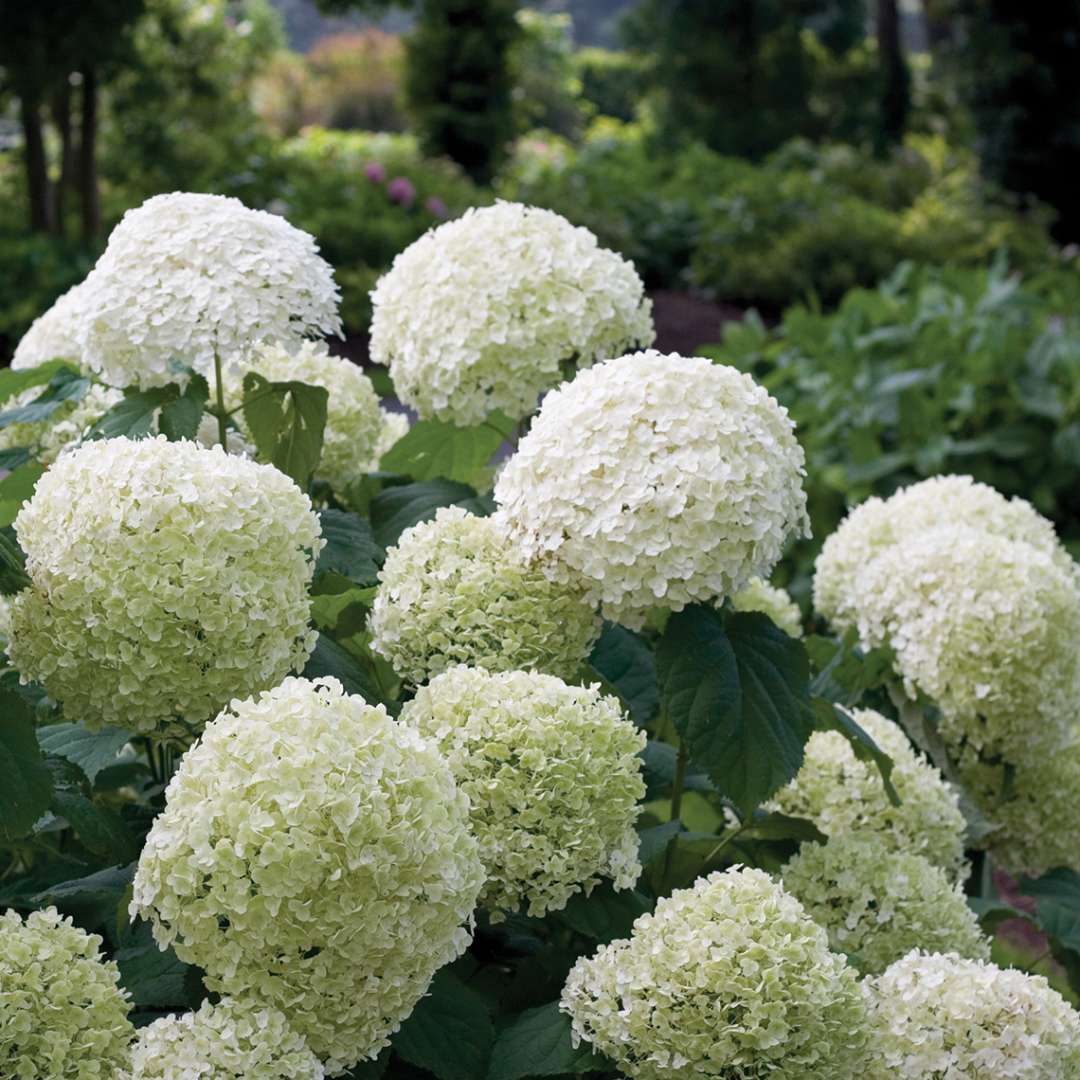
Our goal in creating Incrediball ® hydrangea was to develop a non-flopping version of 'Annabelle.' What we ultimately selected, though, was even better: a powerhouse of a plant that not only has strong, sturdy, supportive stems, but also extra large flowers. On mature plants, they can become as large as basketballs! Blooms age to a beautiful jade green through summer and fall. Don't let its good looks fool you, though - this North American native is super hardy and tough as nails.
'Akadama®'
Hydrangea
Akadama® Hydrangea is a mophead variety known to be a prolific bloomer. Large, round pink to red flower clusters with chartreuse centers bloom from May through July and contrast nicely with the dark green foliage. Single blooms can sometimes last up to two months. Foliage color changes with cool temperatures, appearing deep magenta in early spring and late fall. It is fairly compact making it well-suited for smaller residential spaces. Akadama® Hydrangea will provide you with reliable, vibrant blooms and lovely early-fall foliage color. PP28,860 Botanical Name: Hydrangea macrophylla ‘SK2DAMA’ USDA Zone: 6 – 9 Average Height: 4′ – 5′ Average Width: 4′ – 5′ Sun Exposure: Part Sun to Part Shade Planting/Care Instructions Before planting, have your soil tested to see what amendments are needed. Click this link to check your frost dates: Frost Dates . Check the light preferences for your plant and choose your location accordingly. When you receive your , soak the root ball in water for 20 minutes upon arrival before planting or potting. Gently break up the root ball. This will help the roots of your to grow out into the soil. Dig a hole slightly larger than the root ball of your plant. Fill in the hole tightly with soil to avoid any air pockets. Add a bit of slow-release fertilizer to help new plants to grow quickly. Add the recommended amount per fertilizer instructions. Be sure to water your until it is established. In addition, pull weeds out when they appear. They take nutrients from the soil. Additionally, certain plants may need staking. Whenever they become too heavy to stand on their own, add bamboo or fiberglass stakes for the plants to lean against or tie up for support. Prune plants as needed to encourage growth. Always sterilize your pruners when pruning plants to prevent the spread of diseases. If you have trouble keeping up with your pruners, check out our locally hand-made leather pruner holster here. Lastly, enjoy your and your time in the garden!
'All Summer Beauty'
Hydrangea
All Summer Beauty hydrangea is a big leaf mophead hydrangea that can’t be beat for blooms. It blooms on old and new wood, unlike some other cultivars. The blooms can be pink and blue in neutral soil or a rich blue in acid soil. Great for cut arrangements. All Summer Beauty hydrangea is a great border plant because it blooms profusely. Botanical Name: Hydrangea macrophylla ‘All Summer Beauty’ USDA Zone: 5 – 9 Average Height: 3′ – 5′ Average Width: 3′ – 5′ Sun Exposure: Partial to full sun Planting/Care Instructions Before planting, have your soil tested to see what amendments are needed. Click this link to check your frost dates: Frost Dates . Check the light preferences for your plant and choose your location accordingly. When you receive your , soak the root ball in water for 20 minutes upon arrival before planting or potting. Gently break up the root ball. This will help the roots of your to grow out into the soil. Dig a hole slightly larger than the root ball of your plant. Fill in the hole tightly with soil to avoid any air pockets. Add a bit of slow-release fertilizer to help new plants to grow quickly. Add the recommended amount per fertilizer instructions. Be sure to water your until it is established. In addition, pull weeds out when they appear. They take nutrients from the soil. Additionally, certain plants may need staking. Whenever they become too heavy to stand on their own, add bamboo or fiberglass stakes for the plants to lean against or tie up for support. Prune plants as needed to encourage growth. Always sterilize your pruners when pruning plants to prevent the spread of diseases. If you have trouble keeping up with your pruners, check out our locally hand-made leather pruner holster here. Lastly, enjoy your and your time in the garden!
'Blaumeise'
Hydrangea
Blaumeise Hydrangea is considered one of the best blue lacecap cultivars. Deep-blue blooms can grow as wide as 8 inches and layer nicely over dark green, serrated leaves. Grows with a spreading habit and fills empty spaces well, making it ideal as a hedge or focal point. Blooms on old wood, therefore, prune only immediately after flowering. Blaumeise Hydrangea is classically elegant yet robust, rewarding gardeners with consistent, lush blooms from early to mid-summer. Botanical Name: Hydrangea macrophylla ‘Blaumeise’ USDA Zone: 5 – 9 Average Height: 3′ – 5′ Average Width: 3′ – 5′ Sun Exposure: Part Sun to Part Shade Planting/Care Instructions Before planting, have your soil tested to see what amendments are needed. Click this link to check your frost dates: Frost Dates . Check the light preferences for your plant and choose your location accordingly. When you receive your , soak the root ball in water for 20 minutes upon arrival before planting or potting. Gently break up the root ball. This will help the roots of your to grow out into the soil. Dig a hole slightly larger than the root ball of your plant. Fill in the hole tightly with soil to avoid any air pockets. Add a bit of slow-release fertilizer to help new plants to grow quickly. Add the recommended amount per fertilizer instructions. Be sure to water your until it is established. In addition, pull weeds out when they appear. They take nutrients from the soil. Additionally, certain plants may need staking. Whenever they become too heavy to stand on their own, add bamboo or fiberglass stakes for the plants to lean against or tie up for support. Prune plants as needed to encourage growth. Always sterilize your pruners when pruning plants to prevent the spread of diseases. If you have trouble keeping up with your pruners, check out our locally hand-made leather pruner holster here. Lastly, enjoy your and your time in the garden!
'Bobo®'
Hydrangea
Bobo® Hydrangea has loads of flowers on a tiny plant! This dwarf panicle hydrangea will turn heads! Bobo® hydrangea is engulfed by large white flowers in summer. The flowers are held upright on strong stems, and continue to grow and lengthen as they bloom. No flopping, unlike some panicle hydrangeas! As blooms age, they turn pink. Bobo® Hydrangea is compact and dwarf in habit, and the flowers cover every inch of the plant right down to the ground. Photo and description courtesy of Proven Winners – www.provenwinners.com – USPP 22,782 Botanical Name: Hydrangea paniculata ‘ILVOBO’ USDA Zone: 3 – 8 Average Height: 3′ Average Width: 4′ Sun Exposure: Sun Planting/Care Instructions Before planting, have your soil tested to see what amendments are needed. Click this link to check your frost dates: Frost Dates . Check the light preferences for your plant and choose your location accordingly. When you receive your , soak the root ball in water for 20 minutes upon arrival before planting or potting. Gently break up the root ball. This will help the roots of your to grow out into the soil. Dig a hole slightly larger than the root ball of your plant. Fill in the hole tightly with soil to avoid any air pockets. Add a bit of slow-release fertilizer to help new plants to grow quickly. Add the recommended amount per fertilizer instructions. Be sure to water your until it is established. In addition, pull weeds out when they appear. They take nutrients from the soil. Additionally, certain plants may need staking. Whenever they become too heavy to stand on their own, add bamboo or fiberglass stakes for the plants to lean against or tie up for support. Prune plants as needed to encourage growth. Always sterilize your pruners when pruning plants to prevent the spread of diseases. If you have trouble keeping up with your pruners, check out our locally hand-made leather pruner holster here. Lastly, enjoy your and your time in the garden!
Gatsby Gal
Hydrangea 'Brenhill'
Compact oakleaf hydrangea. A little smaller than other H. quercifolia, but with impressively large flowers, and lots of them - that's Gatsby Gal® oakleaf hydrangea. Full panicles of pure white blooms are held upright above the foliage. The flowers are quite large relative to the plant's compact size and make this plant ideally suited to small spaces.
'Cherry Explosion™'
Hydrangea
Cherry Explosion™ Hydrangea is a lacecap variety that is more cold-hardy and longer blooming than many other hydrangeas. True to its name, it explodes with bright cherry blooms in late spring and dependably reblooms throughout the season. Grows with a tidy, mounding habit, making it ideal for containers, tight spaces or borders. We think it looks amazing along walkways. Cherry Explosion™ Hydrangea delivers potent color from spring to fall and thrives with minimal maintenance even in colder climates. PP28,757 Botanical Name: Hydrangea macrophylla ‘McKay’ USDA Zone: 4 – 9 Average Height: 3′ – 4′ Average Width: 3′ – 4′ Sun Exposure: Part Sun to Part Shade Planting/Care Instructions Before planting, have your soil tested to see what amendments are needed. Click this link to check your frost dates: Frost Dates . Check the light preferences for your plant and choose your location accordingly. When you receive your , soak the root ball in water for 20 minutes upon arrival before planting or potting. Gently break up the root ball. This will help the roots of your to grow out into the soil. Dig a hole slightly larger than the root ball of your plant. Fill in the hole tightly with soil to avoid any air pockets. Add a bit of slow-release fertilizer to help new plants to grow quickly. Add the recommended amount per fertilizer instructions. Be sure to water your until it is established. In addition, pull weeds out when they appear. They take nutrients from the soil. Additionally, certain plants may need staking. Whenever they become too heavy to stand on their own, add bamboo or fiberglass stakes for the plants to lean against or tie up for support. Prune plants as needed to encourage growth. Always sterilize your pruners when pruning plants to prevent the spread of diseases. If you have trouble keeping up with your pruners, check out our locally hand-made leather pruner holster here. Lastly, enjoy your and your time in the garden!
'Fairytrail Bride®'
Hydrangea
Fairytrail Bride® Hydrangea is the first ever Cascade Hydrangea® available in North America! We’re confident you’ll love its unique horizontal growing habit, with each trailing stem absolutely brimming with blooms. Its florets are filled with deckle-edged petals, bringing a frilly, lacy look to the landscape. There are no limits to the ways you can use Fairytrail Bride® in the garden – it’s ready to wow your neighbors in hanging baskets, containers, cascading over retaining walls, and filling in mixed beds! Deadheading is not necessary. Fairytrail Bride® blooms on old wood. These hydrangeas cannot be cut back or trimmed at any time of the year without impacting the bloom for either the current season or the next. Photo and description courtesy of Proven Winners – www.provenwinners.com – USPP 31,120 Botanical Name: Hydrangea x ‘USHYD0405’ USDA Zone: 6 – 9 Average Height: 4′ Average Width: 4′ Sun Exposure: Sun to part sun Planting/Care Instructions Before planting, have your soil tested to see what amendments are needed. Click this link to check your frost dates: Frost Dates . Check the light preferences for your plant and choose your location accordingly. When you receive your , soak the root ball in water for 20 minutes upon arrival before planting or potting. Gently break up the root ball. This will help the roots of your to grow out into the soil. Dig a hole slightly larger than the root ball of your plant. Fill in the hole tightly with soil to avoid any air pockets. Add a bit of slow-release fertilizer to help new plants to grow quickly. Add the recommended amount per fertilizer instructions. Be sure to water your until it is established. In addition, pull weeds out when they appear. They take nutrients from the soil. Additionally, certain plants may need staking. Whenever they become too heavy to stand on their own, add bamboo or fiberglass stakes for the plants to lean against or tie up for support. Prune plants as needed to encourage growth. Always sterilize your pruners when pruning plants to prevent the spread of diseases. If you have trouble keeping up with your pruners, check out our locally hand-made leather pruner holster here. Lastly, enjoy your and your time in the garden!
'Fire Light Tidbit®'
Hydrangea
Fire Light Tidbit® Hydrangea has the tiniest, tidiest panicle hydrangea yet: it reaches just 2-3′ tall and wide, yet it packs in tons of easy-care beauty into its small size. Big, lush panicles of white mophead flowers appear in early to mid summer, nearly obscuring the textured green foliage. As the summer progresses, they begin to develop bright pink and red tones, which keep it colorful right on up to the first frost. Its colorful autumn foliage has an unusual trait in panicle hydrangeas. Thick, sturdy stems help to create a neat, mounded plant that’s fantastic in landscapes, flower gardens, even in containers! Photo and description courtesy of Proven Winners – www.provenwinners.com – USPP 32,512 Botanical Name: Hydrangea paniculata ‘SMNHPK’ USDA Zone: 3 – 8 Average Height: 2′ – 3′ Average Width: 3′ Sun Exposure: Sun to part sun Planting/Care Instructions Before planting, have your soil tested to see what amendments are needed. Click this link to check your frost dates: Frost Dates . Check the light preferences for your plant and choose your location accordingly. When you receive your , soak the root ball in water for 20 minutes upon arrival before planting or potting. Gently break up the root ball. This will help the roots of your to grow out into the soil. Dig a hole slightly larger than the root ball of your plant. Fill in the hole tightly with soil to avoid any air pockets. Add a bit of slow-release fertilizer to help new plants to grow quickly. Add the recommended amount per fertilizer instructions. Be sure to water your until it is established. In addition, pull weeds out when they appear. They take nutrients from the soil. Additionally, certain plants may need staking. Whenever they become too heavy to stand on their own, add bamboo or fiberglass stakes for the plants to lean against or tie up for support. Prune plants as needed to encourage growth. Always sterilize your pruners when pruning plants to prevent the spread of diseases. If you have trouble keeping up with your pruners, check out our locally hand-made leather pruner holster here. Lastly, enjoy your and your time in the garden!
'Firefly'
Hydrangea
Firefly Hydrangea showcases dramatic bi-color florets all season long. Individual flowers are bright pink to rosy-red surrounding a creamy yellow center. Foliage emerges maroon and fades to forest green, creating a backdrop that makes the flower heads seem to glow. Compact, well-branched habit that works beautifully in borders and containers. Firefly Hydrangea will continuously re-bloom on new growth from early summer through fall. It delivers vibrant bloom colors, a strong foliage interest, and dependable flowering performance. PP27110 Botanical Name: Hydrangea macrophylla ‘HORCOS’ USDA Zone: 6 – 11 Average Height: 4′ Average Width: 4′ Sun Exposure: Part Sun Planting/Care Instructions Before planting, have your soil tested to see what amendments are needed. Click this link to check your frost dates: Frost Dates . Check the light preferences for your plant and choose your location accordingly. When you receive your , soak the root ball in water for 20 minutes upon arrival before planting or potting. Gently break up the root ball. This will help the roots of your to grow out into the soil. Dig a hole slightly larger than the root ball of your plant. Fill in the hole tightly with soil to avoid any air pockets. Add a bit of slow-release fertilizer to help new plants to grow quickly. Add the recommended amount per fertilizer instructions. Be sure to water your until it is established. In addition, pull weeds out when they appear. They take nutrients from the soil. Additionally, certain plants may need staking. Whenever they become too heavy to stand on their own, add bamboo or fiberglass stakes for the plants to lean against or tie up for support. Prune plants as needed to encourage growth. Always sterilize your pruners when pruning plants to prevent the spread of diseases. If you have trouble keeping up with your pruners, check out our locally hand-made leather pruner holster here. Lastly, enjoy your and your time in the garden!
'Glowing Embers'
Hydrangea
Glowing Embers Hydrangea is a stunning variety of mophead hydrangea with vibrant, multi-toned flowers. The mophead flowers, influenced by soil pH, range in color from deep pink to striking red, creating a dramatic garden feature. This creates a fiery, glowing effect as they mature. This cultivar blooms on old wood. Pruning should be kept to a minimum. Glowing Embers Hydrangea thrives in partial shade and well-drained, moist soil, making it an ideal choice for a variety of garden settings. Its lush green foliage complements the colorful blooms, offering a dynamic and eye-catching display in any landscape or floral arrangement. It is also known as Alpengluhen or Alpine Glow. Botanical Name: Hydrangea macrophylla ‘Glowing Embers’ USDA Zone: 6 – 9 Average Height: 3′ – 5′ Average Width: 3′ – 5′ Sun Exposure: Morning sun or part sun Planting/Care Instructions Before planting, have your soil tested to see what amendments are needed. Click this link to check your frost dates: Frost Dates . Check the light preferences for your plant and choose your location accordingly. When you receive your , soak the root ball in water for 20 minutes upon arrival before planting or potting. Gently break up the root ball. This will help the roots of your to grow out into the soil. Dig a hole slightly larger than the root ball of your plant. Fill in the hole tightly with soil to avoid any air pockets. Add a bit of slow-release fertilizer to help new plants to grow quickly. Add the recommended amount per fertilizer instructions. Be sure to water your until it is established. In addition, pull weeds out when they appear. They take nutrients from the soil. Additionally, certain plants may need staking. Whenever they become too heavy to stand on their own, add bamboo or fiberglass stakes for the plants to lean against or tie up for support. Prune plants as needed to encourage growth. Always sterilize your pruners when pruning plants to prevent the spread of diseases. If you have trouble keeping up with your pruners, check out our locally hand-made leather pruner holster here. Lastly, enjoy your and your time in the garden!
Bobo
Hydrangea 'ILVOBO'
Big blooms on a compact habit! Bobo® dwarf panicle hydrangea has been turning heads since we first saw it at the ILVO research station in Belgium. Exceptionally floriferous, its compact little frame is smothered with large, lacy, white cones that age to a lovely soft pink. The creamy blooms make excellent cut flowers for fresh arrangements or drying, or you can leave them on the plant for some added interest over winter. With an early summer bloom, these hydrangeas start hydrangea season with a bang. Bobo® Hydrangea paniculata ’s small size is perfect for mixed borders, mass plantings, and containers.
Pinky Winky Prime
Hydrangea 'ILVOHPPRM'
Everything you love about the original and more: Pinky Winky Prime® hydrangea impresses with bigger, fuller blooms that age to a far richer pink. The large, pointed panicles emerge pure white and then gradually transform to a saturated hot pink starting from the bottom and moving to the tip. Like the original, Pinky Winky Prime hydrangea is the work of Dr. Johan Van Huylenbroeck at the ILVO breeding station in Flanders.
'Incrediball®'
Hydrangea
Incrediball® Hydrangea will make you say WOW – it’s an improved version of the garden classic ‘Annabelle’ hydrangea, but with strong, sturdy stems that don’t flop over and extra-large blooms to boot. Incrediball® Hydrangea has white flowers that begin to appear in mid-summer and open to enormous snowballs, nearly the size of basketballs! They then age to a lush jade green, which persists through frost. Photo and descriptions courtesy of Proven Winners – www.provenwinners.com – USPP 20,571 Botanical Name: Hydrangea paniculata ‘Abetwo’ USDA Zone: 3 – 8/9 Average Height: 4 – 5′ Average Width: 4 – 5′ Sun Exposure: Sun to part sun Planting/Care Instructions Before planting, have your soil tested to see what amendments are needed. Click this link to check your frost dates: Frost Dates . Check the light preferences for your plant and choose your location accordingly. When you receive your , soak the root ball in water for 20 minutes upon arrival before planting or potting. Gently break up the root ball. This will help the roots of your to grow out into the soil. Dig a hole slightly larger than the root ball of your plant. Fill in the hole tightly with soil to avoid any air pockets. Add a bit of slow-release fertilizer to help new plants to grow quickly. Add the recommended amount per fertilizer instructions. Be sure to water your until it is established. In addition, pull weeds out when they appear. They take nutrients from the soil. Additionally, certain plants may need staking. Whenever they become too heavy to stand on their own, add bamboo or fiberglass stakes for the plants to lean against or tie up for support. Prune plants as needed to encourage growth. Always sterilize your pruners when pruning plants to prevent the spread of diseases. If you have trouble keeping up with your pruners, check out our locally hand-made leather pruner holster here. Lastly, enjoy your and your time in the garden!
'Inspire'
Hydrangea
Inspire Hydrangea stands out with its elongated petals on star-shaped double florets. Starting in early summer, blooms emerge light chartreuse and mature to bright pink. As it flowers on both new and old wood, it will continue to re-bloom throughout summer. Thick, deep-green leaves give the plant a full and rounded growth habit. Inspire Hydrangea brings a soft texture and color to your backyard oasis. Botanical Name: Hydrangea macrophylla ‘Inspire’ USDA Zone: 6 – 9 Average Height: 3′ – 4′ Average Width: 3′ – 4′ Sun Exposure: Part Sun Planting/Care Instructions Before planting, have your soil tested to see what amendments are needed. Click this link to check your frost dates: Frost Dates . Check the light preferences for your plant and choose your location accordingly. When you receive your , soak the root ball in water for 20 minutes upon arrival before planting or potting. Gently break up the root ball. This will help the roots of your to grow out into the soil. Dig a hole slightly larger than the root ball of your plant. Fill in the hole tightly with soil to avoid any air pockets. Add a bit of slow-release fertilizer to help new plants to grow quickly. Add the recommended amount per fertilizer instructions. Be sure to water your until it is established. In addition, pull weeds out when they appear. They take nutrients from the soil. Additionally, certain plants may need staking. Whenever they become too heavy to stand on their own, add bamboo or fiberglass stakes for the plants to lean against or tie up for support. Prune plants as needed to encourage growth. Always sterilize your pruners when pruning plants to prevent the spread of diseases. If you have trouble keeping up with your pruners, check out our locally hand-made leather pruner holster here. Lastly, enjoy your and your time in the garden!
Little Lime
Hydrangea 'Jane'
Filters: Botanical genus: Hydrangea , Common name: Hydrangea - Panicle , Retail program: Proven Winners® ColorChoice® , USDA Zone 3 , USDA Zone 4 , USDA Zone 5 , USDA Zone 6 , USDA Zone 7 , USDA Zone 8 , Exposure: Full sun , Exposure: Part sun , Bloom time: Summer , Green flowers , Pink flowers , Red flowers , Green foliage
Gatsby Pink
Hydrangea 'JoAnn'
White blooms turn showy deep pink. Simply remarkable, Gatsby Pink ® oakleaf hydranga boasts big showy blooms which transform from pure white to a deep true pink. Color develops early and persists through the season. The dark green foliage turns mahogany-red in autumn. Another great plant developed by Powell Gardens of Kingsville, MO. Native.
'Let’s Dance Can Do!®'
Hydrangea
Let’s Dance Can Do!® Hydrangea has the unique ability to create lacecap flower buds along the entire length of the stem instead of only at the top like other big-leaf hydrangeas. That means that even if winter does its worst and kills back a portion of the plant, there will still be flower buds to open in early summer. It is hardy to USDA zone 4 – not only will it survive in such a cold area, it will actually bloom there! If you’ve been reluctant to try a big-leaf hydrangea, or been disappointed in others, Let’s Dance Can Do!® Hydrangea is the perfect place to start. Flowers are a luscious strawberry pink in neutral/alkaline soils and a lovely lavender in acidic soils. Photo and description courtesy of Proven Winners – www.provenwinners.com – USPP 32,548 Botanical Name: Hydrangea serrata ‘SMNHSI’ USDA Zone: 4 – 9 Average Height: 3′ – 4′ Average Width: 3′ – 4′ Sun Exposure: Sun to part sun Planting/Care Instructions Before planting, have your soil tested to see what amendments are needed. Click this link to check your frost dates: Frost Dates . Check the light preferences for your plant and choose your location accordingly. When you receive your , soak the root ball in water for 20 minutes upon arrival before planting or potting. Gently break up the root ball. This will help the roots of your to grow out into the soil. Dig a hole slightly larger than the root ball of your plant. Fill in the hole tightly with soil to avoid any air pockets. Add a bit of slow-release fertilizer to help new plants to grow quickly. Add the recommended amount per fertilizer instructions. Be sure to water your until it is established. In addition, pull weeds out when they appear. They take nutrients from the soil. Additionally, certain plants may need staking. Whenever they become too heavy to stand on their own, add bamboo or fiberglass stakes for the plants to lean against or tie up for support. Prune plants as needed to encourage growth. Always sterilize your pruners when pruning plants to prevent the spread of diseases. If you have trouble keeping up with your pruners, check out our locally hand-made leather pruner holster here. Lastly, enjoy your and your time in the garden!
‘Limelight’
Hydrangea 'Limelight'
Limelight Hydrangea is a fantastic cold hardy paniculata hydrangea. The large, football sized blooms are a refreshing lime green color that change to burgundy red in the fall. This long season blooming and award winning hydrangea has a place in every landscape. Limelight Hydrangea can be used as a specimen plant as easily as it can function as a dense flowering hedge. The blooms of Limelight Hydrangea make excellent cut flowers and can be used fresh or dried. Paniculata hydrangeas are not affected by late frosts and will give you blooms every year. Botanical Name: Hydrangea paniculata ‘Limelight’ USDA Zone: 3 – 9 Average Height: 6′ – 8′ Average Width: 6′ – 8′ Sun Exposure: Sun to part sun Planting/Care Instructions Before planting, have your soil tested to see what amendments are needed. Click this link to check your frost dates: Frost Dates . Check the light preferences for your plant and choose your location accordingly. When you receive your , soak the root ball in water for 20 minutes upon arrival before planting or potting. Gently break up the root ball. This will help the roots of your to grow out into the soil. Dig a hole slightly larger than the root ball of your plant. Fill in the hole tightly with soil to avoid any air pockets. Add a bit of slow-release fertilizer to help new plants to grow quickly. Add the recommended amount per fertilizer instructions. Be sure to water your until it is established. In addition, pull weeds out when they appear. They take nutrients from the soil. Additionally, certain plants may need staking. Whenever they become too heavy to stand on their own, add bamboo or fiberglass stakes for the plants to lean against or tie up for support. Prune plants as needed to encourage growth. Always sterilize your pruners when pruning plants to prevent the spread of diseases. If you have trouble keeping up with your pruners, check out our locally hand-made leather pruner holster here. Lastly, enjoy your and your time in the garden!
'Little Lime Punch®'
Hydrangea
You’ll be drinking in the beauty Little Lime Punch® Hydrangea serves up all season long. Similar to Little Lime®, its blooms emerge lime green, but they mature a little differently. Flowers change progressively from the bottom up in a gorgeous array of white, light pink, and rich Hawaiian Punch red! As Little Lime Punch® Hydrangea reblooms throughout the summer, you’ll see a four colors mix of white, green, pink and red all on one bloom. This creates a truly memorable all season show. With a compact habit and strong stems, you’ll find that it’s as useful in the landscape as it is beautiful. Photo and description courtesy of Proven Winners – www.provenwinners.com – USPP 33,207 Botanical Name: Hydrangea paniculata ‘SMNHPH’ USDA Zone: 3 – 9 Average Height: 5′ Average Width: 5′ Sun Exposure: Part sun to full sun Planting/Care Instructions Before planting, have your soil tested to see what amendments are needed. Click this link to check your frost dates: Frost Dates . Check the light preferences for your plant and choose your location accordingly. When you receive your , soak the root ball in water for 20 minutes upon arrival before planting or potting. Gently break up the root ball. This will help the roots of your to grow out into the soil. Dig a hole slightly larger than the root ball of your plant. Fill in the hole tightly with soil to avoid any air pockets. Add a bit of slow-release fertilizer to help new plants to grow quickly. Add the recommended amount per fertilizer instructions. Be sure to water your until it is established. In addition, pull weeds out when they appear. They take nutrients from the soil. Additionally, certain plants may need staking. Whenever they become too heavy to stand on their own, add bamboo or fiberglass stakes for the plants to lean against or tie up for support. Prune plants as needed to encourage growth. Always sterilize your pruners when pruning plants to prevent the spread of diseases. If you have trouble keeping up with your pruners, check out our locally hand-made leather pruner holster here. Lastly, enjoy your and your time in the garden!
'Little Quick Fire®'
Hydrangea
Little Quick Fire® Hydrangea is a dwarf form of the popular Quick Fire® hydrangea! Like Quick Fire®, it is early blooming, flowering about a month before other hydrangeas. White flowers transform to pink-red as summer progresses. This dwarf plant fits easily into any landscape, including container gardens. Add it to your existing hydrangea garden to extend the blooming season. Very drought tolerant. Blooms even if you have a late frost or freeze. Photo and description courtesy of Proven Winners – www.provenwinners.com – USPP 25,136 Botanical Name: Hydrangea paniculata ‘SMHPLQF’ USDA Zone: 3 – 8 Average Height: 3′ – 5′ Average Width: 3′ – 5′ Sun Exposure: Sun to part sun Planting/Care Instructions Before planting, have your soil tested to see what amendments are needed. Click this link to check your frost dates: Frost Dates . Check the light preferences for your plant and choose your location accordingly. When you receive your , soak the root ball in water for 20 minutes upon arrival before planting or potting. Gently break up the root ball. This will help the roots of your to grow out into the soil. Dig a hole slightly larger than the root ball of your plant. Fill in the hole tightly with soil to avoid any air pockets. Add a bit of slow-release fertilizer to help new plants to grow quickly. Add the recommended amount per fertilizer instructions. Be sure to water your until it is established. In addition, pull weeds out when they appear. They take nutrients from the soil. Additionally, certain plants may need staking. Whenever they become too heavy to stand on their own, add bamboo or fiberglass stakes for the plants to lean against or tie up for support. Prune plants as needed to encourage growth. Always sterilize your pruners when pruning plants to prevent the spread of diseases. If you have trouble keeping up with your pruners, check out our locally hand-made leather pruner holster here. Lastly, enjoy your and your time in the garden!
Tiny TUFF STUFF
Hydrangea 'MAKD'
Compact, bud-hardy reblooming hydrangea. It's tough, but delicate - Tiny Tuff Stuff™hydrangea is extremely cold tolerant and beautiful. Extremely bud-hardy, each year it produces abundant lacecap flowers comprised of doubled sepals which appear on both old and new wood. While this plant leans to blue, the flower color may range from blue to pink to white.
Flirty Girl
Hydrangea 'Minsnow3'
One of the problems with Hydrangea hydrangeoides and other climbing hydrangea is that they can take a while to mature and produce flowers. Flirty Girl® false hydrangea-vine solves this issue, producing beautiful flowering 2 or 3-gallon plants with loads of lightly fragrant white blooms. Young purple shoots add to its interest, and its easy care and heat tolerance make it a reliable choice. This self-attaching vine is perfect for adding visual interest to any structure– use it to cover fences, walls, or trees. Flirty Girl® Hydrangea hydrangeoides was developed in France by Pepinieres Minier.
'Miss Saori'
Hydrangea
Miss Saori Hydrangea is a stunning cultivar of the mop head hydrangea. With a delicate mix of pastel pink and blue hues, its blooms create a soft, romantic aesthetic. This variety is prized for its exceptional beauty and resilience, thriving in partial shade and moist, well-drained soil. Miss Saori Hydrangea’s flowers often shift color based on the soil’s pH level, adding an enchanting dynamic to gardens. Its compact size makes it an ideal choice for smaller spaces, where it can provide elegant color throughout the summer and early autumn months. With its showy blooms and purple tinged leaves, it won 2014 RHS Chelsea Flower Show, Plant of the Year. Miss Saori Hydrangea was created by hydrangea breeder Mr. Irie of Kyoto, Japan. PP26657. Consider pairing this with Miss Piggy Japanese Maple Botanical Name: Hydrangea macrophylla ‘H2002’ USDA Zone: 6b – 10 Average Height: 3′ – 4′ Average Width: 3′ – 4′ Sun Exposure: Morning sun or part sun Planting/Care Instructions Before planting, have your soil tested to see what amendments are needed. Click this link to check your frost dates: Frost Dates . Check the light preferences for your plant and choose your location accordingly. When you receive your , soak the root ball in water for 20 minutes upon arrival before planting or potting. Gently break up the root ball. This will help the roots of your to grow out into the soil. Dig a hole slightly larger than the root ball of your plant. Fill in the hole tightly with soil to avoid any air pockets. Add a bit of slow-release fertilizer to help new plants to grow quickly. Add the recommended amount per fertilizer instructions. Be sure to water your until it is established. In addition, pull weeds out when they appear. They take nutrients from the soil. Additionally, certain plants may need staking. Whenever they become too heavy to stand on their own, add bamboo or fiberglass stakes for the plants to lean against or tie up for support. Prune plants as needed to encourage growth. Always sterilize your pruners when pruning plants to prevent the spread of diseases. If you have trouble keeping up with your pruners, check out our locally hand-made leather pruner holster here. Lastly, enjoy your and your time in the garden!
INVINCIBELLE Spirit II
Hydrangea 'NCHA2'
A better pink 'Annabelle' - type hydrangea! Meet Invincibelle ® Spirit II hydrangea - an improved version of Invincibelle ® Spirit, the original pink 'Annabelle' hydrangea. It delivers darker foliage, stiffer stems, and larger flowers of a deeper, truer pink. The blooms age to an attractive green instead of the bisque color of the original. This hydrangea grows from Manitoba to Mobile, blooming every year from mid-summer to frost. It is a strong rebloomer. $1 from each Invincibelle ® Spirit II sold is donated to the Breast Cancer Research Foundation ® (BCRF). We encourage you to donate as well. BCRF is dedicated to advancing the world's most promising research to eradicate breast cancer in our lifetime. Click here for more information about the Invincibelle Spirit Campaign for a Cure . For more information about BCRF, visit www.bcrfcure.org .
INVINCIBELLE Ruby
Hydrangea 'NCHA3'
The deep ruby flower buds of Invincibelle ® Ruby hydrangea open to a two-toned combination of bright ruby red and silvery pink. Rich, unique color isn't the only thing that sets it apart from other smooth hydrangeas - it also has handsome dark foliage, very strong stems, and reblooms all season, producing fresh blooms into autumn.
INCREDIBALL Blush
Hydrangea 'NCHA4'
It's the next big thing in hydrangeas! Incrediball ® Blush hydrangea is everything you love about the original Incrediball® hydrangea, but in pink! Extra large blooms are a very unique and appealing shade of silvery-pink and are held up on strong, sturdy stems. Continues to create fresh flowers through autumn for a very long lasting display.
Invincibelle Wee White
Hydrangea 'NCHA5'
Invincibelle Wee White ® hydrangea is poised to revolutionize landscaping. Its sturdy compact frame reaches just 1-2.5' tall and is covered in pure white mophead flowers from summer to fall. We'd call it a dwarf version of 'Annabelle,' but that wouldn't quite do it justice, as it also boasts very sturdy stems that never flop and the ability to rebloom, producing fresh flowers all summer.
Invincibelle Mini Mauvette
Hydrangea 'NCHA7'
Smooth hydrangeas are beloved for their big, reliable, blooms. But color has never been their strong suit - until now. Invincibelle Mini Mauvette ® hydrangea brings a never-before-seen color to the species, with large mophead flowers in a deep mauve-violet. Blooms are held on very strong stems and appear early summer through fall. Dwarf habit gives this native plant amazing versatility in the landscape and the garden.
Invincibelle Limetta
Hydrangea 'NCHA8'
Invincibelle Limetta ® hydrangea represents the next generation of 'Annabelle'-type hydrangeas. This revolutionary new variety offers a dwarf habit with lush green flowers and very strong stems. Blooms start out a rich jade green, soften to green-white, then age to green again. This strong rebloomer keeps fresh flowers coming through frost, too. A versatile, reliable native shrubs that appeals to landscape designers and homeowners alike.
Puffer Fish
Hydrangea 'NCHP1'
Think of Puffer Fish® panicle hydrangea ( H. paniculata ) as a larger, more puffed up Bobo®, with fluffy white blooms that engulf the entire plant, nearly obscuring the foliage. The flowers open and mature to a pure white. As the blooms age, they turn lime green and, for a bit of surprise, a fresh sprig of white flowers emerges from the tip of the panicle. A tight, compact habit with stems strong enough to hold its blooms. This NCSU hydrangea has all the talent needed to be a first-class landscape performer.
Gatsby Glow Ball
Hydrangea 'NCHQ1'
Smaller than 'Ruby Slippers', faster growing than 'Munchkin', and smaller and denser than 'Snow Queen', Gatsby Glow Ball oakleaf hydrangea ( Hydrangea quercifolia ) opens up a wide range of landscape possibilities. Of course, it offers the same showy white flowers and outstanding fall color that make oakleaf hydrangeas so beloved, but what really sets this apart is its container presentation. A boon to growers and retailers, Gatsby Glow Ball oakleaf hydrangea looks tidy, rounded, and appealing, even in a container and on the shelf at retail.
'Nikko Blue'
Hydrangea
Nikko Blue Hydrangea is one of the most widely known hydrangeas, it offers bouquets of blue clustered flowers from summer through fall. Flowers make beautiful dried arrangements. Nikko Blue Hydrangea blooms on old wood, therefore prune only when necessary. May not bloom if you are prone to late frosts. The color is impacted by soil pH. Botanical Name: Hydrangea macrophylla ‘Nikko Blue’ USDA Zone: 6 – 9 Average Height: 3’ – 8’ Average Width: 4’ – 6’ Sun Exposure: Full sun to partial shade Planting/Care Instructions Before planting, have your soil tested to see what amendments are needed. Click this link to check your frost dates: Frost Dates . Check the light preferences for your plant and choose your location accordingly. When you receive your , soak the root ball in water for 20 minutes upon arrival before planting or potting. Gently break up the root ball. This will help the roots of your to grow out into the soil. Dig a hole slightly larger than the root ball of your plant. Fill in the hole tightly with soil to avoid any air pockets. Add a bit of slow-release fertilizer to help new plants to grow quickly. Add the recommended amount per fertilizer instructions. Be sure to water your until it is established. In addition, pull weeds out when they appear. They take nutrients from the soil. Additionally, certain plants may need staking. Whenever they become too heavy to stand on their own, add bamboo or fiberglass stakes for the plants to lean against or tie up for support. Prune plants as needed to encourage growth. Always sterilize your pruners when pruning plants to prevent the spread of diseases. If you have trouble keeping up with your pruners, check out our locally hand-made leather pruner holster here. Lastly, enjoy your and your time in the garden!
'Paris Rapa'
Hydrangea
Paris Rapa Hydrangea is a compact hydrangea. The dark green foliage has a striking contrast to the deep pink or blue blooms. It is more disease resistant than most hydrangeas. For blue flowers, the soil must be more acidic, add aluminum sulfate. For pink flowers, the soil needs to be more alkaline, add lime. Paris Rapa Hydrangea blooms on old wood and pruning should be kept to a minimum. This is propagated from the CityLine® Paris hydrangea. Botanical Name: Hydrangea macrophylla ‘Paris Rapa’ USDA Zone: 5 – 9 Average Height: 2′ Average Width: 3′ Sun Exposure: Sun to part shade Planting/Care Instructions Before planting, have your soil tested to see what amendments are needed. Click this link to check your frost dates: Frost Dates . Check the light preferences for your plant and choose your location accordingly. When you receive your , soak the root ball in water for 20 minutes upon arrival before planting or potting. Gently break up the root ball. This will help the roots of your to grow out into the soil. Dig a hole slightly larger than the root ball of your plant. Fill in the hole tightly with soil to avoid any air pockets. Add a bit of slow-release fertilizer to help new plants to grow quickly. Add the recommended amount per fertilizer instructions. Be sure to water your until it is established. In addition, pull weeds out when they appear. They take nutrients from the soil. Additionally, certain plants may need staking. Whenever they become too heavy to stand on their own, add bamboo or fiberglass stakes for the plants to lean against or tie up for support. Prune plants as needed to encourage growth. Always sterilize your pruners when pruning plants to prevent the spread of diseases. If you have trouble keeping up with your pruners, check out our locally hand-made leather pruner holster here. Lastly, enjoy your and your time in the garden!
'Penny Mac'
Hydrangea
Penny Mac Hydrangea is a prolific rebloomer, blooming on new wood. Therefore, it blooms even in areas where buds of other hydrangea get killed by late frosts. Penny Mac Hydrangea is seaside/salt tolerant. As with most mopheads, the blooms are more pink in alkaline soil and more blue in acid soil. Penny Mac Hydrangea is named after Mrs. Penny McHenry, founder of the American Hydrangea Society. Botanical Name: Hydrangea macrophylla ‘Penny Mac’ USDA Zone: 5 – 10 Average Height: 5′ – 6′ Average Width: 4′ – 6′ Sun Exposure: Full sun to part shade Planting/Care Instructions Before planting, have your soil tested to see what amendments are needed. Click this link to check your frost dates: Frost Dates . Check the light preferences for your plant and choose your location accordingly. When you receive your , soak the root ball in water for 20 minutes upon arrival before planting or potting. Gently break up the root ball. This will help the roots of your to grow out into the soil. Dig a hole slightly larger than the root ball of your plant. Fill in the hole tightly with soil to avoid any air pockets. Add a bit of slow-release fertilizer to help new plants to grow quickly. Add the recommended amount per fertilizer instructions. Be sure to water your until it is established. In addition, pull weeds out when they appear. They take nutrients from the soil. Additionally, certain plants may need staking. Whenever they become too heavy to stand on their own, add bamboo or fiberglass stakes for the plants to lean against or tie up for support. Prune plants as needed to encourage growth. Always sterilize your pruners when pruning plants to prevent the spread of diseases. If you have trouble keeping up with your pruners, check out our locally hand-made leather pruner holster here. Lastly, enjoy your and your time in the garden!
'Pink Diamond'
Hydrangea
Pink Diamond Hydrangea is one of the most winter hardy hydrangeas. Flowers make stunning dried arrangements. Pink Diamond Hydrangea has beautiful elongated creamy white blooms that turn pink/burgundy in the fall. It can be grown as hedge or single bush. Tolerates most soil conditions. Botanical Name: Hydrangea paniculata ‘Pink Diamond’ USDA Zone: 3 – 8 Average Height: 8’ – 15’ Average Width: 7’ – 15’ Sun Exposure: Full sun Planting/Care Instructions Before planting, have your soil tested to see what amendments are needed. Click this link to check your frost dates: Frost Dates . Check the light preferences for your plant and choose your location accordingly. When you receive your , soak the root ball in water for 20 minutes upon arrival before planting or potting. Gently break up the root ball. This will help the roots of your to grow out into the soil. Dig a hole slightly larger than the root ball of your plant. Fill in the hole tightly with soil to avoid any air pockets. Add a bit of slow-release fertilizer to help new plants to grow quickly. Add the recommended amount per fertilizer instructions. Be sure to water your until it is established. In addition, pull weeds out when they appear. They take nutrients from the soil. Additionally, certain plants may need staking. Whenever they become too heavy to stand on their own, add bamboo or fiberglass stakes for the plants to lean against or tie up for support. Prune plants as needed to encourage growth. Always sterilize your pruners when pruning plants to prevent the spread of diseases. If you have trouble keeping up with your pruners, check out our locally hand-made leather pruner holster here. Lastly, enjoy your and your time in the garden!
'Pistachio™'
Hydrangea
Pistachio™ Hydrangea is a captivating variety of mop-head hydrangea known for its unique color-changing blooms. The flowers start off as a delicate pale green with subtle pink undertones, gradually transitioning to shades of soft lavender and cream as they mature. This variety stands out for its striking, two-toned appearance, making it a stunning addition to any garden or floral arrangement. Thriving in partial shade and moist, well-drained soil, Pistachio™ Hydrangea blooms in summer, providing a long-lasting display of color. You are guaranteed blooms as it blooms on old and new wood. Its lush foliage and elegant flowers make it an ideal choice for creating a serene, colorful landscape. PP25577 Botanical Name: Hydrangea macrophylla ‘Horwack USDA Zone: 6 – 9 Average Height: 3′ – 4′ Average Width: 4′ – 5′ Sun Exposure: Morning sun to part shade Planting/Care Instructions Before planting, have your soil tested to see what amendments are needed. Click this link to check your frost dates: Frost Dates . Check the light preferences for your plant and choose your location accordingly. When you receive your , soak the root ball in water for 20 minutes upon arrival before planting or potting. Gently break up the root ball. This will help the roots of your to grow out into the soil. Dig a hole slightly larger than the root ball of your plant. Fill in the hole tightly with soil to avoid any air pockets. Add a bit of slow-release fertilizer to help new plants to grow quickly. Add the recommended amount per fertilizer instructions. Be sure to water your until it is established. In addition, pull weeds out when they appear. They take nutrients from the soil. Additionally, certain plants may need staking. Whenever they become too heavy to stand on their own, add bamboo or fiberglass stakes for the plants to lean against or tie up for support. Prune plants as needed to encourage growth. Always sterilize your pruners when pruning plants to prevent the spread of diseases. If you have trouble keeping up with your pruners, check out our locally hand-made leather pruner holster here. Lastly, enjoy your and your time in the garden!
'Quick Fire®'
Hydrangea
Quick Fire® Hydrangea blooms about a month before any other panicle hydrangea. Flowers open pure white then turn pink, and will be an extremely dark rosy-pink in the fall. The flower color on Quick Fire® Hydrangea is not affected by soil pH. Blooms on this super-hardy and easy to grow hydrangea are produced on new wood, which means that you will see flowers even after even the harshest winters. Photo and descriptions courtesy of Proven Winners – www.provenwinners.com – USPP 16,812 Botanical Name: Hydrangea paniculata ‘Bulk’ USDA Zone: 3 – 8 Average Height: 8′ Average Width: 8′ Sun Exposure: Sun to part shade Planting/Care Instructions Before planting, have your soil tested to see what amendments are needed. Click this link to check your frost dates: Frost Dates . Check the light preferences for your plant and choose your location accordingly. When you receive your , soak the root ball in water for 20 minutes upon arrival before planting or potting. Gently break up the root ball. This will help the roots of your to grow out into the soil. Dig a hole slightly larger than the root ball of your plant. Fill in the hole tightly with soil to avoid any air pockets. Add a bit of slow-release fertilizer to help new plants to grow quickly. Add the recommended amount per fertilizer instructions. Be sure to water your until it is established. In addition, pull weeds out when they appear. They take nutrients from the soil. Additionally, certain plants may need staking. Whenever they become too heavy to stand on their own, add bamboo or fiberglass stakes for the plants to lean against or tie up for support. Prune plants as needed to encourage growth. Always sterilize your pruners when pruning plants to prevent the spread of diseases. If you have trouble keeping up with your pruners, check out our locally hand-made leather pruner holster here. Lastly, enjoy your and your time in the garden!
'Ramars'
Hydrangea
Ramars Hydrangea is truly out of this world, with gorgeous bi-color blooms that take on pink or deep violet tones, depending on soil pH. Very handsome, high quality foliage. Ramars hydrangea blooms on old wood and pruning should be kept to a minimum. This is propagated from the CityLine® Mars hydrangea. Botanical Name: Hydrangea macrophylla ‘Ramars’ USDA Zone: 5 – 9 Average Height: 3′ Average Width: 3′ Sun Exposure: Sun to part shade Planting/Care Instructions Before planting, have your soil tested to see what amendments are needed. Click this link to check your frost dates: Frost Dates . Check the light preferences for your plant and choose your location accordingly. When you receive your , soak the root ball in water for 20 minutes upon arrival before planting or potting. Gently break up the root ball. This will help the roots of your to grow out into the soil. Dig a hole slightly larger than the root ball of your plant. Fill in the hole tightly with soil to avoid any air pockets. Add a bit of slow-release fertilizer to help new plants to grow quickly. Add the recommended amount per fertilizer instructions. Be sure to water your until it is established. In addition, pull weeds out when they appear. They take nutrients from the soil. Additionally, certain plants may need staking. Whenever they become too heavy to stand on their own, add bamboo or fiberglass stakes for the plants to lean against or tie up for support. Prune plants as needed to encourage growth. Always sterilize your pruners when pruning plants to prevent the spread of diseases. If you have trouble keeping up with your pruners, check out our locally hand-made leather pruner holster here. Lastly, enjoy your and your time in the garden!
Let’S Dance Rhythmic Blue
Hydrangea 'SMHMES14'
Very easily shifted from pink to blue. Let's Dance ® Rhythmic Blue ® reblooming hydrangea is a full, richly colored mophead, with each flower made up of neatly geometric florets. The reliable blooms are held up on sturdy stems, and a tidy habit and good wilt-resistance add to its appeal. Developed in Michigan for improved cold tolerance and reblooming ability.
Let’S Dance Blue Jangles
Hydrangea 'SMHMTAU'
The most compact reblooming hydrangea! Because of their ability to flower on new wood, most reblooming hydrangeas reach relatively large sizes. Let's Dance® Blue Jangles® hydrangea is the first compact rebloomer, maintaining a tight, neat habit while still forming dozens of flowers on new and old wood. Large mophead flowers turn blue readily under appropriate conditions.
Fire Light
Hydrangea 'SMHPFL'
Fire Light® panicle hydrangea is the new standard for measuring all hardy hydrangeas. Upright panicles are packed with florets, which transform from pure white to rich pomegranate-pink. Its thick, sturdy stems hold up the big, beautiful flowers so they are prominently displayed in the garden. The large blooms are also an excellent addition to cut flower arrangements, both fresh and dried. Fire Light® Hydrangea paniculata is incredibly low maintenance and easy to grow, and its useful habit makes it a great choice for a specimen, hedge, or border.
Little QUICK FIRE
Hydrangea 'SMHPLQF'
A dwarf version of best-selling Quick Fire® hydrangea. It has the same early bloom time as the original Quick Fire®, but this dwarf cultivar is about one third the size. The flowers quickly age to a deep burgundy red before other varieties even start to bloom - plus it boasts the best fall leaf color out of any Hydrangea paniculata ! The compact habit makes it a great choice for extending the season in smaller landscapes and container gardens.
Incrediball Storm Proof
Hydrangea 'SMNHAGOV'
As the name suggests, Incrediball Storm Proof smooth hydrangea ( Hydrangea arborescens ) tackles the most common complaint people have with the genus: while other smooth hydrangeas flop, this incredibly stout and sturdy stemmed beauty holds its blooms upright during—and even after—heavy summer downpours. Though its blooms aren’t quite as gigantic as the original Incrediball®, they are so numerous and large in proportion to this compact variety that it absolutely lives up to the expectations associated with this now household name. It's a robust, vigorous, heavy bloomer with a rounder, denser habit than other smooth hydrangeas.
Wee Bit Innocent
Hydrangea 'SMNHMC'
We all know someone who is innocent - but just a wee bit. Wee Bit Innocent hydrangea ( Hydrangea macrophylla ) is for them, and for anyone who can appreciate a high performance hydrangea with drop-dead gorgeous looks. Large, rounded mophead flowers are comprised of doubled florets of a sweet-yet-sassy pink or blue; it also exhibits some rebloom in late summer and fall. This is one of those plants that, when it was on trial, everyone who saw it stopped and said, "Oooooh, that's so pretty!" Grow it and see for yourself! Like the other members of the Wee Bit® series , it combines florist quality blooms with outstanding landscape performance, making these the perfect substitutes for the Cityline series.
Let’S Dance Big Band
Hydrangea 'SMNHMP'
It's the extra-large inflorescences that give Let's Dance Big Band hydrangea its name, but that's not the only feature that sets this selection apart. It's also an excellent rebloomer, with the ability to create new wood flower buds more rapidly than other macs. Flowers may be bright pink or deep purple, depending on soil chemistry.
Let’S Dance Lovable
Hydrangea 'SMNHMTB'
Filters: Botanical genus: Hydrangea , Common name: Bigleaf Hydrangea , Retail program: Proven Winners® ColorChoice® , USDA Zone 5 , USDA Zone 6 , USDA Zone 7 , USDA Zone 8 , USDA Zone 9 , Exposure: Full sun , Exposure: Part sun , Bloom time: Summer , Pink flowers , Purple flowers , Green foliage , Red foliage
Fire Light Tidbit
Hydrangea 'SMNHPK'
A dwarf hydrangea, a bit like Bobo ® . but with a lower, mounded habit and a lot more color. The late-season blooms emerge a bright lime green, transition to white, and quickly take on hues of dragon fruit pink. A perfect little front of the border plant to pair with Supertunia Vista Bubblegum ® . As a bonus, it will often give you a nice display of orange-red autumn foliage.
Quick Fire Fab
Hydrangea 'SMNHPM'
A show-stopping, early bloomer with lots of wow. The large, upright, football-shaped blooms are densely packed with delicate, cruciform flowers of a pleasing coconut-lime color. But there's more. Delicious watermelon hues quickly appear at the base of the bloom and darken as they work their way up towards a contrasting lime-green tip. A fabulous, upright garden plant that holds its bottom-to-top blooms with ease and elegance. Developed here at Spring Meadow by Megan Mathey.
Limelight Prime
Hydrangea 'SMNHPPH'
An improved, more refined Limelight with darker, healthier-looking foliage, stronger stems, and a more compact growth habit. The blooms emerge a vivid lime green and maintain that color longer, often until they transition into a bubblegum pink. The blooms eventually finish a rich, punch pink. It makes a better-looking container, and finishes just as quickly as 'Limelight'.
Tiny Quick Fire
Hydrangea 'SMNHPSB'
Cute as the dickens, Tiny Quick Fire panicle hydrangea ( H. paniculata ) is the smallest, most versatile selection yet. Perfect for the front of the border or for mass planting in drifts. Like the other Quick Fire ® varieties, it blooms early and growers can easily get this plant to market in bud and bloom in May. Flower age an attractive red-pink.
Invincibelle Lace
Hydrangea 'SMNHRLL'
Some people adore lacecap flowers for their delicate beauty, while others appreciate the pollen for butterflies and bees. This premiere plant, the first ever smooth hydrangea with plum-purple lacy florets, accomplishes both, with strong, wiry stems of a dark ruby hue, that sway gracefully with the wind. Imagine big drifts, flowing through a Piet Oudolf-style garden, and come winter, frosted diamonds and songbirds adorning tawny crowns.
Let’S Dance ¡arriba!
Hydrangea 'SMNHSC'
Our most prolific and reliable blooming mophead hydrangea to date. Let's Dance ¡Arriba! ® hydrangea is a H. macrophylla x H. serrata hybrid with large, dense mophead flowers. It is so prolific you can finish and sell and flowering plant in the same year you pot up trimmed liners. The rich flower color ranges from hot pink to purple-blue, depending upon your soil pH, phosphorus and aluminum levels. The blooms age to an attractive mauve pink. Recommended as a replacement for Let's Dance Big Easy, Rave, Rhythmic Blue, and other first-generation reblooming hydrangeas.
Tuff Stuff Ah-Ha
Hydrangea 'SMNHSDD'
A truly outstanding Hydrangea serrata . Standing out notably in our field and container trials for its outstanding reblooming ability, Tuff Stuff Ah-Ha ® mountain hydrangea, the newest member of the series, has massive dinner plate sized blooms. Sterile florets are doubled and waterlily-like, taking on outstanding pink or blue coloration depending on soil conditions. Like all H. serrata , it has outstanding bud hardiness. Prepare to be impressed!
Tuff Stuff Top Fun
Hydrangea 'SMNHSG'
Filters: Botanical genus: Hydrangea , Common name: Mountain Hydrangea , Retail program: Proven Winners® ColorChoice® , USDA Zone 4 , USDA Zone 5 , USDA Zone 6 , USDA Zone 7 , USDA Zone 8 , USDA Zone 9 , Exposure: Full sun , Exposure: Part sun , Bloom time: Summer , Pink flowers , Purple flowers , Green foliage
Let’S Dance Can Do!
Hydrangea 'SMNHSI'
Let's Dance Can Do! hydrangea ( H. macrophylla × serrata ) is an excellent rebloomer, requiring only a short period of vegetative growth in order to create new wood blooms. However, it has another trick up its sleeve: it sets its flower buds along the entire length of the stem, not merely at the tips. This means that if this hydrangea is cut back, or damaged by cold temperatures, those lower old wood buds will still develop into flowers. It's a huge leap forward in achieving success with hydrangeas for landscapers, home gardeners, growers, and retailers alike. Abundant, semi-double, star-like florets make the lacecap flowers very showy.
Let’S Dance Sky View
Hydrangea 'SMNHSME'
Let's Dance Sky View hydrangea hybrid ( H. macrophylla × serrata ) is a standout for consistent, yearly blooming, whether you grow it in Michigan or Florida. Selected from our extensive Let's Dance ® hydrangea breeding program for its ability to not only conserve its old wood buds in the face of weather challenges, but also its ability to continue creating new flowers. You'll also love how easy this cultivar is to turn blue, which is what we recommend since it’s so spectacular this way: flowers emerge a beautiful soft blue with a honeydew-green eye before maturing to a full sky blue. Its nice compact growing habit makes it both a good container and garden plant.
Wee Bit Grumpy
Hydrangea 'Stragrum'
Don't be grouchy - add Wee Bit Grumpy hydrangea to your product mix today! It combines the best of both worlds, with the handsome appeal and fast production times of florist hydrangeas with the rugged durability of a landscape plant. Though it is beautiful grown in untreated soil, it is positively irresistible treated with aluminum sulfate, turning an array of deep, moody purples that will fly off the shelf at retail.
'Sweet Fantasy™'
Hydrangea
Sweet Fantasy™ Hydrangea is a unique, eye-catching shrub prized for its large, variegated blooms. Its mophead flowers showcase soft pink or lavender petals speckled with deep rose, creating an enchanting watercolor effect. The vibrant flowers stand out against lush green foliage, providing beauty throughout the growing season. Thriving in partial shade with moist, well-drained soil, this deciduous shrub reaches up to 3 feet tall and wide. It is perfect for garden borders, foundation plantings, or as a container specimen. The blooms of the Sweet Fantasy™ Hydrangea can be affected by soil PH. It blooms on old wood. Keep pruning to a minimum. PP20140 Botanical Name: Hydrangea macrophylla ‘Dancing Angel’ USDA Zone: 5 – 9 Average Height: 3′ – 4′ Average Width: 3′ – 4′ Sun Exposure: Morning sun or part shade Planting/Care Instructions Before planting, have your soil tested to see what amendments are needed. Click this link to check your frost dates: Frost Dates . Check the light preferences for your plant and choose your location accordingly. When you receive your , soak the root ball in water for 20 minutes upon arrival before planting or potting. Gently break up the root ball. This will help the roots of your to grow out into the soil. Dig a hole slightly larger than the root ball of your plant. Fill in the hole tightly with soil to avoid any air pockets. Add a bit of slow-release fertilizer to help new plants to grow quickly. Add the recommended amount per fertilizer instructions. Be sure to water your until it is established. In addition, pull weeds out when they appear. They take nutrients from the soil. Additionally, certain plants may need staking. Whenever they become too heavy to stand on their own, add bamboo or fiberglass stakes for the plants to lean against or tie up for support. Prune plants as needed to encourage growth. Always sterilize your pruners when pruning plants to prevent the spread of diseases. If you have trouble keeping up with your pruners, check out our locally hand-made leather pruner holster here. Lastly, enjoy your and your time in the garden!
'Sweet Starlight™'
Hydrangea
Sweet Starlight™ Hydrangea may be the only panicle hydrangea you need in your landscape. It is low-maintenance, cold hardy and one of the earliest bloomers of the paniculatas. Huge, conical white florets bloom in June and slowly age to dark blush-pink by September. Very sturdy stems prevent breakage and sagging, and its compact habit keeps it shape without the need for pruning. It flowers on both old and new wood, so it delivers consistent blooms year after year, even after frigid winters. Sweet Starlight™ Hydrangea excels in any kind of residential planting. PP35,658 Botanical Name: Hydrangea paniculata ‘Pan1782hydr’ USDA Zone: 4 – 8 Average Height: 4′ – 5′ Average Width: 3′ – 4′ Sun Exposure: Sun to Part Sun Planting/Care Instructions Before planting, have your soil tested to see what amendments are needed. Click this link to check your frost dates: Frost Dates . Check the light preferences for your plant and choose your location accordingly. When you receive your , soak the root ball in water for 20 minutes upon arrival before planting or potting. Gently break up the root ball. This will help the roots of your to grow out into the soil. Dig a hole slightly larger than the root ball of your plant. Fill in the hole tightly with soil to avoid any air pockets. Add a bit of slow-release fertilizer to help new plants to grow quickly. Add the recommended amount per fertilizer instructions. Be sure to water your until it is established. In addition, pull weeds out when they appear. They take nutrients from the soil. Additionally, certain plants may need staking. Whenever they become too heavy to stand on their own, add bamboo or fiberglass stakes for the plants to lean against or tie up for support. Prune plants as needed to encourage growth. Always sterilize your pruners when pruning plants to prevent the spread of diseases. If you have trouble keeping up with your pruners, check out our locally hand-made leather pruner holster here. Lastly, enjoy your and your time in the garden!
'Tiny Tuff Stuff®'
Hydrangea
Tiny Tuff Stuff® Hydrangea is a real beauty, with flowers so delicate and refined that it seems strange to call them tough – but they are. As mentioned, extremely bud-hardy, each year it produces abundant lacecap flowers comprised of doubled sepals. It is a rebloomer. While this plant leans to blue, the flower color may range from blue to pink to white, all soft, delicate shades perfect for refined gardens.The flowers age to an attractive pink, and tip down in a distinctive arching fashion. It has smaller, narrower leaves and an abundance of dainty flowers that cover the plant every summer. It has never failed to bloom in our western Michigan trial gardens. Add aluminum sulfate to the soil to encourage blue flower color. Photo and description courtesy of Proven Winners – www.provenwinners.com – USPP 24,842 Botanical Name: Hydrangea serrata ‘MAKD’ USDA Zone: 5 – 9 Average Height: 2′ Average Width: 2′ Sun Exposure: Sun to part sun Planting/Care Instructions Before planting, have your soil tested to see what amendments are needed. Click this link to check your frost dates: Frost Dates . Check the light preferences for your plant and choose your location accordingly. When you receive your , soak the root ball in water for 20 minutes upon arrival before planting or potting. Gently break up the root ball. This will help the roots of your to grow out into the soil. Dig a hole slightly larger than the root ball of your plant. Fill in the hole tightly with soil to avoid any air pockets. Add a bit of slow-release fertilizer to help new plants to grow quickly. Add the recommended amount per fertilizer instructions. Be sure to water your until it is established. In addition, pull weeds out when they appear. They take nutrients from the soil. Additionally, certain plants may need staking. Whenever they become too heavy to stand on their own, add bamboo or fiberglass stakes for the plants to lean against or tie up for support. Prune plants as needed to encourage growth. Always sterilize your pruners when pruning plants to prevent the spread of diseases. If you have trouble keeping up with your pruners, check out our locally hand-made leather pruner holster here. Lastly, enjoy your and your time in the garden!
'Tuff Stuff™'
Hydrangea
Tuff Stuff™ Hydrangea is in the mountain hydrangea family and is a rebloomer. Deep pink or blue lacecap flowers that create a mass of color in early summer, and it continues to produce new flowers right up until frost. Bloom color is dependant on soil PH. Mountain hydrangeas grows wild on the chilly mountain tops instead of the mild seaside, it naturally developed substantially better cold tolerance. Tuff Stuff™ Hydrangea lives up to its name. Photo and description courtesy of Proven Winners – www.provenwinners.com – USPP 24,820 Botanical Name: Hydrangea serrata ‘MAK20’ USDA Zone: 5 – 9 Average Height: 2′ -3′ Average Width: 2′ -3′ Sun Exposure: Sun to part shade Planting/Care Instructions Before planting, have your soil tested to see what amendments are needed. Click this link to check your frost dates: Frost Dates . Check the light preferences for your plant and choose your location accordingly. When you receive your , soak the root ball in water for 20 minutes upon arrival before planting or potting. Gently break up the root ball. This will help the roots of your to grow out into the soil. Dig a hole slightly larger than the root ball of your plant. Fill in the hole tightly with soil to avoid any air pockets. Add a bit of slow-release fertilizer to help new plants to grow quickly. Add the recommended amount per fertilizer instructions. Be sure to water your until it is established. In addition, pull weeds out when they appear. They take nutrients from the soil. Additionally, certain plants may need staking. Whenever they become too heavy to stand on their own, add bamboo or fiberglass stakes for the plants to lean against or tie up for support. Prune plants as needed to encourage growth. Always sterilize your pruners when pruning plants to prevent the spread of diseases. If you have trouble keeping up with your pruners, check out our locally hand-made leather pruner holster here. Lastly, enjoy your and your time in the garden!
Fairytrail Bride
Hydrangea 'USHYDO405'
She won Plant of the Year at the Chelsea Flower Show in 2018 as a new class of hydrangea with unrivaled flower power. Finally, this legendary Cascade Hydrangea ® has come to North America! Long, trailing stems draped in white lace, with a bouquet of florets at every leaf node, yields a dramatic display. It also creates new uses for all kinds of spaces, such as hanging baskets and cascading containers, and spilling over rocks and wall spaces. A brilliant introduction from Ushio Sakazaki, the legend of Japan, the same breeder that brought us so much of the Proven Winners® brand.
'Vanilla Strawberry™'
Hydrangea
Vanilla Strawberry™ Hydrangea is a low maintenance shrub with show-stopping blooms of cream and pink. The flowers begin creamy white, then turn to a beautiful pink, and later to a deep burgundy. They make beautiful dried flower arrangements. You can get some of every hue all at once on the same flower head making a stunning show for your garden. Pollinators love the flowers. PP20,670 Botanical Name: Hydrangea paniculata ‘Renhy’ USDA Zone: 4 – 8 Average Height: 6’ – 8′ Average Width: 4’ – 5′ Sun Exposure: Part shade to full sun Planting/Care Instructions Before planting, have your soil tested to see what amendments are needed. Click this link to check your frost dates: Frost Dates . Check the light preferences for your plant and choose your location accordingly. When you receive your , soak the root ball in water for 20 minutes upon arrival before planting or potting. Gently break up the root ball. This will help the roots of your to grow out into the soil. Dig a hole slightly larger than the root ball of your plant. Fill in the hole tightly with soil to avoid any air pockets. Add a bit of slow-release fertilizer to help new plants to grow quickly. Add the recommended amount per fertilizer instructions. Be sure to water your until it is established. In addition, pull weeds out when they appear. They take nutrients from the soil. Additionally, certain plants may need staking. Whenever they become too heavy to stand on their own, add bamboo or fiberglass stakes for the plants to lean against or tie up for support. Prune plants as needed to encourage growth. Always sterilize your pruners when pruning plants to prevent the spread of diseases. If you have trouble keeping up with your pruners, check out our locally hand-made leather pruner holster here. Lastly, enjoy your and your time in the garden!
'Violet Crown™'
Hydrangea
Violet Crown™ Hydrangea is a stunning deciduous shrub celebrated for its lacecap blooms and elegant appeal. The flowers display a charming combination of violet and white, creating a striking contrast against its dark green foliage. Thriving in partial shade with moist, well-drained soil, it grows up to 4 feet tall and wide. Its foliage takes on hints of burgundy in autumn, adding seasonal interest. The timeless beauty of the peppermint swirled blooms makes it a treasured addition to any garden setting. Violet Crown™ Hydrangea blooms on old and new wood. Botanical Name: Hydrangea macrophylla ‘SAXWHIMAR’ USDA Zone: 6 – 9 Average Height: 3′ – 4′ Average Width: 3′ – 4′ Sun Exposure: Morning sun to part shade Planting/Care Instructions Before planting, have your soil tested to see what amendments are needed. Click this link to check your frost dates: Frost Dates . Check the light preferences for your plant and choose your location accordingly. When you receive your , soak the root ball in water for 20 minutes upon arrival before planting or potting. Gently break up the root ball. This will help the roots of your to grow out into the soil. Dig a hole slightly larger than the root ball of your plant. Fill in the hole tightly with soil to avoid any air pockets. Add a bit of slow-release fertilizer to help new plants to grow quickly. Add the recommended amount per fertilizer instructions. Be sure to water your until it is established. In addition, pull weeds out when they appear. They take nutrients from the soil. Additionally, certain plants may need staking. Whenever they become too heavy to stand on their own, add bamboo or fiberglass stakes for the plants to lean against or tie up for support. Prune plants as needed to encourage growth. Always sterilize your pruners when pruning plants to prevent the spread of diseases. If you have trouble keeping up with your pruners, check out our locally hand-made leather pruner holster here. Lastly, enjoy your and your time in the garden!
Fairytrail Fresco
Hydrangea 'WNHYDFBPBMH'
Fairytrail Fresco is the long-awaited colorful edition to the award-winning series of Cascade Hydrangeas! Large mophead flowers will be blue or pink, depending on soil chemistry. In production, treat with aluminum sulfate to ensure the best blue. As with the other varieties in the Fairytrail series, Fairytrail Fresco hydrangea sets flower buds at every leaf node, creating its distinctive cascading or garland-like effect. Foliage turns red in fall as a fun season extender. Developed by Ushio Sakazaki.
FAIRYTRAIL White
Hydrangea 'WNHYDFBVYWMH'
Hardiness on the Cascade Hydrangeas is a bit of an unusual situation. The plants themselves are actually quite hardy - as hardy as H. macrophylla , perhaps a bit more. However, because they bloom so much earlier in the season than other hydrangeas, their flower buds are more susceptible to damage from unexpected spring frosts and freezes. To combat this, we have found that planting them in sites where they are shaded in the morning is very helpful. It allows any ice crystals on the plant to melt away very gradually, reducing the risk of tissue damage. Protecting them with old blankets on those spring nights and mornings when unusually cold weather threatens is also a viable approach.
FAIRYTRAIL Green
Hydrangea 'WNHYDFBWMH'
Hardiness on the Cascade Hydrangeas is a bit of an unusual situation. The plants themselves are actually quite hardy - as hardy as H. macrophylla , perhaps a bit more. However, because they bloom so much earlier in the season than other hydrangeas, their flower buds are more susceptible to damage from unexpected spring frosts and freezes. To combat this, we have found that planting them in sites where they are shaded in the morning is very helpful. It allows any ice crystals on the plant to melt away very gradually, reducing the risk of tissue damage. Protecting them with old blankets on those spring nights and mornings when unusually cold weather threatens is also a viable approach.
Wee Bit Giddy
Hydrangea 'Wee Bit Giddy®'
Wee Bit Giddy® Hydrangea will put a smile on your face – not just because it’s absolutely beautiful (though it is!), but because it’s a durable and handsome plant. This hydrangea is an improved version of the Cityline Paris hydrangea, as it blooms on old and new wood. Saturated red-pink mophead blooms make this plant stand out with a WOW factor. If you have alkaline soil, Wee Bit Giddy® Hydrangea will have red-pink blooms, however blooms are a nice dark violet-purple when treated with aluminum sulfate. Photo and descriptions courtesy of Proven Winners – www.provenwinners.com – USPP 32,317 Botanical Name: Hydrangea macrophylla ‘SMNHML’ USDA Zone: 5 – 9 Average Height: 2′ Average Width: 2.5′ Sun Exposure: Sun to part shade Planting/Care Instructions Before planting, have your soil tested to see what amendments are needed. Click this link to check your frost dates: Frost Dates . Check the light preferences for your plant and choose your location accordingly. When you receive your , soak the root ball in water for 20 minutes upon arrival before planting or potting. Gently break up the root ball. This will help the roots of your to grow out into the soil. Dig a hole slightly larger than the root ball of your plant. Fill in the hole tightly with soil to avoid any air pockets. Add a bit of slow-release fertilizer to help new plants to grow quickly. Add the recommended amount per fertilizer instructions. Be sure to water your until it is established. In addition, pull weeds out when they appear. They take nutrients from the soil. Additionally, certain plants may need staking. Whenever they become too heavy to stand on their own, add bamboo or fiberglass stakes for the plants to lean against or tie up for support. Prune plants as needed to encourage growth. Always sterilize your pruners when pruning plants to prevent the spread of diseases. If you have trouble keeping up with your pruners, check out our locally hand-made leather pruner holster here. Lastly, enjoy your and your time in the garden!
'Hydrangeaceae'
Hydrangea
Flower Color: Cream Flower Form: In Clusters Flowering Period: Mid Summer Mature Height: 6-40′(3.5-6m) Pruning Requirement: Little to No Pruning Planting Aspect: Full Sun / Partial Shade Cold Tolerance: USDA Zone 5 Fragrant: Yes Suitable As Ground Cover: Yes Price Group: 2 About Hydrangea anomala petiolaris (Hydrangeaceae) Dark green glossy foliage, large clusters of white flowers in early summer. This self clinging climber is well suited for shady walls. Little or no pruning is needed. If pruning to shape, prune in early spring.
'Miranda'
Hydrangea
Flower Color: Cream Flower Form: In Clusters Flowering Period: Mid Summer Mature Height: 6-40′(2-12m) Pruning Requirement: Little to No Pruning Planting Aspect: Full Sun / Partial Shade Cold Tolerance: USDA Zone 5 Fragrant: Yes Suitable As Ground Cover: Yes Price Group: 2 About Hydrangea anomala petiolaris Miranda The foliage is outstanding with its green and yellow variegations. Large clusters of lacy cream flowers in early summer. Best suited to a lightly shaded area. Little or no pruning is needed. If pruning to shape, prune in early spring. Prune hard if controlled height is desired.
Hydrangea anomala
Hydrangea
Climbing hydrangea is an elegant vine with glossy green leaves and lacy white flowers in June. Useful for adding interest to walls, trees, and chimneys. Growers should provide a support at potting time. Also known as Hydrangea anomala subsp. petiolaris and Hydrangea petiolaris ; H. anomala is the current accepted name.