

PL#271
Kintzley’S Ghost
Lonicera 'P015S'
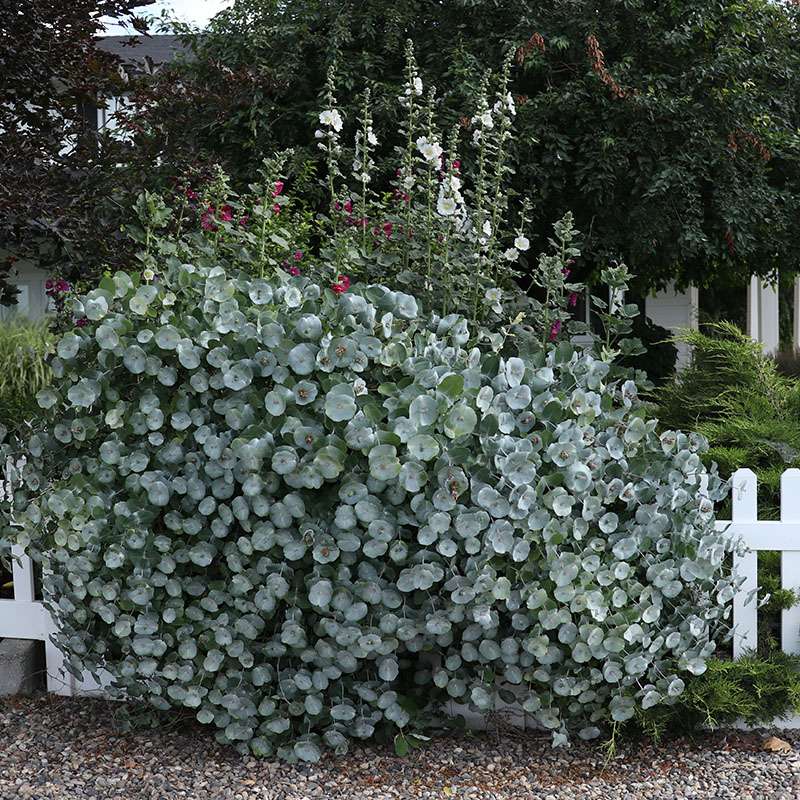
If you haven't had the pleasure of getting to know this plant, let us introduce you: it was originally discovered by William "Ped" Kintzley, a professor at Iowa State University and came to us from Plant Select. In spring, its foliage emerges looking like any other honeysuckle, but as it gets going and develops flower buds, unique blue-white, saucer-shaped bracts form around them, and tubular yellow flowers emerge from the center. They have a light scent and do attract pollinators, including hummingbirds, but it's the bracts that make everyone ask, what is that?! They look like a eucalyptus, and remain effective on the plant until it defoliates in autumn. Flowers fade to reveal glistening red berries in each bract, but not to worry - this North American native species is not invasive and won't make a nuisance of itself.
Public reference
- Genus
- Lonicera
- Species
- —
- Cultivar
- P015S
- Trade name
- KINTZLEY’S GHOST
- Hardiness zones
- 4–8 (USDA)
- Mature height
- 6–12 ft
- Mature width
- —
- Description
- If you haven't had the pleasure of getting to know this plant, let us introduce you: it was originally discovered by William "Ped" Kintzley, a professor at Iowa State University and came to us from Plant Select. In spring, its foliage emerges looking like any other honeysuckle, but as it gets going and develops flower buds, unique blue-white, saucer-shaped bracts form around them, and tubular yellow flowers emerge from the center. They have a light scent and do attract pollinators, including hummingbirds, but it's the bracts that make everyone ask, what is that?! They look like a eucalyptus, and remain effective on the plant until it defoliates in autumn. Flowers fade to reveal glistening red berries in each bract, but not to worry - this North American native species is not invasive and won't make a nuisance of itself.
More attributes available to subscribers
Silver, Gold, and White tiers unlock the full curator-reviewed record — care requirements, flower & foliage detail, wildlife value, safety, and legal status.
Identity
- Common names
- For subscribers only
- Patent number
- For subscribers only
Lifecycle & form
- Lifecycle
- For subscribers only
- Deciduous / evergreen
- For subscribers only
- Height category
- For subscribers only
- Form
- For subscribers only
- Growth habit
- For subscribers only
Site requirements
- Sun exposure
- For subscribers only
- Soil moisture
- For subscribers only
- pH range
- For subscribers only
- Drought tolerant
- For subscribers only
- Flood tolerant
- For subscribers only
- Heat tolerant
- For subscribers only
Flowers
- Bloom months
- For subscribers only
- Flower colors
- For subscribers only
- Flower size
- For subscribers only
- Flower shape
- For subscribers only
- Petal count
- For subscribers only
- Reblooming
- For subscribers only
- Fragrance level
- For subscribers only
- Fragrance notes
- For subscribers only
Foliage
- Foliage colors (by season)
- For subscribers only
- Variegated
- For subscribers only
- Seasons of interest
- For subscribers only
Wildlife & safety
- Attracts
- For subscribers only
- Deer resistant
- For subscribers only
- Rodent resistant
- For subscribers only
- Pet toxicity
- For subscribers only
- Human toxicity
- For subscribers only
Use & care
- Best for
- For subscribers only
- Thornless
- For subscribers only
- Has seed pods
- For subscribers only
- Difficulty level
- For subscribers only
- Gardener notes
- For subscribers only
Legal
- Asexual propagation forbidden
- For subscribers only
- Patent expires
- For subscribers only
Showing the public preview. Subscribers see the curator-reviewed values for every field below.